 Bird Album
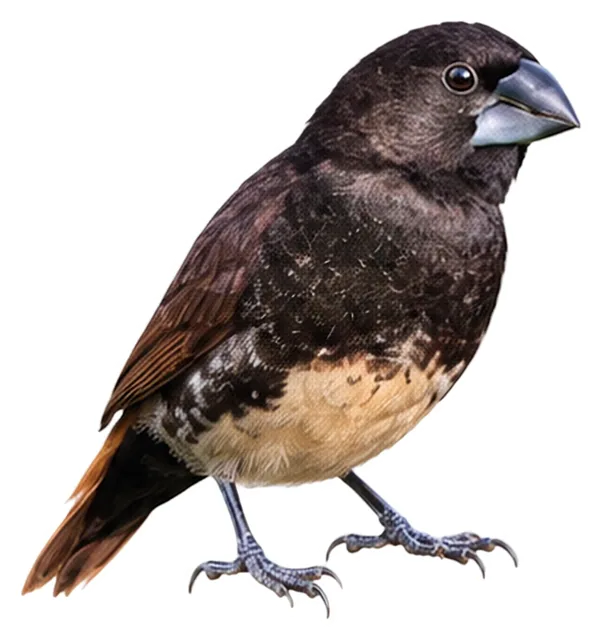
Buff-bellied Mannikin
Lonchura melaena (Sclater, PL, 1880)
13 gWeight
The buff-bellied mannikin (Lonchura melaena), also known as the sooty munia or Bismarck munia, is a species of estrildid finch found in New Britain and Buka Island.
Busiest months: July–August · Most records: Papua New Guinea
Where and when it's recorded

Buff-bellied Mannikin has been recorded at 4 of the 8,276 birding hotspots we track, in 1 country or region.
Records by month Southern Hemisphere
Where it's recorded most
- Numondo Cattle FarmPapua New Guinea139 records
- Kulu RiverPapua New Guinea74 records
- Garu WMAPapua New Guinea22 records
More places
- Walindi Dive ResortPapua New Guinea17 records
Countries and regions with the most records
eBird records via GBIF up to 2024-12-31. A record means someone listed it; more records partly mean more birders, not more birds.
About
The buff-bellied mannikin (Lonchura melaena), also known as the sooty munia or Bismarck munia, is a species of estrildid finch found in New Britain and Buka Island. It has an estimated global extent of occurrence of 20,000 to 50,000 km2.
Excerpt from Wikipedia, CC BY-SA 4.0 · authors · Read more on Wikipedia
Questions
How big is the Buff-bellied Mannikin?
The Buff-bellied Mannikin weighs around 13 g.
Where does the Buff-bellied Mannikin live?
Its breeding range: Australasia: New Britain and New Ireland (eastern Bismarck Archipelago) and Buka Island (northern Solomon Islands). It is most often recorded in Papua New Guinea.
When is the best time to see the Buff-bellied Mannikin?
At the hotspots we track, it is recorded most in July and August (Southern Hemisphere).
Is the Buff-bellied Mannikin endangered?
The IUCN Red List classifies the Buff-bellied Mannikin as Least Concern.
What does the Buff-bellied Mannikin eat?
Main food: Seeds.
What family is the Buff-bellied Mannikin in?
It belongs to the family Waxbills, Munias & Allies (Estrildidae), order Passerines (Passeriformes).
At a glance
- Weight
- 13 g
- Habitat
- Grassland
- Diet
- Seeds
- Lifestyle
- Varied
- Migration
- Resident (barely migrates)
- Conservation
- Least Concern
More measurements
- Wing
- 55 mm
- Tail
- 42 mm
- Bill
- 15 mm
- Tarsus
- 16 mm
Averages from the AVONET dataset; length from field guides where available.
Range
Australasia: New Britain and New Ireland (eastern Bismarck Archipelago) and Buka Island (northern Solomon Islands)
Breeding range, IOC World Bird List 15.2
Classification
- Order
- Passerines Passeriformes
- Family
- Waxbills, Munias & Allies Estrildidae
- Genus
- Lonchura
Other birds in the genus Lonchura
 Scaly-breasted MuniaLonchura punctulata
 Black-throated MuniaLonchura kelaarti
 Black-faced MuniaLonchura molucca
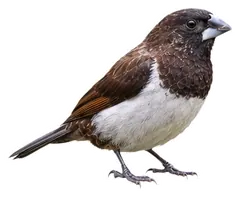 White-rumped MuniaLonchura striata
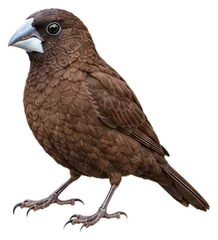 Dusky MuniaLonchura fuscans
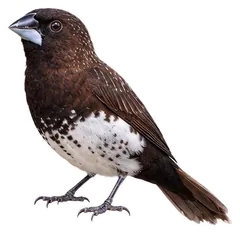 White-bellied MuniaLonchura leucogastra
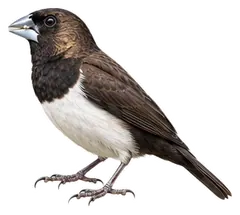 Javan MuniaLonchura leucogastroides
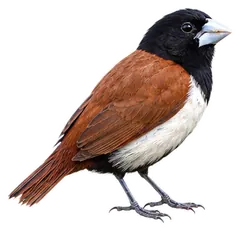 Tricolored MuniaLonchura malacca
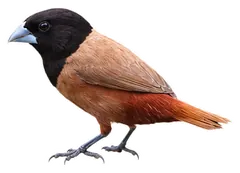 Chestnut MuniaLonchura atricapilla
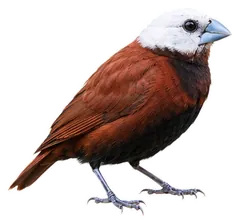 White-capped MuniaLonchura ferruginosa
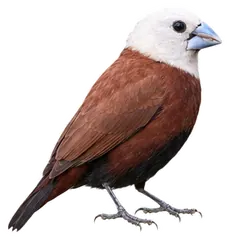 White-headed MuniaLonchura maja
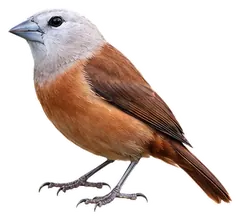 Pale-headed MuniaLonchura pallida
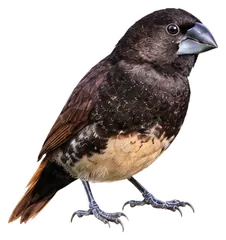
Download illustration
Free to use with credit: “Illustration: Bird Album (birdalbum.com)”. Drawn by AI from a reference photo by manuelquiroga1. ↗
Heard it but can't see it? Mingji identifies birds by sound and photo, on your phone.
In other languages
- EnglishBuff-bellied Mannikin
- 简体中文太平洋文鸟
- 繁體中文澳洲黑文鳥
- 日本語ニューブリテンキンパラ
- DeutschDickkopfnonne
- FrançaisCapucin de Nouvelle-Bretagne
- EspañolCapuchino de Nueva Bretaña
- Portuguêscapuchinho-de-barriga-creme
- ItalianoMunia delle Bismarck
- NederlandsBismarckrietvink
- РусскийТолстоклювая муния
- Svenskabismarckmunia
- DanskTyknæbssivfinke
- Polskimniszka grubodzioba