 Bird Album
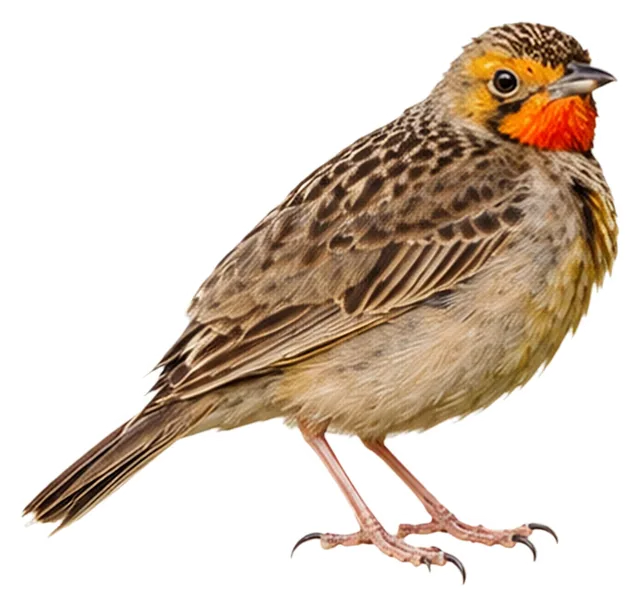
Cape Longclaw
Macronyx capensis (Linnaeus, 1766)
19–20 cmLength50 gWeight
The Cape longclaw or orange-throated longclaw (Macronyx capensis) is a passerine bird in the family Motacillidae, which comprises the longclaws, pipits and wagtails.
Busiest months: October–November · Most records: South Africa, Eswatini, Zimbabwe
Where and when it's recorded

Cape Longclaw has been recorded at 67 of the 8,276 birding hotspots we track, in 5 countries and regions.
Records by month Southern Hemisphere
Where it's recorded most
- Rietvlei NRSouth Africa1,177 records
- Strandfontein WTPSouth Africa657 records
- Marievale Bird SanctuarySouth Africa602 records
More places
- Suikerbosrand NRSouth Africa412 records
- West Coast NPSouth Africa298 records
- Wakkerstroom areaSouth Africa281 records
- Midmar Dam – South ShoreSouth Africa231 records
- Rietvlei Wetlands ReserveSouth Africa164 records
- West Coast NP – Geelbek hides vicinitySouth Africa160 records
- Malolotja Nature ReserveEswatini136 records
Countries and regions with the most records
eBird records via GBIF up to 2024-12-31. A record means someone listed it; more records partly mean more birders, not more birds.
About
The Cape longclaw or orange-throated longclaw (Macronyx capensis) is a passerine bird in the family Motacillidae, which comprises the longclaws, pipits and wagtails. It occurs in Southern Africa in Zimbabwe and southern and eastern South Africa. This species is found in coastal and mountain grassland, often near water.
Excerpt from Wikipedia, CC BY-SA 4.0 · authors · Read more on Wikipedia
Questions
How big is the Cape Longclaw?
The Cape Longclaw is about 19–20 cm long and weighs around 50 g.
Where does the Cape Longclaw live?
Its breeding range: Africa: southern, southeastern. It is most often recorded in South Africa, Eswatini and Zimbabwe.
When is the best time to see the Cape Longclaw?
At the hotspots we track, it is recorded most in October and November (Southern Hemisphere).
Is the Cape Longclaw endangered?
The IUCN Red List classifies the Cape Longclaw as Least Concern.
What does the Cape Longclaw eat?
Main food: Insects & other invertebrates.
What family is the Cape Longclaw in?
It belongs to the family Wagtails, Pipits (Motacillidae), order Passerines (Passeriformes).
At a glance
- Length
- 19–20 cm
- Weight
- 50 g
- Habitat
- Grassland
- Diet
- Insects & other invertebrates
- Lifestyle
- Active on the ground
- Migration
- Resident (barely migrates)
- Conservation
- Least Concern
More measurements
- Wing
- 94 mm
- Tail
- 66 mm
- Bill
- 21 mm
- Tarsus
- 34 mm
Averages from the AVONET dataset; length from field guides where available.
Range
Africa: southern, southeastern
Breeding range, IOC World Bird List 15.2
Classification
- Order
- Passerines Passeriformes
- Family
- Wagtails, Pipits Motacillidae
- Genus
- Macronyx
Other birds in the genus Macronyx
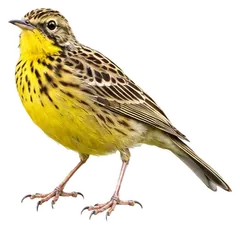 Sharpe's LongclawMacronyx sharpei
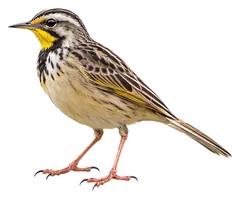 Abyssinian LongclawMacronyx flavicollis
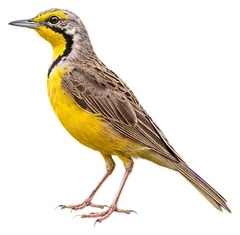 Fülleborn's LongclawMacronyx fuelleborni
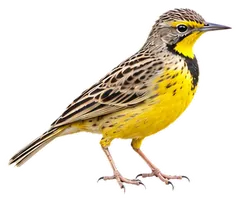 Yellow-throated LongclawMacronyx croceus
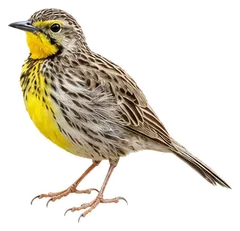 Pangani LongclawMacronyx aurantiigula
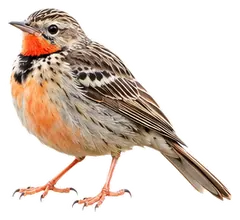 Rosy-throated LongclawMacronyx ameliae
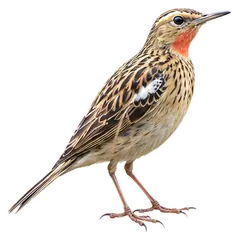 Grimwood's LongclawMacronyx grimwoodi
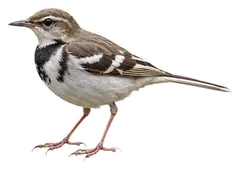 Forest WagtailDendronanthus indicus
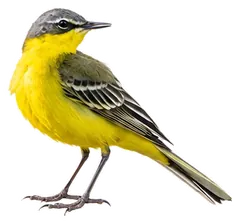 Western Yellow WagtailMotacilla flava
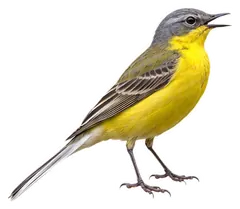 Eastern Yellow WagtailMotacilla tschutschensis
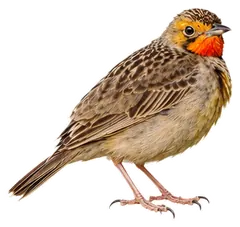
Download illustration
Free to use with credit: “Illustration: Bird Album (birdalbum.com)”. Drawn by AI from a reference photo by Richard Gill. ↗
Heard it but can't see it? Mingji identifies birds by sound and photo, on your phone.
In other languages
- EnglishCape Longclaw
- 简体中文橙喉长爪鹡鸰
- 繁體中文橙喉長爪鶺鴒
- 日本語アカノドツメナガタヒバリ
- DeutschKappieper
- FrançaisSentinelle du Cap
- EspañolBisbita de El Cabo
- Portuguêssentinela-de-garganta-laranja
- ItalianoUnghialunga del Capo
- NederlandsKaapse Langklauw
- РусскийКапский шпорник
- Svenskaorangestrupig piplärka
- DanskKapsporepiber
- Polskiszponnik rudobrewy