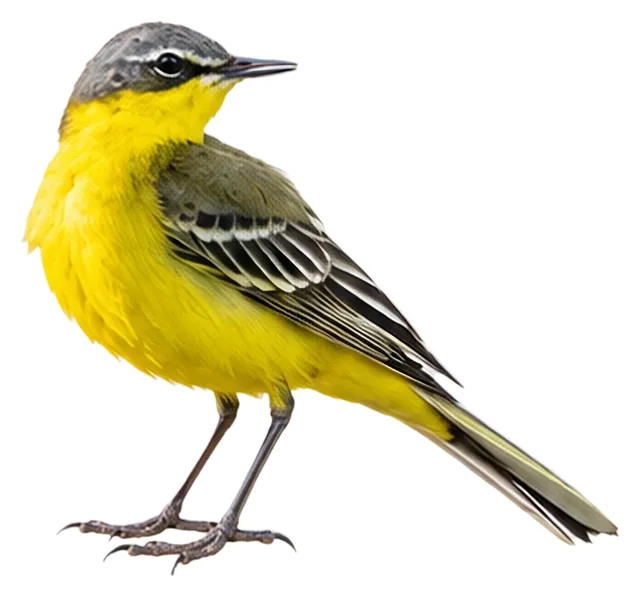
Western Yellow Wagtail
Motacilla flava Linnaeus, 1758
15–16 cmLength26 cmWingspan18 gWeight
It is slender and constantly wags its long tail; the male has an olive back and yellow belly in the breeding season.
Busiest months: April and September · Most records: Spain, United Kingdom, India
How to identify
Field marks
- Long tail constantly wagged up and down
- Breeding male has olive back and yellow belly
- Male head color and pattern vary by subspecies
- Bill brown; legs and feet brown to black
Male, female and young
Male has olive back and yellow belly in the breeding season; in other plumages, especially juvenile, the yellow may be so pale as to appear almost white.
Voice
A high-pitched “jeet”.
Where and when it's recorded
Busiest months: April and September · Most records: Spain, United Kingdom, India

Western Yellow Wagtail has been recorded at 1,923 of the 8,276 birding hotspots we track, in 128 countries and regions.
Records by month Northern Hemisphere
Where it's recorded most
- International Birding and Research Center Eilat (IBRCE)Israel2,727 records
- Lezíria Grande de Vila Franca de Xira – área geralPortugal2,152 records
- Desembocadura del Guadalhorce – ÁreaSpain2,030 records
More places
- Eilat – KM20 Flamingo Pools 20Israel1,826 records
- Spurn Bird Observatory Recording AreaUnited Kingdom1,701 records
- Dubai Pivot FieldsUnited Arab Emirates1,507 records
- Frampton Marsh RSPB ReserveUnited Kingdom1,495 records
- Balsa de Zolina/EzkorizSpain1,231 records
- Azud de RiolobosSpain1,227 records
- Sureste PNat – Ruta del Soto GutiérrezSpain1,181 records
Countries and regions with the most records
eBird records via GBIF up to 2024-12-31. A record means someone listed it; more records partly mean more birders, not more birds.
About
The western yellow wagtail (Motacilla flava) is a small passerine bird in the wagtail family Motacillidae, which also includes the pipits and longclaws. This species breeds in much of temperate Europe and Asia. Most populations are migratory, moving south to tropical Africa and southern Asia for the winter; the small population breeding in Egypt is however resident there.
Excerpt from Wikipedia, CC BY-SA 4.0 · authors · Read more on Wikipedia
Questions
How big is the Western Yellow Wagtail?
The Western Yellow Wagtail is about 15–16 cm long, with a wingspan of 26 cm and weighs around 18 g.
Where does the Western Yellow Wagtail live?
Its breeding range: Palearctic: widespread. It is most often recorded in Spain, United Kingdom and India.
When is the best time to see the Western Yellow Wagtail?
At the hotspots we track, it is recorded most in April and September (Northern Hemisphere).
Is the Western Yellow Wagtail endangered?
The IUCN Red List classifies the Western Yellow Wagtail as Least Concern.
What does the Western Yellow Wagtail eat?
Main food: Insects & other invertebrates.
What family is the Western Yellow Wagtail in?
It belongs to the family Wagtails, Pipits (Motacillidae), order Passerines (Passeriformes).
At a glance
- Length
- 15–16 cm
- Wingspan
- 26 cm
- Weight
- 18 g
- Habitat
- Grassland
- Diet
- Insects & other invertebrates
- Lifestyle
- Active on the ground
- Migration
- Migratory
- Conservation
- Least Concern
More measurements
- Wing
- 80 mm
- Tail
- 71 mm
- Bill
- 16 mm
- Tarsus
- 23 mm
Averages from the AVONET dataset; length from field guides where available.
Range
Palearctic: widespread
Breeding range, IOC World Bird List 15.2
Subspecies · 1
- Motacilla flava leucocephala nw Mongolia, nw China and sc Siberia | non-breeding: India
Classification
- Order
- Passerines Passeriformes
- Family
- Wagtails, Pipits Motacillidae
- Genus
- Motacilla
Other birds in the genus Motacilla
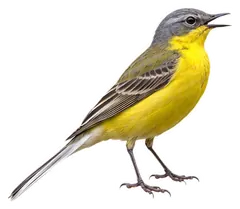 Eastern Yellow WagtailMotacilla tschutschensis
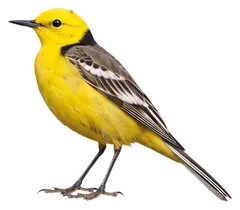 Citrine WagtailMotacilla citreola
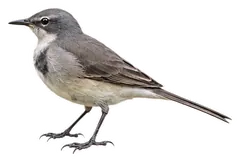 Cape WagtailMotacilla capensis
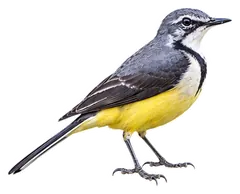 Madagascar WagtailMotacilla flaviventris
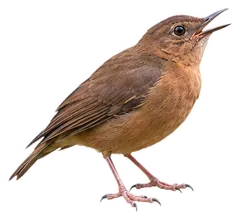 Sao Tome ShorttailMotacilla bocagii
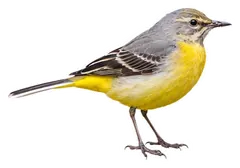 Grey WagtailMotacilla cinerea
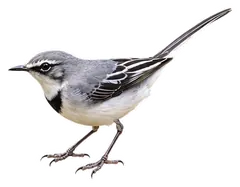 Mountain WagtailMotacilla clara
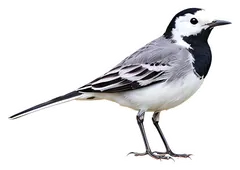 White WagtailMotacilla alba
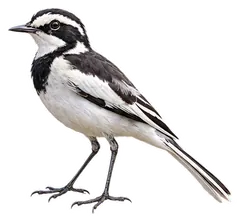 African Pied WagtailMotacilla aguimp
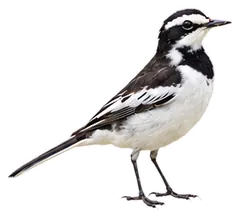 Mekong WagtailMotacilla samveasnae
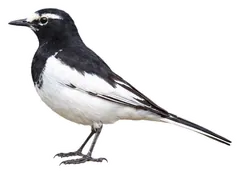 Japanese WagtailMotacilla grandis
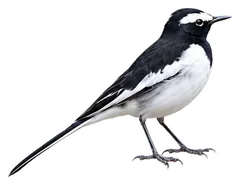 White-browed WagtailMotacilla maderaspatensis
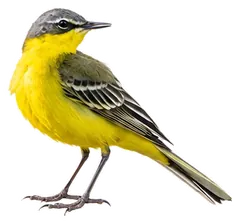
Download illustration
Free to use with credit: “Illustration: Bird Album (birdalbum.com)”. Drawn by AI from a reference photo by Łukasz Król. ↗
Heard it but can't see it? Mingji identifies birds by sound and photo, on your phone.