 Bird Album
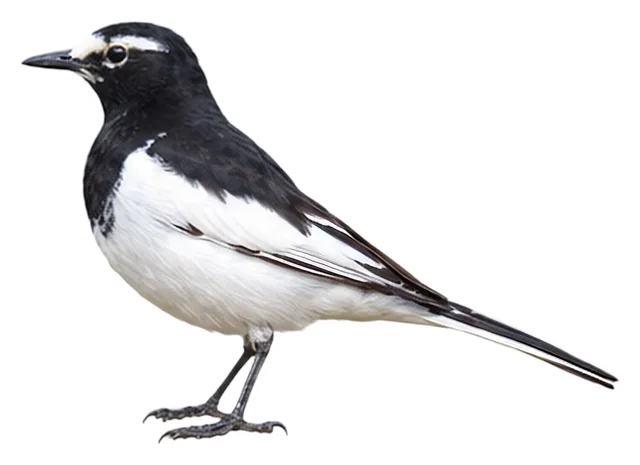
Japanese Wagtail
Motacilla grandis Sharpe, 1885
20 cmLength30 gWeight
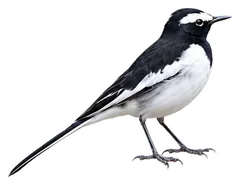
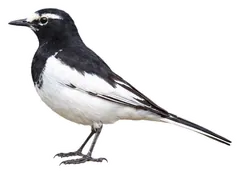
This wagtail has a black back and throat, a white belly and white supercilium, and is about 20 cm long.
Busiest months: January–February · Most records: Japan, South Korea, China
How to identify
Field marks
- Back, throat and upper body black
- Belly white
- Supercilium white
- Bill black; legs and feet dark gray
Male, female and young
Sexes similar; juvenile plumage is grayer and duller than that of the adult.
Where and when it's recorded
Busiest months: January–February · Most records: Japan, South Korea, China

Japanese Wagtail has been recorded at 129 of the 8,276 birding hotspots we track, in 3 countries and regions.
Records by month Northern Hemisphere
Where it's recorded most
- Kyoto – Kyoto Gyoen Garden / Kyoto Imperial Palace ParkJapan452 records
- Okayama – Okayama Korakuen GardenJapan407 records
- Edogawa Ward – Kasai Rinkai Park / Kasai Kaihin ParkJapan298 records
More places
- Katsushika Ward – Mizumoto ParkJapan229 records
- Atsugi – Sagami River – Sagami-ohashi BridgeJapan220 records
- Saku – Saku Regulating PondJapan214 records
- Hanam – Hangang Migratory Bird Observation PointSouth Korea200 records
- Kawasaki – Confluence of Tama River and Nikaryo Aqueduct – Nikaryo Shukugawara WeirJapan192 records
- Kumamoto – Kamiezu LakeJapan158 records
- Odawara – Sakawagawa Sports PlazaJapan148 records
Countries and regions with the most records
eBird records via GBIF up to 2024-12-31. A record means someone listed it; more records partly mean more birders, not more birds.
About
The Japanese wagtail (Motacilla grandis) is a species of bird in the pipit and wagtail family Motacillidae. It is native to Japan and Korea.
Excerpt from Wikipedia, CC BY-SA 4.0 · authors · Read more on Wikipedia
Questions
How big is the Japanese Wagtail?
The Japanese Wagtail is about 20 cm long and weighs around 30 g.
Where does the Japanese Wagtail live?
Its breeding range: Palearctic: Hokkaido to Kyushu (northern to southern Japan) and southern Korean Peninsula. It is most often recorded in Japan, South Korea and China.
When is the best time to see the Japanese Wagtail?
At the hotspots we track, it is recorded most in January and February (Northern Hemisphere).
Is the Japanese Wagtail endangered?
The IUCN Red List classifies the Japanese Wagtail as Least Concern.
What does the Japanese Wagtail eat?
Main food: Insects & other invertebrates.
What family is the Japanese Wagtail in?
It belongs to the family Wagtails, Pipits (Motacillidae), order Passerines (Passeriformes).
At a glance
- Length
- 20 cm
- Weight
- 30 g
- Habitat
- Rivers & streams
- Diet
- Insects & other invertebrates
- Lifestyle
- Active on the ground
- Migration
- Resident (barely migrates)
- Conservation
- Least Concern
More measurements
- Wing
- 94 mm
- Tail
- 100 mm
- Bill
- 18 mm
- Tarsus
- 26 mm
Averages from the AVONET dataset; length from field guides where available.
Range
Palearctic: Hokkaido to Kyushu (northern to southern Japan) and southern Korean Peninsula
Breeding range, IOC World Bird List 15.2
Classification
- Order
- Passerines Passeriformes
- Family
- Wagtails, Pipits Motacillidae
- Genus
- Motacilla
Other birds in the genus Motacilla
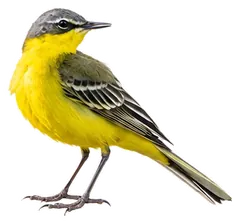 Western Yellow WagtailMotacilla flava
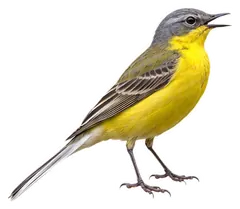 Eastern Yellow WagtailMotacilla tschutschensis
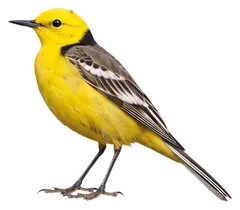 Citrine WagtailMotacilla citreola
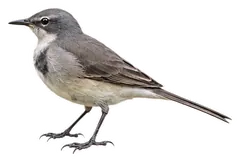 Cape WagtailMotacilla capensis
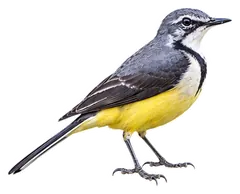 Madagascar WagtailMotacilla flaviventris
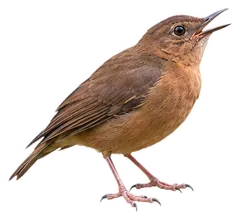 Sao Tome ShorttailMotacilla bocagii
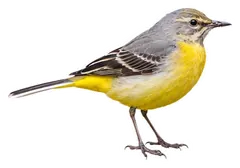 Grey WagtailMotacilla cinerea
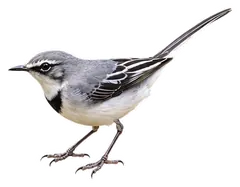 Mountain WagtailMotacilla clara
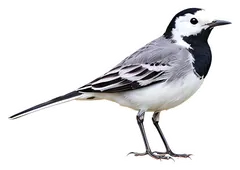 White WagtailMotacilla alba
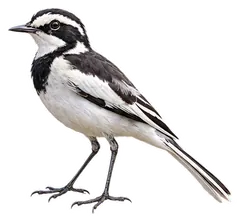 African Pied WagtailMotacilla aguimp
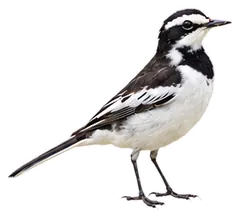 Mekong WagtailMotacilla samveasnae
 White-browed WagtailMotacilla maderaspatensis
Download illustration
Free to use with credit: “Illustration: Bird Album (birdalbum.com)”. Drawn by AI from a reference photo by jitensha2021. ↗
Heard it but can't see it? Mingji identifies birds by sound and photo, on your phone.