 Bird Album
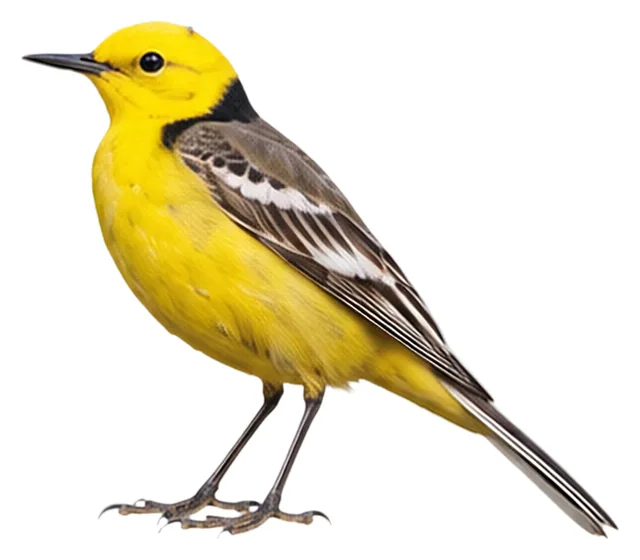
Citrine Wagtail
Motacilla citreola Pallas, 1776
≈16 cmLength19 gWeight
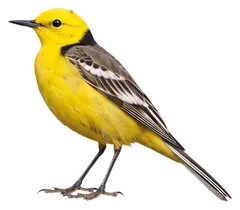
This slender wagtail often wags its long tail, and the breeding male has a bright yellow head and underparts.
Busiest months: December–March · Most records: India, United Arab Emirates, Israel
How to identify
Field marks
- Breeding male has entire head bright yellow and nape black
- Breeding male has gray or black back and white on the flight feathers
- Long tail wagged continuously
- Head brown in winter plumage, with a yellow supercilium
Male, female and young
Female resembles a faded version of the male in winter.
Where and when it's recorded

Citrine Wagtail has been recorded at 1,123 of the 8,171 birding hotspots we track, in 83 countries and regions.
Records by month Northern Hemisphere
Where it's recorded most
- Bharatpur – Keoladeo Ghana NPIndia1,833 records
- Private estate near Green MubazzarahUnited Arab Emirates1,665 records
- International Birding and Research Center Eilat (IBRCE)Israel1,580 records
More places
- Okhla Bird SanctuaryIndia1,232 records
- Baruipur MarshesIndia1,120 records
- Budhera Water Treatment PlantIndia887 records
- Maguri BeelIndia876 records
- Sultanpur National ParkIndia861 records
- Dubai Pivot FieldsUnited Arab Emirates774 records
- ChanduIndia726 records
Countries and regions with the most records
eBird records via GBIF up to 2024-12-31. A record means someone listed it; more records partly mean more birders, not more birds.
Questions
How big is the Citrine Wagtail?
The Citrine Wagtail is about ≈16 cm long and weighs around 19 g.
Where does the Citrine Wagtail live?
Its breeding range: Palearctic: widespread. It is most often recorded in India, United Arab Emirates and Israel.
When is the best time to see the Citrine Wagtail?
At the hotspots we track, it is recorded most in January, February, March and December (Northern Hemisphere).
Is the Citrine Wagtail endangered?
The IUCN Red List classifies the Citrine Wagtail as Least Concern.
What does the Citrine Wagtail eat?
Main food: Fish, shrimp & shellfish.
What family is the Citrine Wagtail in?
It belongs to the family Wagtails, Pipits (Motacillidae), order Passerines (Passeriformes).
At a glance
- Length
- ≈16 cm
- Weight
- 19 g
- Habitat
- Wetland
- Diet
- Fish, shrimp & shellfish
- Lifestyle
- Active on the ground
- Migration
- Migratory
- Conservation
- Least Concern
More measurements
- Wing
- 86 mm
- Tail
- 83 mm
- Bill
- 16 mm
- Tarsus
- 25 mm
Averages from the AVONET dataset; length from field guides where available.
Range
Palearctic: widespread
Breeding range, IOC World Bird List 15.2
Subspecies · 2
- Motacilla citreola citreola n, e Europe to c Siberia, Mongolia and ne China | non-breeding: India and se Asia
- Motacilla citreola calcarata e Iran and Afghanistan to c China | non-breeding: s Asia
Classification
- Order
- Passerines Passeriformes
- Family
- Wagtails, Pipits Motacillidae
- Genus
- Motacilla
Other birds in the genus Motacilla
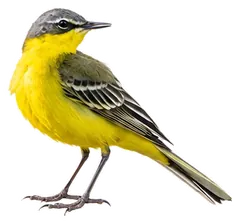 Western Yellow WagtailMotacilla flava
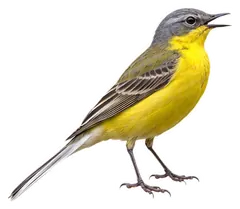 Eastern Yellow WagtailMotacilla tschutschensis
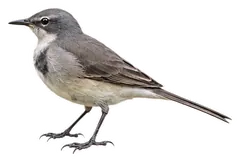 Cape WagtailMotacilla capensis
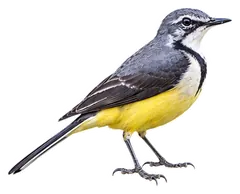 Madagascar WagtailMotacilla flaviventris
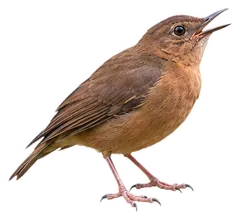 Sao Tome ShorttailMotacilla bocagii
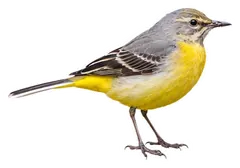 Grey WagtailMotacilla cinerea
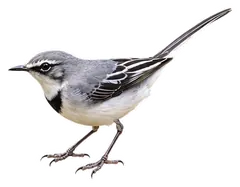 Mountain WagtailMotacilla clara
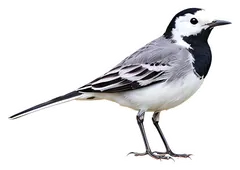 White WagtailMotacilla alba
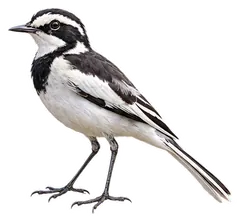 African Pied WagtailMotacilla aguimp
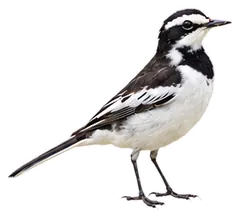 Mekong WagtailMotacilla samveasnae
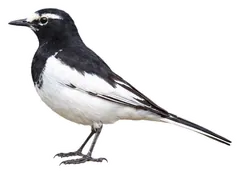 Japanese WagtailMotacilla grandis
 White-browed WagtailMotacilla maderaspatensis
Download illustration
Free to use with credit: “Illustration: Bird Album (birdalbum.com)”. Drawn by AI from a reference photo by Ron Knight. ↗

Heard it but can't see it? Mingji identifies birds by sound and photo, on your phone.
In other languages
- EnglishCitrine Wagtail
- 简体中文黄头鹡鸰
- 繁體中文黃頭鶺鴒
- 日本語キガシラセキレイ
- 한국어노랑머리할미새
- DeutschZitronenstelze
- FrançaisBergeronnette citrine
- EspañolLavandera cetrina
- Portuguêsalvéola-citrina
- ItalianoCutrettola testagialla orientale
- NederlandsCitroenkwikstaart
- РусскийЖелтоголовая трясогузка
- Svenskacitronärla
- DanskCitronvipstjert
- Polskipliszka cytrynowa