 Bird Album
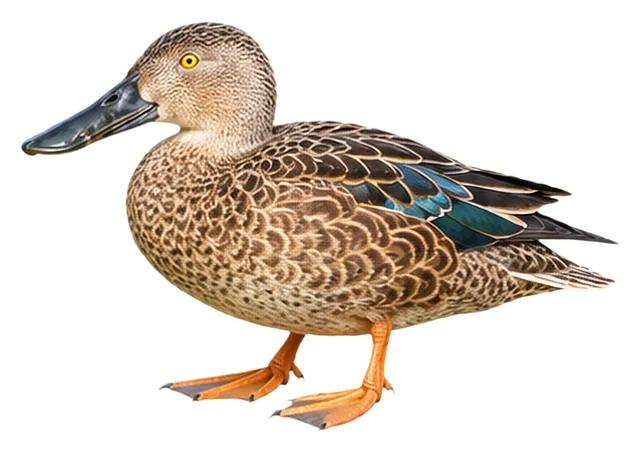
Cape Shoveler
Spatula smithii Hartert, EJO, 1891
51–53 cmLength592 gWeight
The Cape shoveler or Cape shoveller (Spatula smithii) is a species of dabbling duck of the genus Spatula.
Busiest months: September–November · Most records: South Africa, Namibia, Mozambique
Where and when it's recorded
Busiest months: September–November · Most records: South Africa, Namibia, Mozambique

Cape Shoveler has been recorded at 76 of the 8,276 birding hotspots we track, in 7 countries and regions.
Records by month Southern Hemisphere
Where it's recorded most
- Strandfontein WTPSouth Africa2,942 records
- Marievale Bird SanctuarySouth Africa863 records
- Rondevlei NRSouth Africa705 records
More places
- West Coast NP – Abrahamskraal hideSouth Africa523 records
- PaardevleiSouth Africa458 records
- West Coast NPSouth Africa436 records
- Rietvlei Wetlands ReserveSouth Africa403 records
- Wakkerstroom Wetland NR – bridge/causewaySouth Africa333 records
- De Hoop Nature ReserveSouth Africa280 records
- Macassar Sewage WorksSouth Africa256 records
Countries and regions with the most records
eBird records via GBIF up to 2024-12-31. A record means someone listed it; more records partly mean more birders, not more birds.
About
The Cape shoveler or Cape shoveller (Spatula smithii) is a species of dabbling duck of the genus Spatula. It is resident in South Africa, and uncommon further north in Namibia, Botswana, Zimbabwe, southern Angola, Lesotho, Mozambique, and Zambia.
Excerpt from Wikipedia, CC BY-SA 4.0 · authors · Read more on Wikipedia
Questions
How big is the Cape Shoveler?
The Cape Shoveler is about 51–53 cm long and weighs around 592 g.
Where does the Cape Shoveler live?
Its breeding range: Africa: Namibia, Botswana and South Africa. It is most often recorded in South Africa, Namibia and Mozambique.
When is the best time to see the Cape Shoveler?
At the hotspots we track, it is recorded most in September, October and November (Southern Hemisphere).
Is the Cape Shoveler endangered?
The IUCN Red List classifies the Cape Shoveler as Least Concern.
What does the Cape Shoveler eat?
Main food: Fish, shrimp & shellfish.
What family is the Cape Shoveler in?
It belongs to the family Ducks, Geese, Swans (Anatidae), order Anseriformes.
At a glance
- Length
- 51–53 cm
- Weight
- 592 g
- Habitat
- Wetland
- Diet
- Fish, shrimp & shellfish
- Lifestyle
- On the water surface
- Migration
- Partial migrant
- Conservation
- Least Concern
More measurements
- Wing
- 229 mm
- Tail
- 72 mm
- Bill
- 64 mm
- Tarsus
- 35 mm
Averages from the AVONET dataset; length from field guides where available.
Range
Africa: Namibia, Botswana and South Africa
Breeding range, IOC World Bird List 15.2
Classification
- Order
- Anseriformes
- Family
- Ducks, Geese, Swans Anatidae
- Genus
- Spatula
Other birds in the genus Spatula
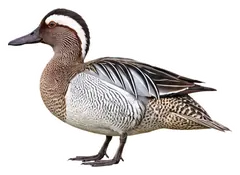 GarganeySpatula querquedula
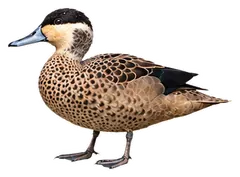 Blue-billed TealSpatula hottentota
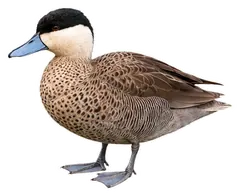 Puna TealSpatula puna
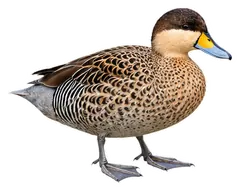 Silver TealSpatula versicolor
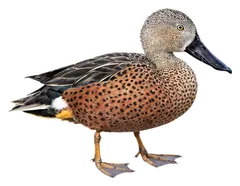 Red ShovelerSpatula platalea
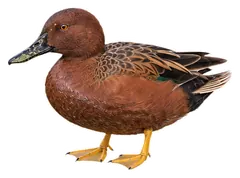 Cinnamon TealSpatula cyanoptera
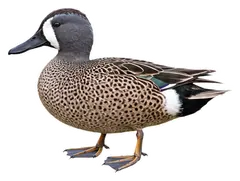 Blue-winged TealSpatula discors
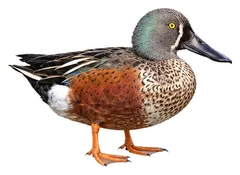 Australasian ShovelerSpatula rhynchotis
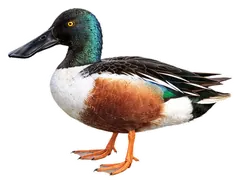 Northern ShovelerSpatula clypeata
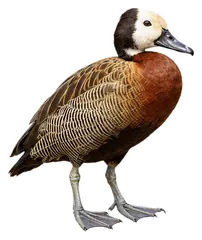 White-faced Whistling DuckDendrocygna viduata
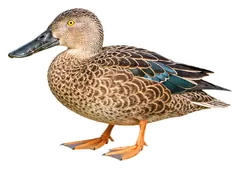
Download illustration
Free to use with credit: “Illustration: Bird Album (birdalbum.com)”. Drawn by AI from a reference photo by John Gale. ↗
Heard it but can't see it? Mingji identifies birds by sound and photo, on your phone.