 Bird Album
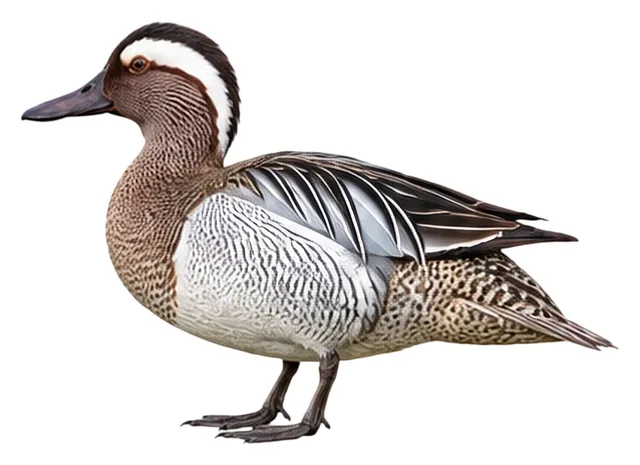
Garganey
Spatula querquedula (Linnaeus, 1758)
≈34 cmLength326 gWeight
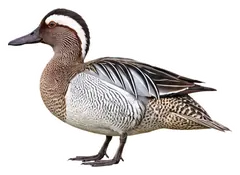
The male has a rufous head and breast, with a single broad white supercilium curved like a crescent above the eye.
Busiest months: April · Most records: India, China, United Kingdom
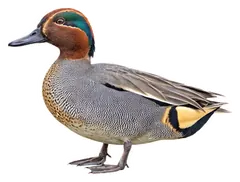
Looks like Eurasian Teal
How to identify
Field marks
- Male has a broad white crescent-shaped supercilium above the eye
- Male has a rufous head and breast, with most of the rest gray
- Male shows pale blue on the upperwing in flight
- Male shows white feather edges on the tertials when swimming
Male, female and young
Male has a rufous head and breast with a broad white stripe above the eye; female rufous-brown.
Voice
Male has a distinctive crackling courtship call; female is relatively quiet for a female duck, but can give a faint “quack”.
Similar species
Where and when it's recorded
Busiest months: April · Most records: India, China, United Kingdom

Garganey has been recorded at 2,058 of the 8,276 birding hotspots we track, in 130 countries and regions.
Records by month Northern Hemisphere
Where it's recorded most
- Changaram Wetlands – EzhupunnaIndia2,520 records
- Saul Kere / Sowl KereIndia2,180 records
- Bharatpur – Keoladeo Ghana NPIndia1,874 records
More places
- Mai Po Nature ReserveHong Kong (China)1,679 records
- Private estate near Green MubazzarahUnited Arab Emirates1,132 records
- Eilat – KM20 Flamingo Pools 20Israel1,132 records
- Hoskote / Hosakote KereIndia962 records
- Sholinganallur/Perumbakkam MarshlandsIndia893 records
- Mysore City Bird Atlas 30A, Lingambudhi kereIndia890 records
- Sultanpur National ParkIndia874 records
Countries and regions with the most records
eBird records via GBIF up to 2024-12-31. A record means someone listed it; more records partly mean more birders, not more birds.
About
The garganey (Spatula querquedula) is a small dabbling duck. It breeds in much of Europe and across the Palearctic, but is strictly migratory, with the entire population moving to Africa, India (in particular Santragachi), Bangladesh (in the natural reservoirs of Sylhet district) and Australasia during the winter of the Northern hemisphere, where large flocks can occur. This species was first described by Carl Linnaeus in his landmark 1758 10th edition of Systema Naturae.
Excerpt from Wikipedia, CC BY-SA 4.0 · authors · Read more on Wikipedia
Questions
How big is the Garganey?
The Garganey is about ≈34 cm long and weighs around 326 g.
Where does the Garganey live?
Its breeding range: Palearctic: western Europe to Japan. It is most often recorded in India, China and United Kingdom.
When is the best time to see the Garganey?
At the hotspots we track, it is recorded most in April (Northern Hemisphere).
Is the Garganey endangered?
The IUCN Red List classifies the Garganey as Least Concern.
What does the Garganey eat?
Main food: Aquatic plants.
What family is the Garganey in?
It belongs to the family Ducks, Geese, Swans (Anatidae), order Anseriformes.
At a glance
- Length
- ≈34 cm
- Weight
- 326 g
- Habitat
- Wetland
- Diet
- Aquatic plants
- Lifestyle
- On the water surface
- Migration
- Migratory
- Conservation
- Least Concern
More measurements
- Wing
- 188 mm
- Tail
- 64 mm
- Bill
- 39 mm
- Tarsus
- 26 mm
Averages from the AVONET dataset; length from field guides where available.
Range
Palearctic: western Europe to Japan
Breeding range, IOC World Bird List 15.2
Classification
- Order
- Anseriformes
- Family
- Ducks, Geese, Swans Anatidae
- Genus
- Spatula
Other birds in the genus Spatula
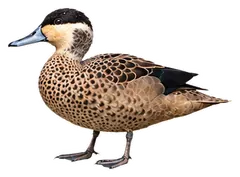 Blue-billed TealSpatula hottentota
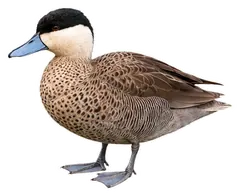 Puna TealSpatula puna
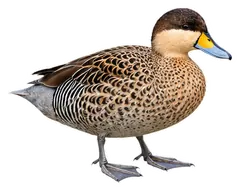 Silver TealSpatula versicolor
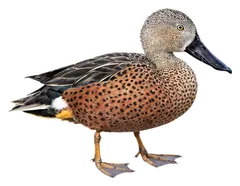 Red ShovelerSpatula platalea
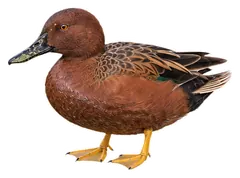 Cinnamon TealSpatula cyanoptera
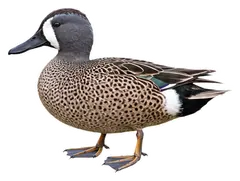 Blue-winged TealSpatula discors
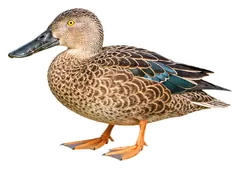 Cape ShovelerSpatula smithii
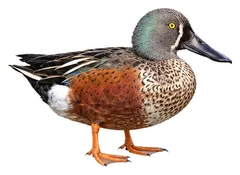 Australasian ShovelerSpatula rhynchotis
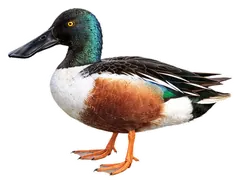 Northern ShovelerSpatula clypeata
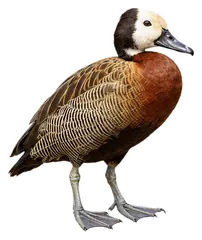 White-faced Whistling DuckDendrocygna viduata
Download illustration
Free to use with credit: “Illustration: Bird Album (birdalbum.com)”. Drawn by AI from a reference photo by YedidyaPopper. ↗

Heard it but can't see it? Mingji identifies birds by sound and photo, on your phone.