 Bird Album
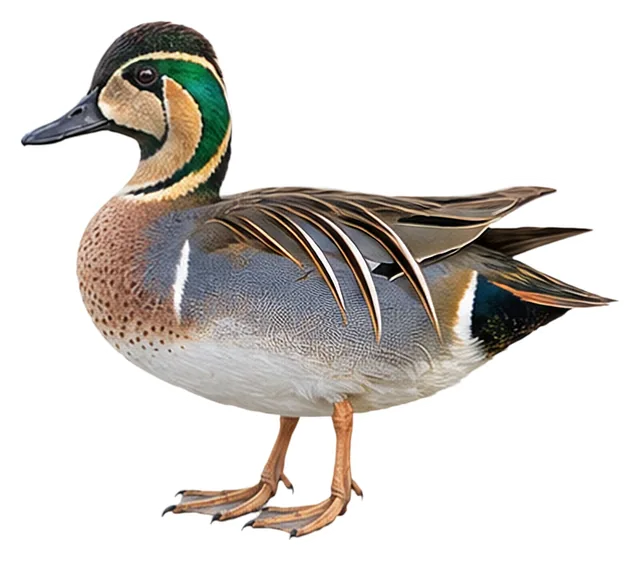
Baikal Teal
Sibirionetta formosa (Georgi, 1775)
≈38 cmLength434 gWeight
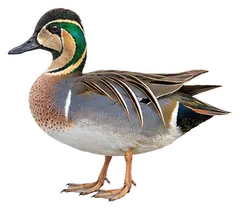
In the breeding season, the male is very conspicuous, with a bright green nape and alternating yellow and black on the ear-coverts, neck and throat.
Busiest months: December–January · Most records: China, Japan, South Korea
Looks like Eurasian Teal
How to identify
Field marks
- Male has a bright green nape
- Male in the breeding season has alternating yellow and black on the ear-coverts, neck and throat
- Male in the breeding season has a dark crown and a pale rufous breast with dark patches
- Male in the breeding season has long, drooping scapulars and white stripes at the front and rear of the gray flanks
Male, female and young
Female resembles female Eurasian Teal, but has a longer tail, a conspicuous white spot at the base of the bill and a white throat extending behind the eye.
Similar species
Where and when it's recorded

Baikal Teal has been recorded at 419 of the 8,171 birding hotspots we track, in 23 countries and regions.
Records by month Northern Hemisphere
Where it's recorded most
- Kaga – Katano Kamoike / Kamoike Observation CenterJapan149 records
- Taipei – Tianliaoyang WetlandTaiwan (China)136 records
- Riparian Preserve at Gilbert Water RanchUnited States130 records
More places
- North Lake InbanumaJapan124 records
- St. Paul IslandUnited States117 records
- Mai Po Nature ReserveHong Kong (China)112 records
- Beihu MarshlandChina100 records
- Taipei – Luzhou EmbankmentTaiwan (China)94 records
- Ma ChangChina93 records
- Wild Duck LakeChina83 records
Countries and regions with the most records
eBird records via GBIF up to 2024-12-31. A record means someone listed it; more records partly mean more birders, not more birds.
About
The Baikal teal (Sibirionetta formosa), also called the bimaculate duck or squawk duck, is a dabbling duck that breeds in eastern Russia and winters in East Asia.
Excerpt from Wikipedia, CC BY-SA 4.0 · authors · Read more on Wikipedia
Questions
How big is the Baikal Teal?
The Baikal Teal is about ≈38 cm long and weighs around 434 g.
Where does the Baikal Teal live?
Its breeding range: Palearctic: eastern Siberia. It is most often recorded in China, Japan and South Korea.
When is the best time to see the Baikal Teal?
At the hotspots we track, it is recorded most in January and December (Northern Hemisphere).
Is the Baikal Teal endangered?
The IUCN Red List classifies the Baikal Teal as Least Concern.
What does the Baikal Teal eat?
Main food: Aquatic plants.
What family is the Baikal Teal in?
It belongs to the family Ducks, Geese, Swans (Anatidae), order Anseriformes.
At a glance
- Length
- ≈38 cm
- Weight
- 434 g
- Habitat
- Wetland
- Diet
- Aquatic plants
- Lifestyle
- On the water surface
- Migration
- Migratory
- Conservation
- Least Concern
More measurements
- Wing
- 206 mm
- Tail
- 77 mm
- Bill
- 38 mm
- Tarsus
- 32 mm
Averages from the AVONET dataset; length from field guides where available.
Range
Palearctic: eastern Siberia
Breeding range, IOC World Bird List 15.2
Classification
- Order
- Anseriformes
- Family
- Ducks, Geese, Swans Anatidae
- Genus
- Sibirionetta
More from the family Ducks, Geese, Swans
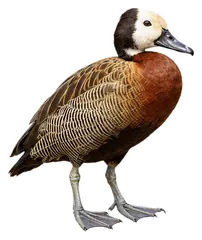 White-faced Whistling DuckDendrocygna viduata
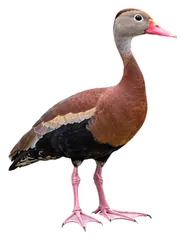 Black-bellied Whistling DuckDendrocygna autumnalis
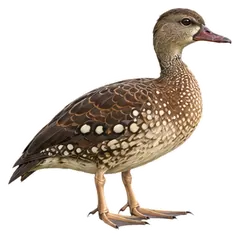 Spotted Whistling DuckDendrocygna guttata
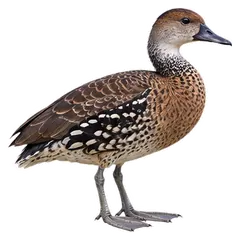 West Indian Whistling DuckDendrocygna arborea
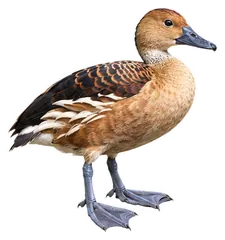 Fulvous Whistling DuckDendrocygna bicolor
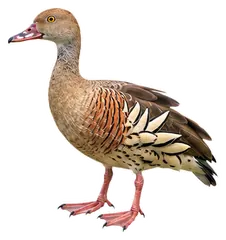 Plumed Whistling DuckDendrocygna eytoni
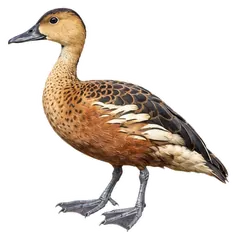 Wandering Whistling DuckDendrocygna arcuata
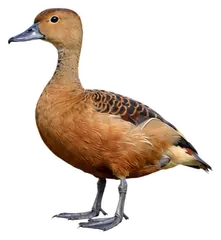 Lesser Whistling DuckDendrocygna javanica
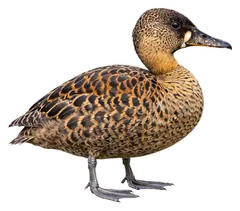 White-backed DuckThalassornis leuconotus
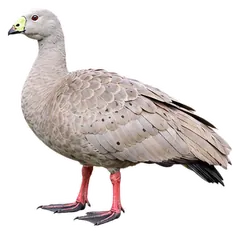 Cape Barren GooseCereopsis novaehollandiae
Download illustration
Free to use with credit: “Illustration: Bird Album (birdalbum.com)”. Drawn by AI from a reference photo by Sun Jiao (Interaccoonale). ↗
Heard it but can't see it? Mingji identifies birds by sound and photo, on your phone.