 Bird Album
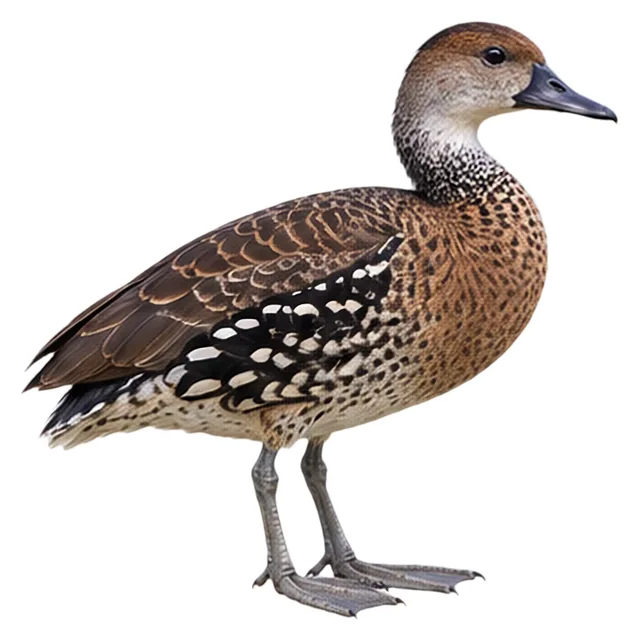
West Indian Whistling Duck
Dendrocygna arborea (Linnaeus, 1758)
48–58 cmLength1.1 kgWeight
The West Indian whistling duck (Dendrocygna arborea) is a whistling duck that breeds in the Caribbean.
Busiest months: January–March · Most records: Puerto Rico, Cayman Islands, Dominican Republic
Where and when it's recorded

West Indian Whistling Duck has been recorded at 92 of the 8,171 birding hotspots we track, in 15 countries and regions.
Records by month Northern Hemisphere
Where it's recorded most
- Jardín Botánico NacionalDominican Republic843 records
- Patricks Island Roost and DykesCayman Islands731 records
- Laguna Cartagena - West EndPuerto Rico693 records
More places
- Reserva Natural Laguna CartagenaPuerto Rico442 records
- Laguna Cartagena – TowerPuerto Rico411 records
- Otto Watler's LakeCayman Islands302 records
- Font Hill Nature PreserveJamaica240 records
- Cayo CocoCuba233 records
- Laguna flamingosCuba223 records
- Central Mangrove DykesCayman Islands167 records
Countries and regions with the most records
eBird records via GBIF up to 2024-12-31. A record means someone listed it; more records partly mean more birders, not more birds.
About
The West Indian whistling duck (Dendrocygna arborea) is a whistling duck that breeds in the Caribbean. Alternative names are black-billed whistling duck and Cuban whistling duck.
Excerpt from Wikipedia, CC BY-SA 4.0 · authors · Read more on Wikipedia
Questions
How big is the West Indian Whistling Duck?
The West Indian Whistling Duck is about 48–58 cm long and weighs around 1.1 kg.
Where does the West Indian Whistling Duck live?
Its breeding range: North America: West Indies. It is most often recorded in Puerto Rico, Cayman Islands and Dominican Republic.
When is the best time to see the West Indian Whistling Duck?
At the hotspots we track, it is recorded most in January, February and March (Northern Hemisphere).
Is the West Indian Whistling Duck endangered?
The IUCN Red List classifies the West Indian Whistling Duck as Near Threatened.
What does the West Indian Whistling Duck eat?
Main food: Omnivore.
What family is the West Indian Whistling Duck in?
It belongs to the family Ducks, Geese, Swans (Anatidae), order Anseriformes.
At a glance
- Length
- 48–58 cm
- Weight
- 1.1 kg
- Habitat
- Forest
- Diet
- Omnivore
- Lifestyle
- Active on the ground
- Migration
- Partial migrant
- Conservation
- Near Threatened
More measurements
- Wing
- 256 mm
- Tail
- 73 mm
- Bill
- 53 mm
- Tarsus
- 66 mm
Averages from the AVONET dataset; length from field guides where available.
Range
North America: West Indies
Breeding range, IOC World Bird List 15.2
Classification
- Order
- Anseriformes
- Family
- Ducks, Geese, Swans Anatidae
- Genus
- Dendrocygna
Other birds in the genus Dendrocygna
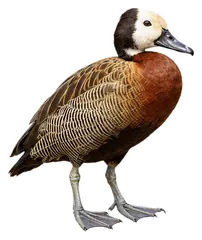 White-faced Whistling DuckDendrocygna viduata
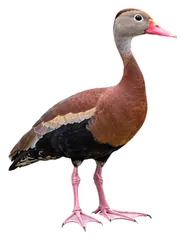 Black-bellied Whistling DuckDendrocygna autumnalis
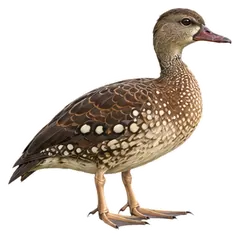 Spotted Whistling DuckDendrocygna guttata
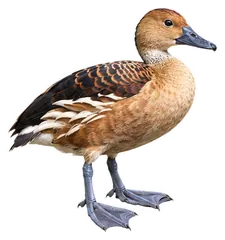 Fulvous Whistling DuckDendrocygna bicolor
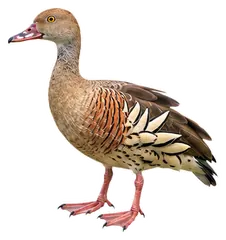 Plumed Whistling DuckDendrocygna eytoni
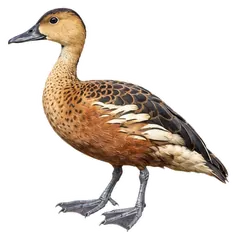 Wandering Whistling DuckDendrocygna arcuata
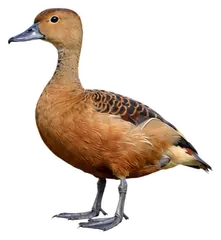 Lesser Whistling DuckDendrocygna javanica
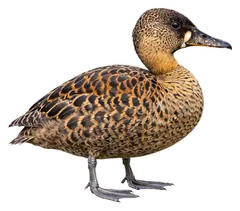 White-backed DuckThalassornis leuconotus
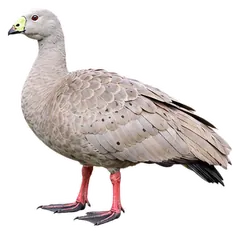 Cape Barren GooseCereopsis novaehollandiae
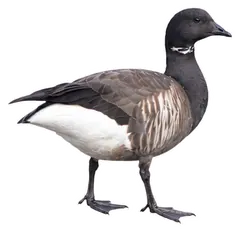 Brant GooseBranta bernicla
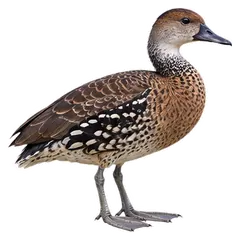
Download illustration
Free to use with credit: “Illustration: Bird Album (birdalbum.com)”. Drawn by AI from a reference photo by David Chernack. ↗
Heard it but can't see it? Mingji identifies birds by sound and photo, on your phone.
In other languages
- EnglishWest Indian Whistling Duck
- 简体中文西印度树鸭
- 繁體中文黑嘴樹鴨
- 日本語ハシグロリュウキュウガモ
- DeutschKubapfeifgans
- FrançaisDendrocygne des Antilles
- EspañolSuirirí yaguaza
- Portuguêsmarreca-das-antilhas
- ItalianoDendrocigna delle Indie Occidentali
- NederlandsWest-Indische Fluiteend
- РусскийКубинская древесная утка
- Svenskakaribvisseland
- DanskCubatræand
- Polskidrzewica karaibska