 Bird Album
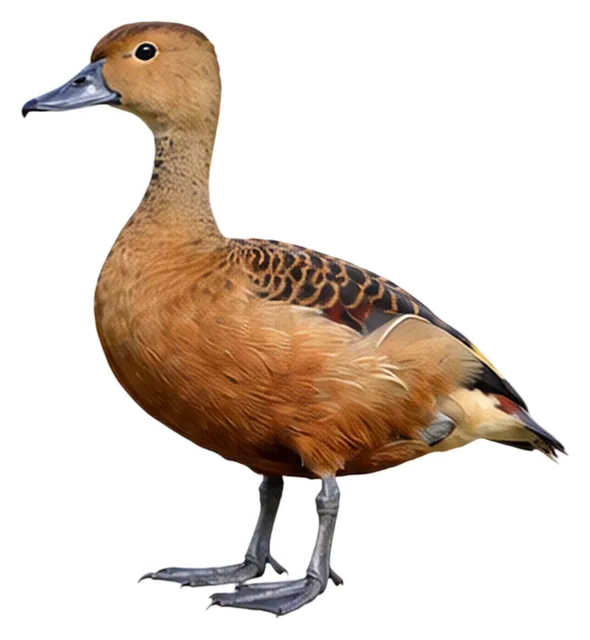
Lesser Whistling Duck
Dendrocygna javanica (Horsfield, 1821)
≈36 cmLength520 gWeight
This chestnut-brown, long-necked duck rests in flocks by the water during the day, forages at night and gives conspicuous whistles in flight.
Busiest months: December–February · Most records: India, Sri Lanka, Thailand
How to identify
Field marks
- Uppertail-coverts chestnut
- Eye-ring orange to yellow
- Crown appears darker
- Head held below the body in straight flight
Male, female and young
Sexes similar in plumage; chicks mainly black with a white supercilium and white patches.
Voice
Loud, two-syllable call with a harsh, wheezing quality; conspicuous whistles in flight.
Where and when it's recorded

Lesser Whistling Duck has been recorded at 562 of the 8,171 birding hotspots we track, in 20 countries and regions.
Records by month Northern Hemisphere
Where it's recorded most
- Changaram Wetlands – EzhupunnaIndia5,498 records
- Bharatpur – Keoladeo Ghana NPIndia2,880 records
- Baruipur MarshesIndia1,614 records
More places
- Kanha NP – Mukki ZoneIndia1,550 records
- Saul Kere / Sowl KereIndia1,498 records
- KattampallyIndia1,398 records
- Matara – Kirala Kele SanctuarySri Lanka1,242 records
- Thattekkad Bird SanctuaryIndia1,146 records
- Yala National ParkSri Lanka1,123 records
- PeralathvayalIndia987 records
Countries and regions with the most records
eBird records via GBIF up to 2024-12-31. A record means someone listed it; more records partly mean more birders, not more birds.
About
The lesser whistling duck (Dendrocygna javanica), also known as Indian whistling duck or lesser whistling teal, is a species of whistling duck that breeds in the Indian subcontinent and Southeast Asia. They are nocturnal feeders that during the day may be found in flocks around lakes and wet paddy fields. They can perch on trees and sometimes build their nest in the hollow of a tree.
Excerpt from Wikipedia, CC BY-SA 4.0 · authors · Read more on Wikipedia
Questions
How big is the Lesser Whistling Duck?
The Lesser Whistling Duck is about ≈36 cm long and weighs around 520 g.
Where does the Lesser Whistling Duck live?
Its breeding range: Oriental: Pakistan to southeastern China and Greater Sundas. It is most often recorded in India, Sri Lanka and Thailand.
When is the best time to see the Lesser Whistling Duck?
At the hotspots we track, it is recorded most in January, February and December (Northern Hemisphere).
Is the Lesser Whistling Duck endangered?
The IUCN Red List classifies the Lesser Whistling Duck as Least Concern.
What does the Lesser Whistling Duck eat?
Main food: Aquatic plants.
What family is the Lesser Whistling Duck in?
It belongs to the family Ducks, Geese, Swans (Anatidae), order Anseriformes.
At a glance
- Length
- ≈36 cm
- Weight
- 520 g
- Habitat
- Wetland
- Diet
- Aquatic plants
- Lifestyle
- On the water surface
- Migration
- Partial migrant
- Conservation
- Least Concern
More measurements
- Wing
- 194 mm
- Tail
- 51 mm
- Bill
- 44 mm
- Tarsus
- 42 mm
Averages from the AVONET dataset; length from field guides where available.
Range
Oriental: Pakistan to southeastern China and Greater Sundas
Breeding range, IOC World Bird List 15.2
Classification
- Order
- Anseriformes
- Family
- Ducks, Geese, Swans Anatidae
- Genus
- Dendrocygna
Other birds in the genus Dendrocygna
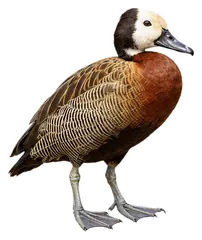 White-faced Whistling DuckDendrocygna viduata
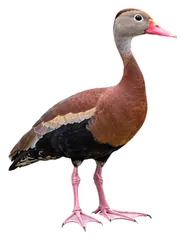 Black-bellied Whistling DuckDendrocygna autumnalis
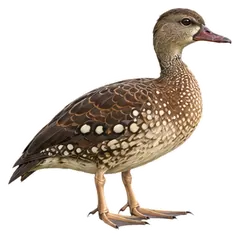 Spotted Whistling DuckDendrocygna guttata
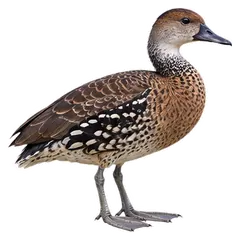 West Indian Whistling DuckDendrocygna arborea
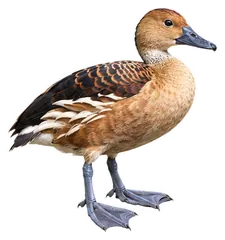 Fulvous Whistling DuckDendrocygna bicolor
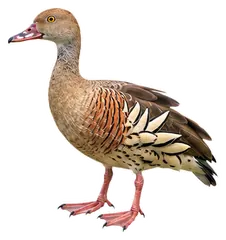 Plumed Whistling DuckDendrocygna eytoni
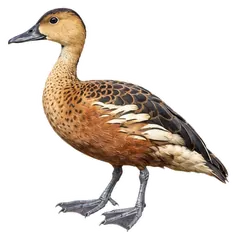 Wandering Whistling DuckDendrocygna arcuata
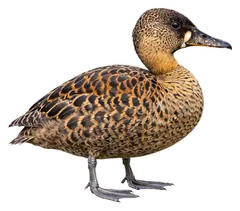 White-backed DuckThalassornis leuconotus
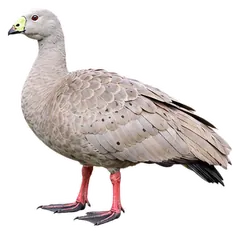 Cape Barren GooseCereopsis novaehollandiae
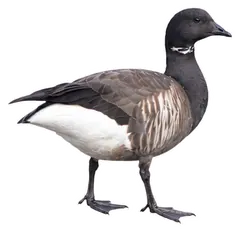 Brant GooseBranta bernicla
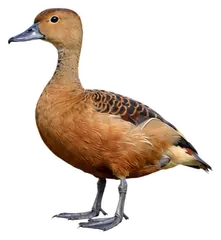
Download illustration
Free to use with credit: “Illustration: Bird Album (birdalbum.com)”. Drawn by AI from a reference photo by Peter Ericsson. ↗
Heard it but can't see it? Mingji identifies birds by sound and photo, on your phone.