 Bird Album
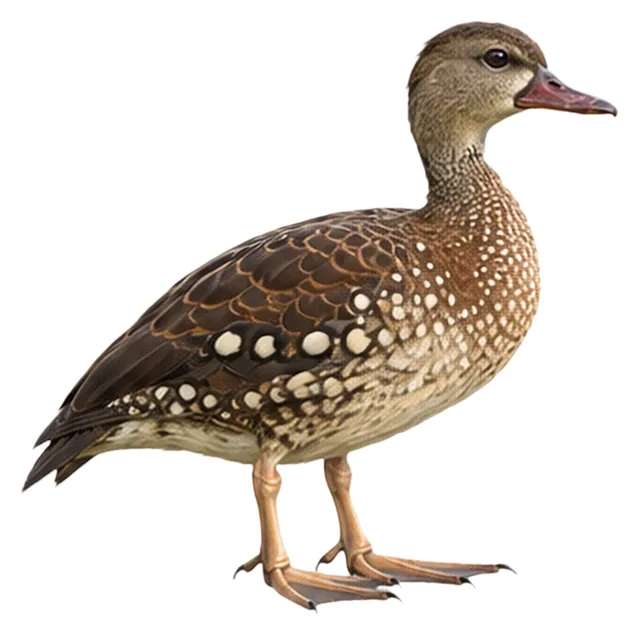
Spotted Whistling Duck
Dendrocygna guttata Schlegel, 1866
800 gWeight
The spotted whistling duck (Dendrocygna guttata) is a member of the duck family Anatidae.
Busiest months: November · Most records: Australia, Papua New Guinea, Indonesia
Where and when it's recorded

Spotted Whistling Duck has been recorded at 33 of the 8,171 birding hotspots we track, in 3 countries and regions.
Records by month Southern Hemisphere
Where it's recorded most
- Daintree Village Boat CruiseAustralia374 records
- Keatings Lagoon Conservation ParkAustralia327 records
- Pacific Adventist UniversityPapua New Guinea105 records
More places
- Cattana WetlandsAustralia85 records
- Townsville Town Common Conservation ParkAustralia43 records
- Leanyer PondsAustralia29 records
- Kulu RiverPapua New Guinea26 records
- Sorong MangrovesIndonesia22 records
- Cairns Botanical Gardens and Centenary LakesAustralia21 records
- Fly River – between Kiunga and Elevala RiverPapua New Guinea19 records
Countries and regions with the most records
eBird records via GBIF up to 2024-12-31. A record means someone listed it; more records partly mean more birders, not more birds.
About
The spotted whistling duck (Dendrocygna guttata) is a member of the duck family Anatidae. It is also referred to as the "spotted tree duck". This duck can be found in Indonesia, New Guinea, Australia and the Philippines.
Excerpt from Wikipedia, CC BY-SA 4.0 · authors · Read more on Wikipedia
Questions
How big is the Spotted Whistling Duck?
The Spotted Whistling Duck weighs around 800 g.
Where does the Spotted Whistling Duck live?
Its breeding range: Oriental, Australasia: Sulawesi region, northern, central Moluccas, New Guinea, northern Cape York Peninsula, northeastern Queensland (northeastern Australia), Umboi (west of New Britain) and New Britain (southeastern Bismarck Archipelago). It is most often recorded in Australia, Papua New Guinea and Indonesia.
When is the best time to see the Spotted Whistling Duck?
At the hotspots we track, it is recorded most in November (Southern Hemisphere).
Is the Spotted Whistling Duck endangered?
The IUCN Red List classifies the Spotted Whistling Duck as Least Concern.
What does the Spotted Whistling Duck eat?
Main food: Omnivore.
What family is the Spotted Whistling Duck in?
It belongs to the family Ducks, Geese, Swans (Anatidae), order Anseriformes.
At a glance
- Weight
- 800 g
- Habitat
- Wetland
- Diet
- Omnivore
- Lifestyle
- Active on the ground
- Migration
- Partial migrant
- Conservation
- Least Concern
More measurements
- Wing
- 207 mm
- Tail
- 59 mm
- Bill
- 44 mm
- Tarsus
- 44 mm
Averages from the AVONET dataset; length from field guides where available.
Range
Oriental, Australasia: Sulawesi region, northern, central Moluccas, New Guinea, northern Cape York Peninsula, northeastern Queensland (northeastern Australia), Umboi (west of New Britain) and New Britain (southeastern Bismarck Archipelago)
Breeding range, IOC World Bird List 15.2
Classification
- Order
- Anseriformes
- Family
- Ducks, Geese, Swans Anatidae
- Genus
- Dendrocygna
Other birds in the genus Dendrocygna
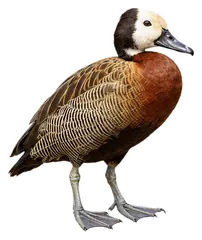 White-faced Whistling DuckDendrocygna viduata
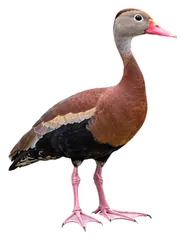 Black-bellied Whistling DuckDendrocygna autumnalis
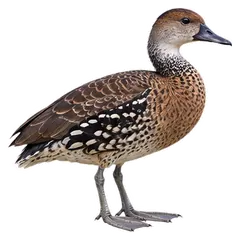 West Indian Whistling DuckDendrocygna arborea
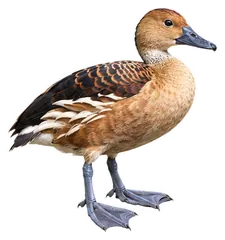 Fulvous Whistling DuckDendrocygna bicolor
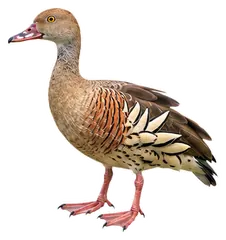 Plumed Whistling DuckDendrocygna eytoni
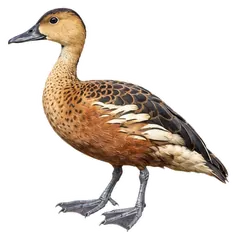 Wandering Whistling DuckDendrocygna arcuata
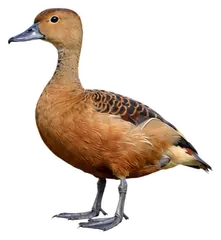 Lesser Whistling DuckDendrocygna javanica
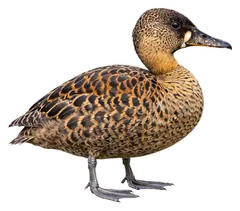 White-backed DuckThalassornis leuconotus
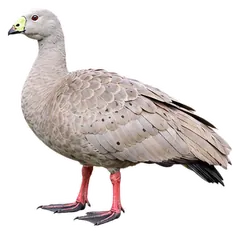 Cape Barren GooseCereopsis novaehollandiae
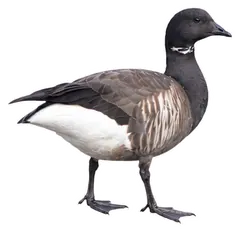 Brant GooseBranta bernicla
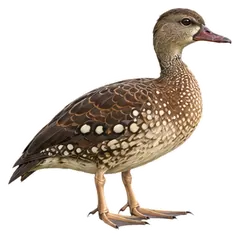
Download illustration
Free to use with credit: “Illustration: Bird Album (birdalbum.com)”. Drawn by AI from a reference photo by Markus Lilje. ↗
Heard it but can't see it? Mingji identifies birds by sound and photo, on your phone.
In other languages
- EnglishSpotted Whistling Duck
- 简体中文细斑树鸭
- 繁體中文細斑樹鴨
- 日本語シラボシリュウキュウガモ
- DeutschTüpfelpfeifgans
- FrançaisDendrocygne tacheté
- EspañolSuirirí moteado
- Portuguêsmarreca-malhada
- ItalianoDendrocigna macchiata
- NederlandsGevlekte Fluiteend
- РусскийПятнистая древесная утка
- Svenskafläckig visseland
- DanskPlettet Træand
- Polskidrzewica plamista