 Bird Album
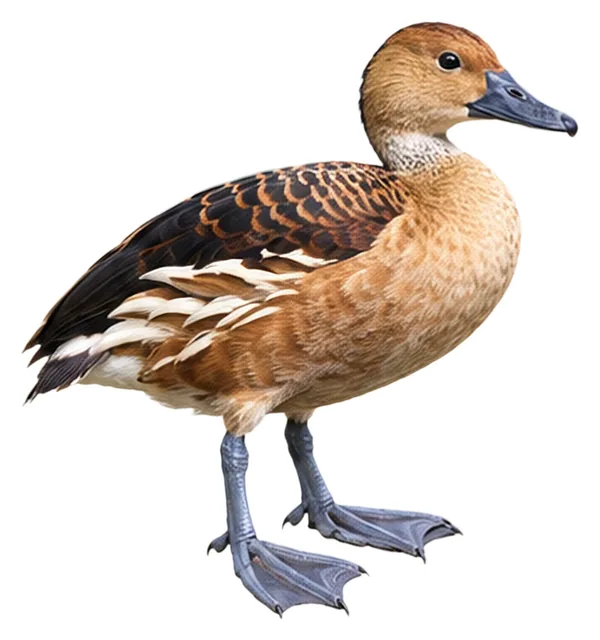
Fulvous Whistling Duck
Dendrocygna bicolor (Vieillot, 1816)
45–53 cmLength756 gWeight
Busiest months: April · Most records: United States, Argentina, Colombia
Where and when it's recorded

Fulvous Whistling Duck has been recorded at 716 of the 8,171 birding hotspots we track, in 73 countries and regions.
Records by month Northern Hemisphere
Where it's recorded most
- Lake Apopka Wildlife DriveUnited States9,642 records
- Estero Llano Grande SP WBCUnited States6,104 records
- Jocelyn Nungaray NWR (Anahuac)United States6,061 records
More places
- Reserva Ecológica Costanera SurArgentina3,298 records
- Jocelyn Nungaray NWR – Shoveler Pond LoopUnited States3,225 records
- Lake Apopka North Shore – Orange County sectionUnited States2,336 records
- Galveston – Lafitte's CoveUnited States1,942 records
- Santa Ana NWRUnited States1,932 records
- Stormwater Treatment Area 5/6United States1,621 records
- Tyrrell Park – Cattail MarshUnited States1,455 records
Countries and regions with the most records
eBird records via GBIF up to 2024-12-31. A record means someone listed it; more records partly mean more birders, not more birds.
About
The fulvous whistling duck or fulvous tree duck (Dendrocygna bicolor) is a species of whistling duck that breeds across the world's tropical regions in much of Mexico and South America, the West Indies, the southern United States, sub-Saharan Africa and the Indian subcontinent. It has plumage that is mainly reddish brown, long legs and a long grey bill, and shows a distinctive white band across its black tail in flight. Like other members of its ancient lineage, it has a whistling call which is given in flight or on the ground.
Excerpt from Wikipedia, CC BY-SA 4.0 · authors · Read more on Wikipedia
Questions
How big is the Fulvous Whistling Duck?
The Fulvous Whistling Duck is about 45–53 cm long and weighs around 756 g.
Where does the Fulvous Whistling Duck live?
Its breeding range: North America, Middle America, South America, Africa, Oriental: widespread. It is most often recorded in United States, Argentina and Colombia.
When is the best time to see the Fulvous Whistling Duck?
At the hotspots we track, it is recorded most in April (Northern Hemisphere).
Is the Fulvous Whistling Duck endangered?
The IUCN Red List classifies the Fulvous Whistling Duck as Least Concern.
What does the Fulvous Whistling Duck eat?
Main food: Omnivore.
What family is the Fulvous Whistling Duck in?
It belongs to the family Ducks, Geese, Swans (Anatidae), order Anseriformes.
At a glance
- Length
- 45–53 cm
- Weight
- 756 g
- Habitat
- Wetland
- Diet
- Omnivore
- Lifestyle
- Active on the ground
- Migration
- Partial migrant
- Conservation
- Least Concern
More measurements
- Wing
- 223 mm
- Tail
- 63 mm
- Bill
- 51 mm
- Tarsus
- 50 mm
Averages from the AVONET dataset; length from field guides where available.
Range
North America, Middle America, South America, Africa, Oriental: widespread
Breeding range, IOC World Bird List 15.2
Classification
- Order
- Anseriformes
- Family
- Ducks, Geese, Swans Anatidae
- Genus
- Dendrocygna
Other birds in the genus Dendrocygna
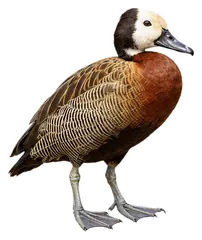 White-faced Whistling DuckDendrocygna viduata
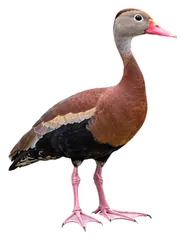 Black-bellied Whistling DuckDendrocygna autumnalis
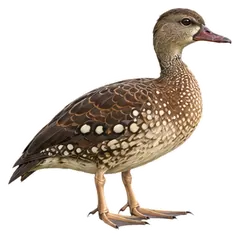 Spotted Whistling DuckDendrocygna guttata
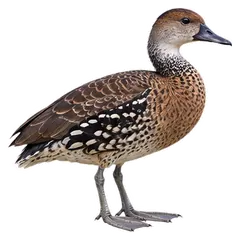 West Indian Whistling DuckDendrocygna arborea
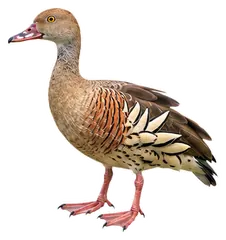 Plumed Whistling DuckDendrocygna eytoni
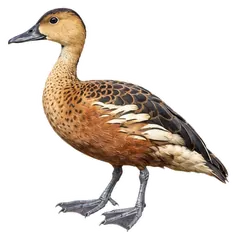 Wandering Whistling DuckDendrocygna arcuata
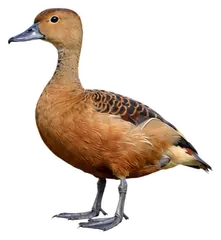 Lesser Whistling DuckDendrocygna javanica
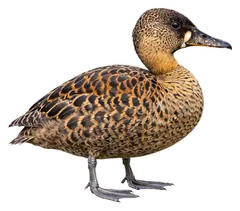 White-backed DuckThalassornis leuconotus
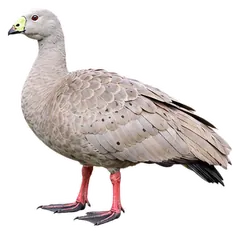 Cape Barren GooseCereopsis novaehollandiae
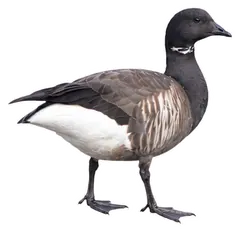 Brant GooseBranta bernicla
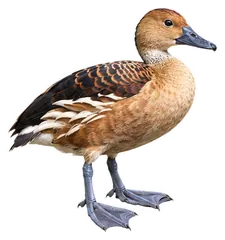
Download illustration
Free to use with credit: “Illustration: Bird Album (birdalbum.com)”. Drawn by AI from a reference photo by Tom Benson. ↗
Heard it but can't see it? Mingji identifies birds by sound and photo, on your phone.