 Bird Album
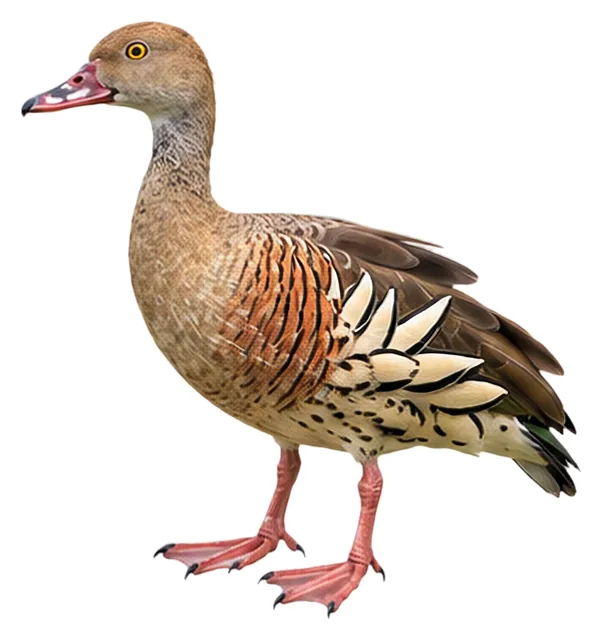
Plumed Whistling Duck
Dendrocygna eytoni (Eyton, 1838)
790 gWeight
The plumed whistling duck (Dendrocygna eytoni), also called the grass whistling duck, is a species of bird in the whistling duck subfamily of the family Anatidae.
Busiest months: July and September–October · Most records: Australia, Papua New Guinea, Norfolk Island
Where and when it's recorded

Plumed Whistling Duck has been recorded at 123 of the 8,171 birding hotspots we track, in 4 countries and regions.
Records by month Southern Hemisphere
Where it's recorded most
- Broome South Wastewater Treatment PlantAustralia2,604 records
- Hasties Swamp National ParkAustralia2,338 records
- Lake GalletlyAustralia1,616 records
More places
- Kakadu National Park – Yellow WaterAustralia1,158 records
- Bundaberg Botanical GardensAustralia1,025 records
- Hasties Swamp Bird HideAustralia864 records
- Finland Road, Paradise WatersAustralia826 records
- Tyto WetlandsAustralia801 records
- Carlyle Gardens Retirement Resort, TownsvilleAustralia700 records
- Fogg Dam Conservation ReserveAustralia505 records
Countries and regions with the most records
eBird records via GBIF up to 2024-12-31. A record means someone listed it; more records partly mean more birders, not more birds.
About
The plumed whistling duck (Dendrocygna eytoni), also called the grass whistling duck, is a species of bird in the whistling duck subfamily of the family Anatidae. It is resident and breeds in Australia, in a broad arc covering the northern half and most of the eastern third of the continent. There are also non-breeding and seasonally uncertain populations in New Zealand, the Solomon Islands, Indonesia and Papua New Guinea.
Excerpt from Wikipedia, CC BY-SA 4.0 · authors · Read more on Wikipedia
Questions
How big is the Plumed Whistling Duck?
The Plumed Whistling Duck weighs around 790 g.
Where does the Plumed Whistling Duck live?
Its breeding range: Australasia: Australia (except southwestern, south-central, Tasmania). It is most often recorded in Australia, Papua New Guinea and Norfolk Island.
When is the best time to see the Plumed Whistling Duck?
At the hotspots we track, it is recorded most in July, September and October (Southern Hemisphere).
Is the Plumed Whistling Duck endangered?
The IUCN Red List classifies the Plumed Whistling Duck as Least Concern.
What does the Plumed Whistling Duck eat?
Main food: Land plants.
What family is the Plumed Whistling Duck in?
It belongs to the family Ducks, Geese, Swans (Anatidae), order Anseriformes.
At a glance
- Weight
- 790 g
- Habitat
- Grassland
- Diet
- Land plants
- Lifestyle
- Active on the ground
- Migration
- Partial migrant
- Conservation
- Least Concern
More measurements
- Wing
- 232 mm
- Tail
- 68 mm
- Bill
- 42 mm
- Tarsus
- 55 mm
Averages from the AVONET dataset; length from field guides where available.
Range
Australasia: Australia (except southwestern, south-central, Tasmania)
Breeding range, IOC World Bird List 15.2
Classification
- Order
- Anseriformes
- Family
- Ducks, Geese, Swans Anatidae
- Genus
- Dendrocygna
Other birds in the genus Dendrocygna
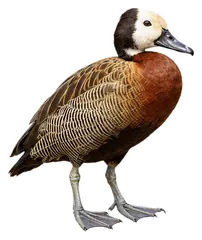 White-faced Whistling DuckDendrocygna viduata
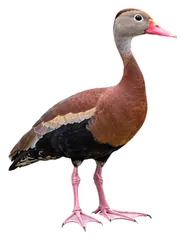 Black-bellied Whistling DuckDendrocygna autumnalis
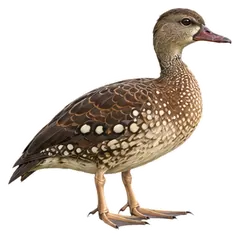 Spotted Whistling DuckDendrocygna guttata
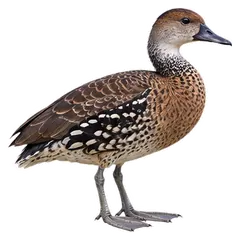 West Indian Whistling DuckDendrocygna arborea
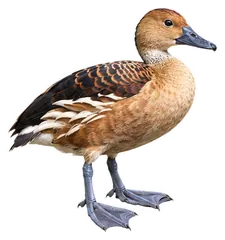 Fulvous Whistling DuckDendrocygna bicolor
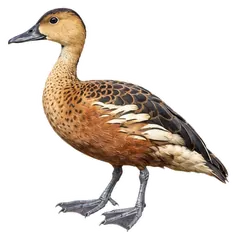 Wandering Whistling DuckDendrocygna arcuata
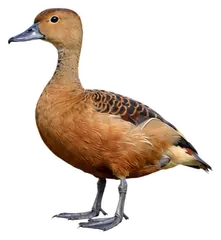 Lesser Whistling DuckDendrocygna javanica
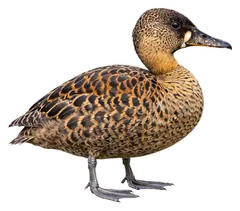 White-backed DuckThalassornis leuconotus
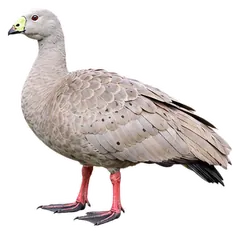 Cape Barren GooseCereopsis novaehollandiae
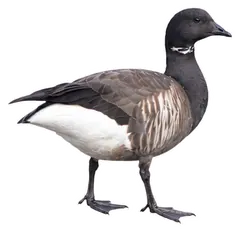 Brant GooseBranta bernicla
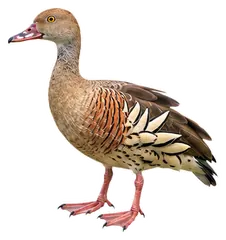
Download illustration
Free to use with credit: “Illustration: Bird Album (birdalbum.com)”. Drawn by AI from a reference photo by Gary Stone. ↗
Heard it but can't see it? Mingji identifies birds by sound and photo, on your phone.
In other languages
- EnglishPlumed Whistling Duck
- 简体中文尖羽树鸭
- 繁體中文尖羽樹鴨
- 日本語カザリリュウキュウガモ
- DeutschGelbfuß-Pfeifgans
- FrançaisDendrocygne d’Eyton
- EspañolSuirirí australiano
- Portuguêsmarreca-emplumada
- ItalianoDendrocigna falcata
- NederlandsAustralische Fluiteend
- РусскийРозовоногая древесная утка
- Svenskaplymvisseland
- DanskAustralsk Træand
- Polskidrzewica australijska