 Bird Album
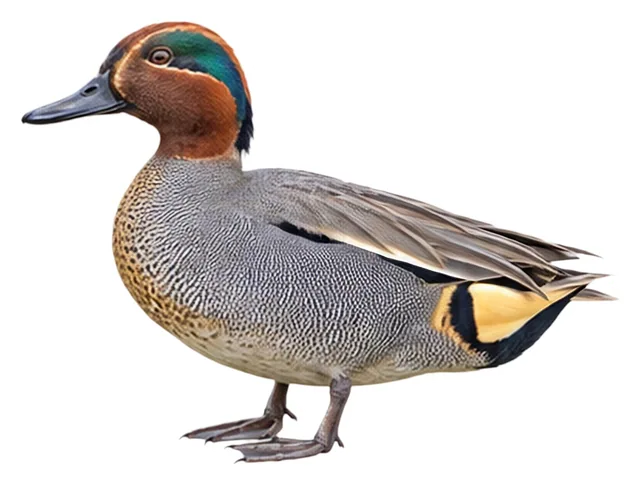
Eurasian Teal
Anas crecca Linnaeus, 1758
≈33 cmLength342 gWeight
This is a very small duck with a large green “comma” on the male’s face.
Busiest months: January, March–April and October–November · Most records: United States, Canada, United Kingdom
How to identify
Field marks
- Male has a green comma-shaped band from around the eye to the side of neck
- Speculum emerald-green
- Male has a conspicuous horizontal white band along the side when the wings are folded
- Male has creamy-yellow undertail-coverts edged with black
Male, female and young
Female brown overall, without the green comma, white line on the side or creamy-yellow rear, but still has an emerald-green speculum.
Where and when it's recorded
Busiest months: January, March–April and October–November · Most records: United States, Canada, United Kingdom

Eurasian Teal has been recorded at 3,434 of the 8,276 birding hotspots we track, in 146 countries and regions.
Records by month Northern Hemisphere
Where it's recorded most
- Estero Llano Grande SP WBCUnited States20,026 records
- Riparian Preserve at Gilbert Water RanchUnited States17,910 records
- Parker River NWRUnited States17,771 records
More places
- Sweetwater WetlandsUnited States15,181 records
- Reifel Bird SanctuaryCanada15,010 records
- Billy Frank Jr. Nisqually NWRUnited States13,423 records
- Union Bay Natural Area/Montlake FillUnited States12,465 records
- Edwin B. Forsythe NWRUnited States12,221 records
- Cape Island – South Cape May MeadowsUnited States12,145 records
- Bombay Hook National Wildlife RefugeUnited States11,356 records
Countries and regions with the most records
eBird records via GBIF up to 2024-12-31. A record means someone listed it; more records partly mean more birders, not more birds.
About
The Eurasian teal (Anas crecca), common teal, or Eurasian green-winged teal is a common and widespread duck that breeds in temperate Eurosiberia and migrates south in winter. The Eurasian teal is often called simply the teal due to being the only one of these small dabbling ducks in much of its range. The bird gives its name to the blue-green colour teal.
Excerpt from Wikipedia, CC BY-SA 4.0 · authors · Read more on Wikipedia
Questions
How big is the Eurasian Teal?
The Eurasian Teal is about ≈33 cm long and weighs around 342 g.
Where does the Eurasian Teal live?
Its breeding range: Palearctic, North America: northern, central Europe, Asia and Aleutian Islands. It is most often recorded in United States, Canada and United Kingdom.
When is the best time to see the Eurasian Teal?
At the hotspots we track, it is recorded most in January, March, April, October and November (Northern Hemisphere).
What does the Eurasian Teal eat?
Main food: Aquatic plants.
What family is the Eurasian Teal in?
It belongs to the family Ducks, Geese, Swans (Anatidae), order Anseriformes.
At a glance
- Length
- ≈33 cm
- Weight
- 342 g
- Habitat
- Wetland
- Diet
- Aquatic plants
- Lifestyle
- On the water surface
- Migration
- Partial migrant
More measurements
- Wing
- 179 mm
- Tail
- 62 mm
- Bill
- 36 mm
- Tarsus
- 26 mm
Averages from the AVONET dataset; length from field guides where available.
Range
Palearctic, North America: northern, central Europe, Asia and Aleutian Islands
Breeding range, IOC World Bird List 15.2
Classification
- Order
- Anseriformes
- Family
- Ducks, Geese, Swans Anatidae
- Genus
- Anas
Other birds in the genus Anas
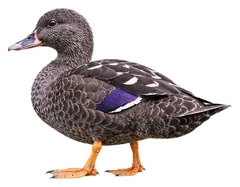 African Black DuckAnas sparsa
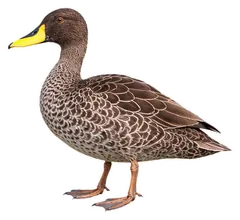 Yellow-billed DuckAnas undulata
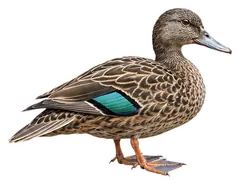 Meller's DuckAnas melleri
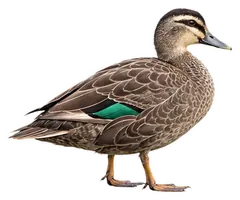 Pacific Black DuckAnas superciliosa
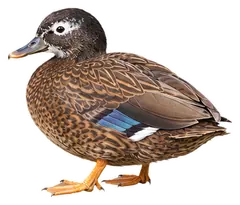 Laysan DuckAnas laysanensis
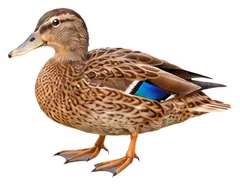 Hawaiian DuckAnas wyvilliana
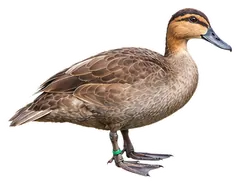 Philippine DuckAnas luzonica
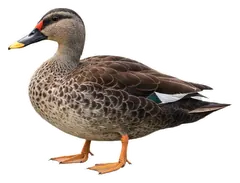 Indian Spot-billed DuckAnas poecilorhyncha
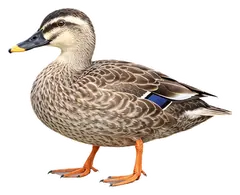 Eastern Spot-billed DuckAnas zonorhyncha
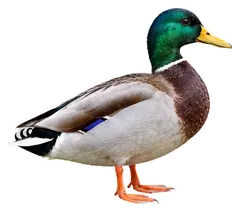 MallardAnas platyrhynchos
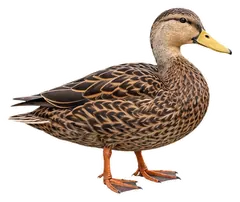 Mottled DuckAnas fulvigula
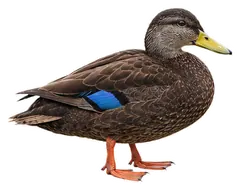 American Black DuckAnas rubripes
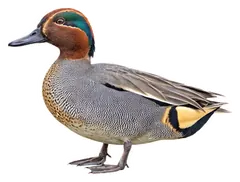
Download illustration
Free to use with credit: “Illustration: Bird Album (birdalbum.com)”. Drawn by AI from a reference photo by Charles J. Sharp. ↗

Heard it but can't see it? Mingji identifies birds by sound and photo, on your phone.