 Bird Album
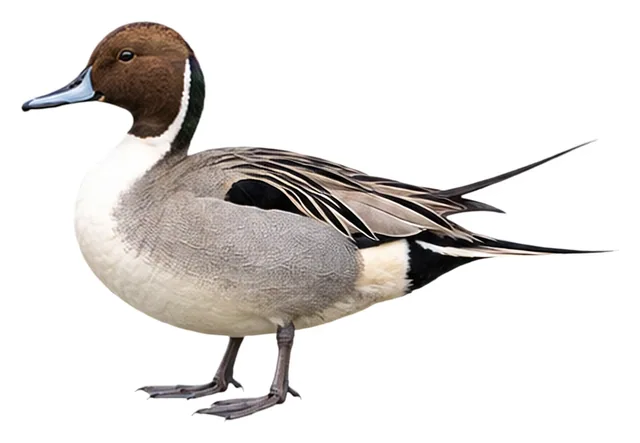
Northern Pintail
Anas acuta Linnaeus, 1758
59–76 cmLength90 cmWingspan945 gWeight
The male has slender, upturned tail feathers and a single white band on the side of neck, like a sword piercing the brown head.
Busiest months: January and November · Most records: United States, Canada, United Kingdom
Looks like Mallard
How to identify
Field marks
- Breeding male has a rufous-brown head, with a white stripe on side of neck extending toward rear of head
- Male has two extremely long, upturned central tail feathers
- Male wings gray, speculum greenish-bronze
- Female dull brown, with a slender, elongated body
Male, female and young
Female dull brown, with many black patches on upperparts and black spots on breast, much less conspicuous than male.
Voice
Male gives a soft “proop-proop” whistle; female gives descending quacking calls like those of Mallard.
Similar species
Where and when it's recorded
Busiest months: January and November · Most records: United States, Canada, United Kingdom

Northern Pintail has been recorded at 3,013 of the 8,276 birding hotspots we track, in 152 countries and regions.
Records by month Northern Hemisphere
Where it's recorded most
- Reifel Bird SanctuaryCanada16,270 records
- Billy Frank Jr. Nisqually NWRUnited States13,470 records
- Riparian Preserve at Gilbert Water RanchUnited States12,147 records
More places
- Parker River NWRUnited States11,278 records
- Edwin B. Forsythe NWRUnited States10,622 records
- Sweetwater WetlandsUnited States9,100 records
- Bombay Hook National Wildlife RefugeUnited States8,437 records
- St. Paul IslandUnited States7,665 records
- Estero Llano Grande SP WBCUnited States7,467 records
- Edwin B. Forsythe NWR – Wildlife DriveUnited States7,464 records
Countries and regions with the most records
eBird records via GBIF up to 2024-12-31. A record means someone listed it; more records partly mean more birders, not more birds.
About
The pintail or northern pintail (Anas acuta) is a duck species with wide geographic distribution that breeds in the northern areas of Europe and across the Palearctic and North America. It is migratory and winters south of its breeding range as far as the equator. Unusually for a bird with such a large range, it has no geographical subspecies, although the possibly conspecific duck Eaton's pintail is considered to be a separate species.
Excerpt from Wikipedia, CC BY-SA 4.0 · authors · Read more on Wikipedia
Questions
How big is the Northern Pintail?
The Northern Pintail is about 59–76 cm long, with a wingspan of 90 cm and weighs around 945 g.
Where does the Northern Pintail live?
Its breeding range: North America, Palearctic: widespread. It is most often recorded in United States, Canada and United Kingdom.
When is the best time to see the Northern Pintail?
At the hotspots we track, it is recorded most in January and November (Northern Hemisphere).
Is the Northern Pintail endangered?
The IUCN Red List classifies the Northern Pintail as Least Concern.
What does the Northern Pintail eat?
Main food: Aquatic plants.
What family is the Northern Pintail in?
It belongs to the family Ducks, Geese, Swans (Anatidae), order Anseriformes.
At a glance
- Length
- 59–76 cm
- Wingspan
- 90 cm
- Weight
- 945 g
- Habitat
- Wetland
- Diet
- Aquatic plants
- Lifestyle
- On the water surface
- Migration
- Migratory
- Conservation
- Least Concern
More measurements
- Wing
- 257 mm
- Tail
- 125 mm
- Bill
- 48 mm
- Tarsus
- 37 mm
Averages from the AVONET dataset; length from field guides where available.
Range
North America, Palearctic: widespread
Breeding range, IOC World Bird List 15.2
Classification
- Order
- Anseriformes
- Family
- Ducks, Geese, Swans Anatidae
- Genus
- Anas
Other birds in the genus Anas
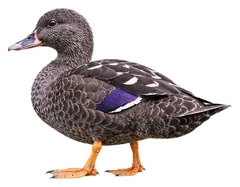 African Black DuckAnas sparsa
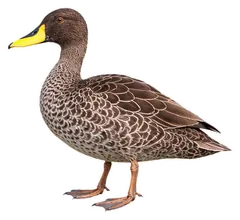 Yellow-billed DuckAnas undulata
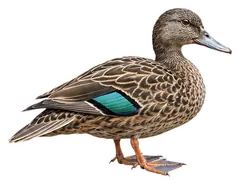 Meller's DuckAnas melleri
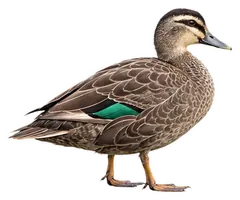 Pacific Black DuckAnas superciliosa
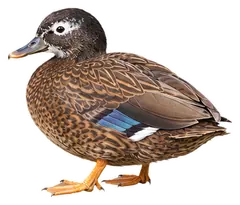 Laysan DuckAnas laysanensis
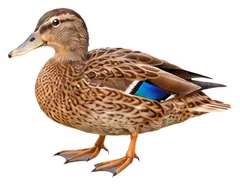 Hawaiian DuckAnas wyvilliana
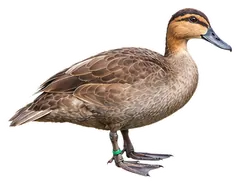 Philippine DuckAnas luzonica
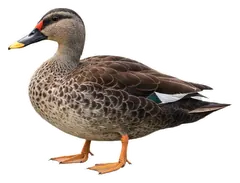 Indian Spot-billed DuckAnas poecilorhyncha
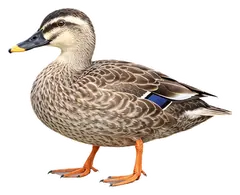 Eastern Spot-billed DuckAnas zonorhyncha
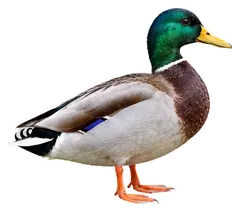 MallardAnas platyrhynchos
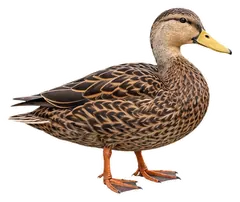 Mottled DuckAnas fulvigula
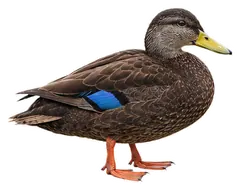 American Black DuckAnas rubripes
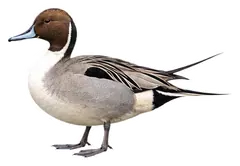
Download illustration
Free to use with credit: “Illustration: Bird Album (birdalbum.com)”. Drawn by AI from a reference photo by J.M.Garg. ↗

Heard it but can't see it? Mingji identifies birds by sound and photo, on your phone.