 Bird Album
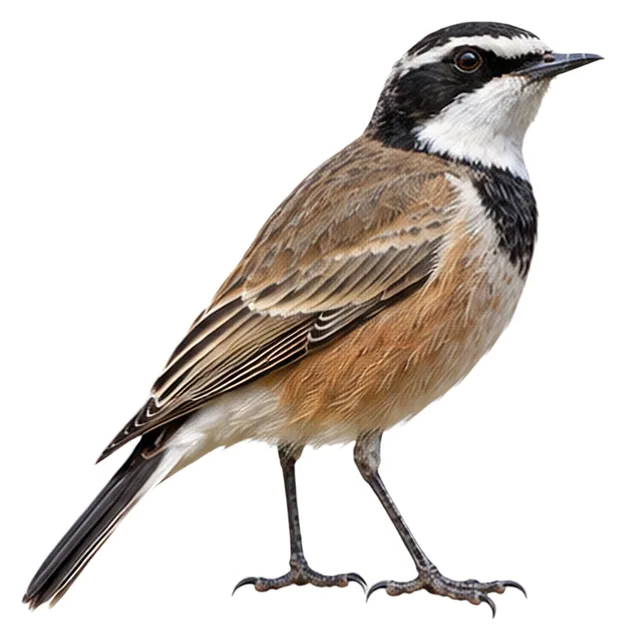
Capped Wheatear
Oenanthe pileata (Gmelin, JF, 1789)
17–18 cmLength27 gWeight
The capped wheatear (Oenanthe pileata) is a small insectivorous passerine bird that is widely distributed over southern Africa.
Busiest months: October–November · Most records: South Africa, Tanzania, Kenya
Where and when it's recorded

Capped Wheatear has been recorded at 180 of the 8,276 birding hotspots we track, in 13 countries and regions.
Records by month Southern Hemisphere
Where it's recorded most
- Ngorongoro Conservation Area – Ngorongoro CraterTanzania909 records
- De Hoop Nature ReserveSouth Africa437 records
- Engikaret Lark PlainsTanzania326 records
More places
- Rietvlei NRSouth Africa305 records
- Darling Hills/Groote Post RoadSouth Africa289 records
- Suikerbosrand NRSouth Africa278 records
- Serengeti NPTanzania254 records
- Marievale Bird SanctuarySouth Africa242 records
- Kliphoek Salt PansSouth Africa144 records
- Pilanesberg NPSouth Africa122 records
Countries and regions with the most records
eBird records via GBIF up to 2024-12-31. A record means someone listed it; more records partly mean more birders, not more birds.
About
The capped wheatear (Oenanthe pileata) is a small insectivorous passerine bird that is widely distributed over southern Africa. It was formerly classed as a member of the thrush family Turdidae, but is now placed in the Old World flycatcher family, Muscicapidae.
Excerpt from Wikipedia, CC BY-SA 4.0 · authors · Read more on Wikipedia
Questions
How big is the Capped Wheatear?
The Capped Wheatear is about 17–18 cm long and weighs around 27 g.
Where does the Capped Wheatear live?
Its breeding range: Africa: south-central, southern. It is most often recorded in South Africa, Tanzania and Kenya.
When is the best time to see the Capped Wheatear?
At the hotspots we track, it is recorded most in October and November (Southern Hemisphere).
Is the Capped Wheatear endangered?
The IUCN Red List classifies the Capped Wheatear as Least Concern.
What does the Capped Wheatear eat?
Main food: Insects & other invertebrates.
What family is the Capped Wheatear in?
It belongs to the family Chats, Old World Flycatchers (Muscicapidae), order Passerines (Passeriformes).
At a glance
- Length
- 17–18 cm
- Weight
- 27 g
- Habitat
- Grassland
- Diet
- Insects & other invertebrates
- Lifestyle
- Perches in trees
- Migration
- Partial migrant
- Conservation
- Least Concern
More measurements
- Wing
- 93 mm
- Tail
- 60 mm
- Bill
- 20 mm
- Tarsus
- 32 mm
Averages from the AVONET dataset; length from field guides where available.
Range
Africa: south-central, southern
Breeding range, IOC World Bird List 15.2
Classification
- Order
- Passerines Passeriformes
- Family
- Chats, Old World Flycatchers Muscicapidae
- Genus
- Oenanthe
Other birds in the genus Oenanthe
 Northern WheatearOenanthe oenanthe
 Atlas WheatearOenanthe seebohmi
 Buff-breasted WheatearOenanthe bottae
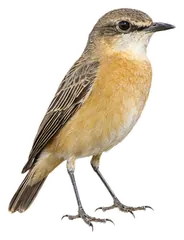 Rusty-breasted WheatearOenanthe frenata
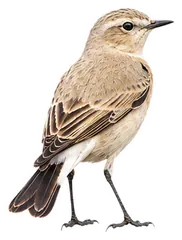 Isabelline WheatearOenanthe isabellina
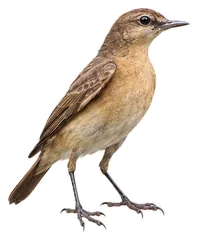 Heuglin's WheatearOenanthe heuglinii
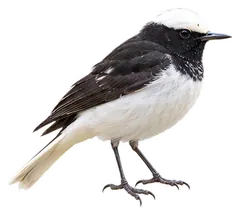 Hooded WheatearOenanthe monacha
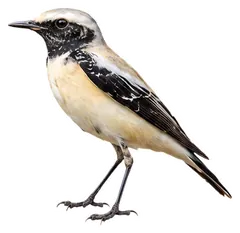 Desert WheatearOenanthe deserti
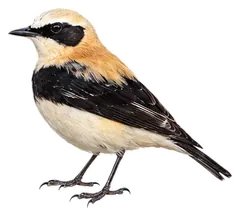 Western Black-eared WheatearOenanthe hispanica
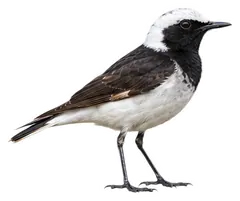 Pied WheatearOenanthe pleschanka
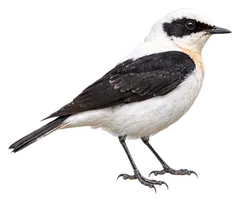 Eastern Black-eared WheatearOenanthe melanoleuca
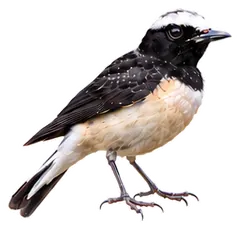 Cyprus WheatearOenanthe cypriaca
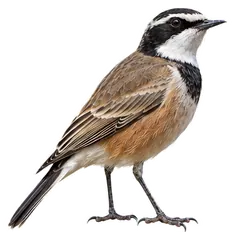
Download illustration
Free to use with credit: “Illustration: Bird Album (birdalbum.com)”. Drawn by AI from a reference photo by Derek Keats. ↗
Heard it but can't see it? Mingji identifies birds by sound and photo, on your phone.
In other languages
- EnglishCapped Wheatear
- 简体中文冕䳭
- 繁體中文冕䳭
- 日本語クロエリサバクヒタキ
- DeutschErdsteinschmätzer
- FrançaisTraquet du Cap
- EspañolCollalba capirotada
- Portuguêschasco-de-barrete-preto
- ItalianoMonachella pileata
- NederlandsAardtapuit
- РусскийЧерношапочная каменка
- Svenskasvartbröstad stenskvätta
- DanskSortbrystet Stenpikker
- Polskibiałorzytka obrożna