 Bird Album
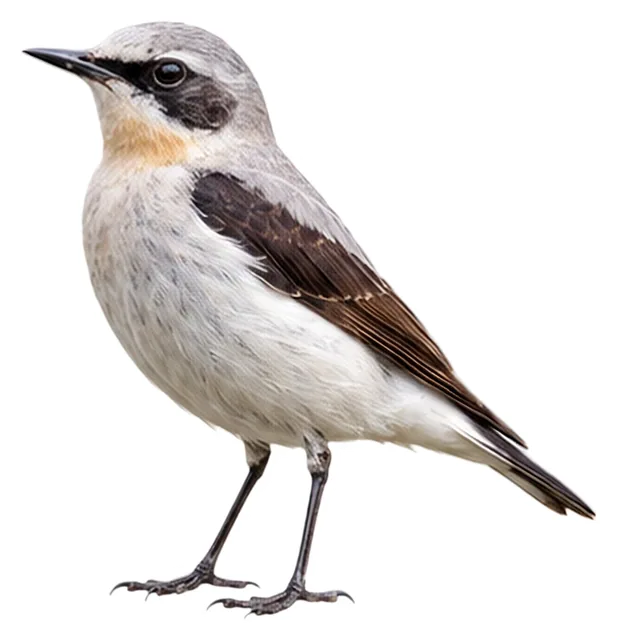
Northern Wheatear
Oenanthe oenanthe (Linnaeus, 1758)
14–16 cmLength28 cmWingspan25 gWeight
This small wheatear has a white rump and tail with a single black inverted T at the tail tip.
Busiest months: September · Most records: United Kingdom, Spain, Portugal
How to identify
Field marks
- Rump and tail white
- Tail tip with a black inverted T-shaped marking
- Summer male with gray upperparts and black wings and face mask
Male, female and young
Summer male with gray upperparts and black wings and face mask; female pale brown above and buff below; autumn male resembles the female but retains black wings.
Voice
A typical “chat chack”, also given in flight.
Where and when it's recorded

Northern Wheatear has been recorded at 1,590 of the 8,171 birding hotspots we track, in 121 countries and regions.
Records by month Northern Hemisphere
Where it's recorded most
- GambellUnited States2,186 records
- SkokholmUnited Kingdom1,434 records
- Spurn Bird Observatory Recording AreaUnited Kingdom1,393 records
More places
- Portland BillUnited Kingdom1,310 records
- St Mary'sUnited Kingdom1,280 records
- RivaTürkiye1,250 records
- Fair IsleUnited Kingdom1,204 records
- Azud de RiolobosSpain1,047 records
- Aberlady Bay LNRUnited Kingdom1,003 records
- Calf of ManIsle of Man980 records
Countries and regions with the most records
eBird records via GBIF up to 2024-12-31. A record means someone listed it; more records partly mean more birders, not more birds.
About
The northern wheatear or wheatear (Oenanthe oenanthe) is a small passerine bird in the Old World flycatcher family. It is the most widespread member of the wheatear genus Oenanthe in Europe and North and Central Asia. The northern wheatear is a migratory insectivorous species breeding in open stony country in Europe and east across the Palearctic with footholds in northeastern Canada and Greenland as well as in northwestern Canada and Alaska.
Excerpt from Wikipedia, CC BY-SA 4.0 · authors · Read more on Wikipedia
Questions
How big is the Northern Wheatear?
The Northern Wheatear is about 14–16 cm long, with a wingspan of 28 cm and weighs around 25 g.
Where does the Northern Wheatear live?
Its breeding range: Palearctic: widespread, also northern North America. It is most often recorded in United Kingdom, Spain and Portugal.
When is the best time to see the Northern Wheatear?
At the hotspots we track, it is recorded most in September (Northern Hemisphere).
Is the Northern Wheatear endangered?
The IUCN Red List classifies the Northern Wheatear as Least Concern.
What does the Northern Wheatear eat?
Main food: Insects & other invertebrates.
What family is the Northern Wheatear in?
It belongs to the family Chats, Old World Flycatchers (Muscicapidae), order Passerines (Passeriformes).
At a glance
- Length
- 14–16 cm
- Wingspan
- 28 cm
- Weight
- 25 g
- Habitat
- Grassland
- Diet
- Insects & other invertebrates
- Lifestyle
- Perches in trees
- Migration
- Migratory
- Conservation
- Least Concern
More measurements
- Wing
- 95 mm
- Tail
- 57 mm
- Bill
- 18 mm
- Tarsus
- 27 mm
Averages from the AVONET dataset; length from field guides where available.
Range
Palearctic: widespread, also northern North America
Breeding range, IOC World Bird List 15.2
Subspecies · 1
- Oenanthe oenanthe libanotica s Europe through the Middle East and sw Asia to Mongolia and nw China | non-breeding: n Africa and sw Asia
Classification
- Order
- Passerines Passeriformes
- Family
- Chats, Old World Flycatchers Muscicapidae
- Genus
- Oenanthe
Other birds in the genus Oenanthe
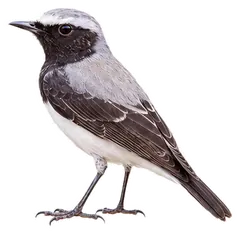 Atlas WheatearOenanthe seebohmi
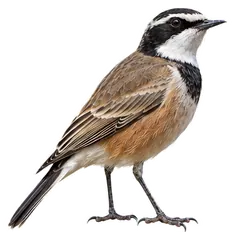 Capped WheatearOenanthe pileata
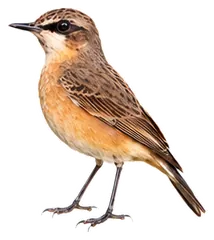 Buff-breasted WheatearOenanthe bottae
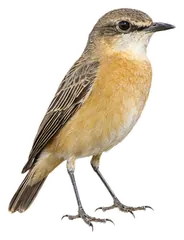 Rusty-breasted WheatearOenanthe frenata
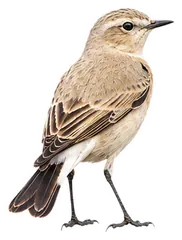 Isabelline WheatearOenanthe isabellina
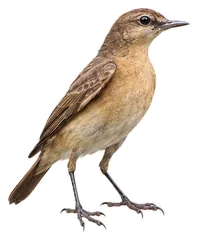 Heuglin's WheatearOenanthe heuglinii
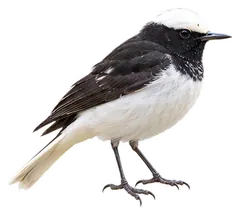 Hooded WheatearOenanthe monacha
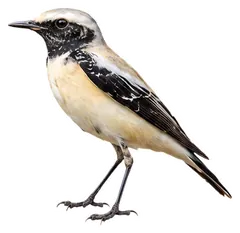 Desert WheatearOenanthe deserti
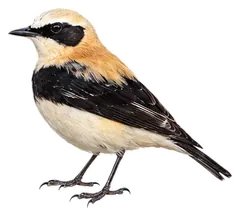 Western Black-eared WheatearOenanthe hispanica
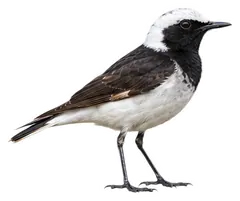 Pied WheatearOenanthe pleschanka
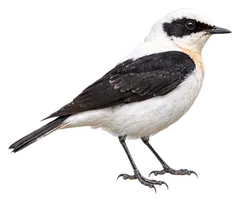 Eastern Black-eared WheatearOenanthe melanoleuca
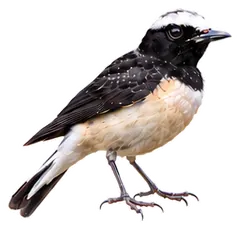 Cyprus WheatearOenanthe cypriaca
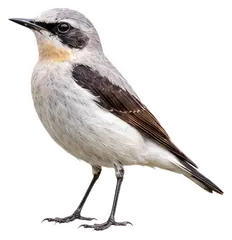
Download illustration
Free to use with credit: “Illustration: Bird Album (birdalbum.com)”. Drawn by AI from a reference photo by Andreas Trepte. ↗

Heard it but can't see it? Mingji identifies birds by sound and photo, on your phone.