 Bird Album
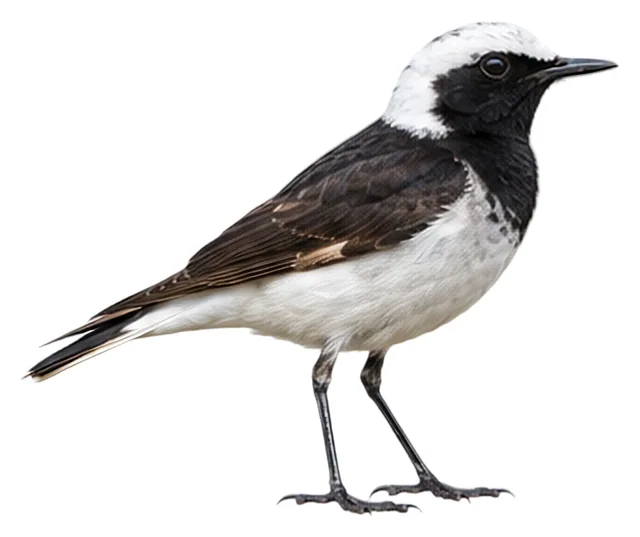
Pied Wheatear
Oenanthe pleschanka (Lepechin, 1770)
≈16 cmLength19 gWeight
The male is sharply black and white, with a white crown, black face and throat, and a white rump.
Busiest months: March · Most records: United Arab Emirates, Kenya, Ethiopia
Looks like Northern Wheatear
How to identify
Field marks
- Male crown white with a slight brown tinge
- Male black from the face and throat to the upper breast
- Rump creamy white
- Tail feathers white, with black markings forming an inverted T
Male, female and young
Female browner, with a sandy-yellow wash on the head; juvenile resembles the female, with pale feather centers giving the upperparts a spotted appearance.
Voice
A harsh “zack zack”; male song low and melodious.
Similar species
Where and when it's recorded

Pied Wheatear has been recorded at 361 of the 8,171 birding hotspots we track, in 48 countries and regions.
Records by month Northern Hemisphere
Where it's recorded most
- Abu Dhabi Golf and Equestrian ClubUnited Arab Emirates471 records
- Wamm FarmsUnited Arab Emirates454 records
- Kaliakra CapeBulgaria371 records
More places
- Al Jahra Reserve (Restricted access)Kuwait343 records
- Private estate near Green MubazzarahUnited Arab Emirates317 records
- Nairobi NPKenya285 records
- Irakhiya FarmQatar256 records
- Mushrif Palace GardensUnited Arab Emirates244 records
- Green MubazzarahUnited Arab Emirates235 records
- Abraq Al-HabariKuwait212 records
Countries and regions with the most records
eBird records via GBIF up to 2024-12-31. A record means someone listed it; more records partly mean more birders, not more birds.
About
The pied wheatear (Oenanthe pleschanka) is a wheatear, a small insectivorous passerine bird that was formerly classed as a member of the thrush family Turdidae, but is now more generally considered to be an Old World flycatcher (family Muscicapidae). This migratory central Asiatic wheatear occurs from the extreme southeast of Europe to China, and has been found wintering in India and northeastern Africa. It is a very rare vagrant to western Europe.
Excerpt from Wikipedia, CC BY-SA 4.0 · authors · Read more on Wikipedia
Questions
How big is the Pied Wheatear?
The Pied Wheatear is about ≈16 cm long and weighs around 19 g.
Where does the Pied Wheatear live?
Its breeding range: Palearctic: Romania and Ukraine to south-central Russia, Mongolia and central China. It is most often recorded in United Arab Emirates, Kenya and Ethiopia.
When is the best time to see the Pied Wheatear?
At the hotspots we track, it is recorded most in March (Northern Hemisphere).
Is the Pied Wheatear endangered?
The IUCN Red List classifies the Pied Wheatear as Least Concern.
What does the Pied Wheatear eat?
Main food: Insects & other invertebrates.
What family is the Pied Wheatear in?
It belongs to the family Chats, Old World Flycatchers (Muscicapidae), order Passerines (Passeriformes).
At a glance
- Length
- ≈16 cm
- Weight
- 19 g
- Habitat
- Rocky terrain
- Diet
- Insects & other invertebrates
- Lifestyle
- Perches in trees
- Migration
- Migratory
- Conservation
- Least Concern
More measurements
- Wing
- 93 mm
- Tail
- 60 mm
- Bill
- 16 mm
- Tarsus
- 23 mm
Averages from the AVONET dataset; length from field guides where available.
Range
Palearctic: Romania and Ukraine to south-central Russia, Mongolia and central China
Breeding range, IOC World Bird List 15.2
Classification
- Order
- Passerines Passeriformes
- Family
- Chats, Old World Flycatchers Muscicapidae
- Genus
- Oenanthe
Other birds in the genus Oenanthe
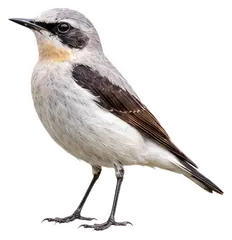 Northern WheatearOenanthe oenanthe
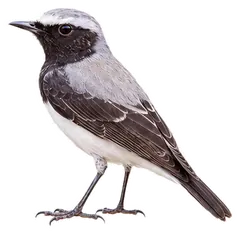 Atlas WheatearOenanthe seebohmi
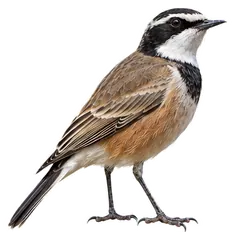 Capped WheatearOenanthe pileata
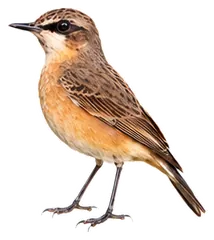 Buff-breasted WheatearOenanthe bottae
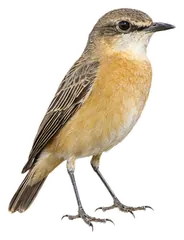 Rusty-breasted WheatearOenanthe frenata
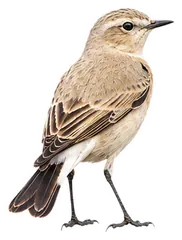 Isabelline WheatearOenanthe isabellina
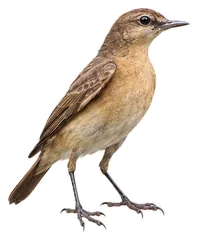 Heuglin's WheatearOenanthe heuglinii
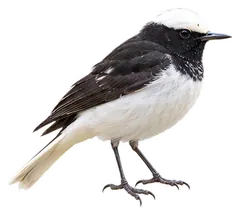 Hooded WheatearOenanthe monacha
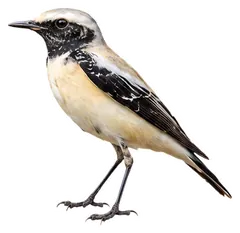 Desert WheatearOenanthe deserti
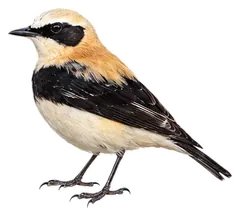 Western Black-eared WheatearOenanthe hispanica
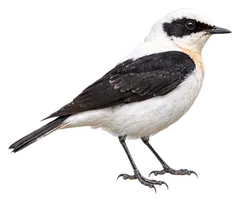 Eastern Black-eared WheatearOenanthe melanoleuca
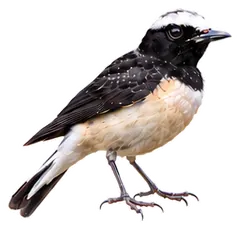 Cyprus WheatearOenanthe cypriaca
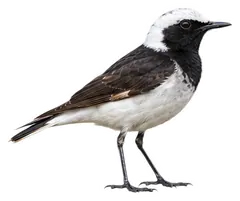
Download illustration
Free to use with credit: “Illustration: Bird Album (birdalbum.com)”. Drawn by AI from a reference photo by Ron Knight. ↗

Heard it but can't see it? Mingji identifies birds by sound and photo, on your phone.