 Bird Album
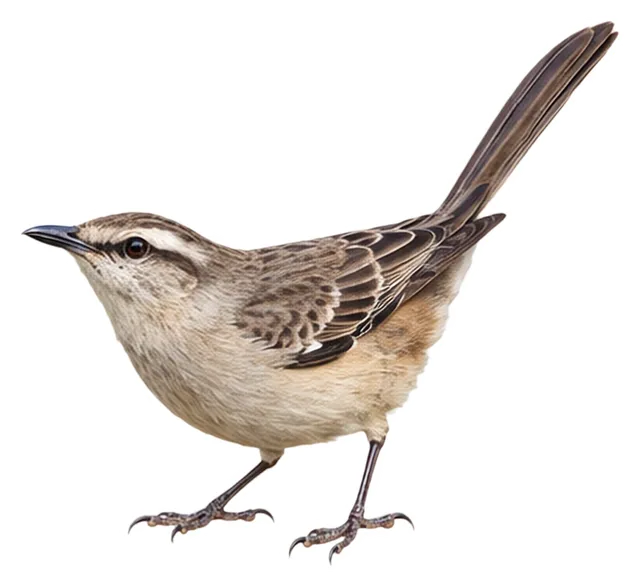
Chalk-browed Mockingbird
Mimus saturninus (Lichtenstein, MHC, 1823)
24–26 cmLength64 gWeight
The chalk-browed mockingbird (Mimus saturninus) is a bird in the family Mimidae.
Busiest months: October · Most records: Argentina, Brazil, Uruguay
Where and when it's recorded

Chalk-browed Mockingbird has been recorded at 285 of the 8,276 birding hotspots we track, in 5 countries and regions.
Records by month Southern Hemisphere
Where it's recorded most
- Reserva Ecológica Costanera SurArgentina11,688 records
- Reserva Ecológica Ciudad Universitaria - Costanera NorteArgentina2,302 records
- Rio Claro – Campus da UNESPBrazil1,366 records
More places
- Reserva Ecológica de Vicente LópezArgentina1,160 records
- Reserva Ribera NorteArgentina1,030 records
- Parque FinkyArgentina997 records
- Lago de RegatasArgentina967 records
- Poconé – Pousada PiuvalBrazil939 records
- PN Chapada dos Guimarães – Pousada do ParqueBrazil923 records
- Paso Centurión – ÁreaUruguay902 records
Countries and regions with the most records
eBird records via GBIF up to 2024-12-31. A record means someone listed it; more records partly mean more birders, not more birds.
About
The chalk-browed mockingbird (Mimus saturninus) is a bird in the family Mimidae. It is found in Brazil, Bolivia, Argentina, Paraguay, Suriname, and Uruguay.
Excerpt from Wikipedia, CC BY-SA 4.0 · authors · Read more on Wikipedia
Questions
How big is the Chalk-browed Mockingbird?
The Chalk-browed Mockingbird is about 24–26 cm long and weighs around 64 g.
Where does the Chalk-browed Mockingbird live?
Its breeding range: South America: Amazonia and southeastern. It is most often recorded in Argentina, Brazil and Uruguay.
When is the best time to see the Chalk-browed Mockingbird?
At the hotspots we track, it is recorded most in October (Southern Hemisphere).
Is the Chalk-browed Mockingbird endangered?
The IUCN Red List classifies the Chalk-browed Mockingbird as Least Concern.
What does the Chalk-browed Mockingbird eat?
Main food: Omnivore.
What family is the Chalk-browed Mockingbird in?
It belongs to the family Mockingbirds, Thrashers (Mimidae), order Passerines (Passeriformes).
At a glance
- Length
- 24–26 cm
- Weight
- 64 g
- Habitat
- Shrubland
- Diet
- Omnivore
- Lifestyle
- Active on the ground
- Migration
- Partial migrant
- Conservation
- Least Concern
More measurements
- Wing
- 115 mm
- Tail
- 123 mm
- Bill
- 25 mm
- Tarsus
- 34 mm
Averages from the AVONET dataset; length from field guides where available.
Range
South America: Amazonia and southeastern
Breeding range, IOC World Bird List 15.2
Classification
- Order
- Passerines Passeriformes
- Family
- Mockingbirds, Thrashers Mimidae
- Genus
- Mimus
Other birds in the genus Mimus
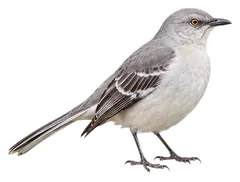 Northern MockingbirdMimus polyglottos
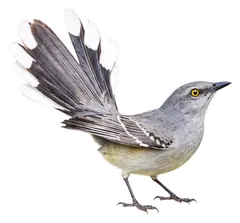 Tropical MockingbirdMimus gilvus
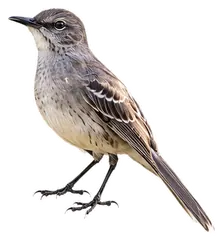 Bahama MockingbirdMimus gundlachii
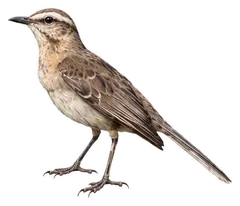 Chilean MockingbirdMimus thenca
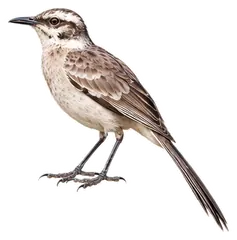 Long-tailed MockingbirdMimus longicaudatus
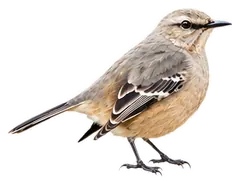 Patagonian MockingbirdMimus patagonicus
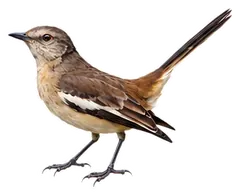 White-banded MockingbirdMimus triurus
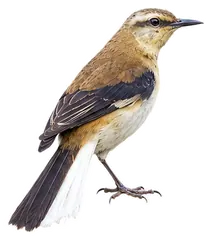 Brown-backed MockingbirdMimus dorsalis
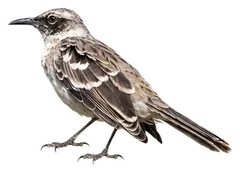 Galapagos MockingbirdMimus parvulus
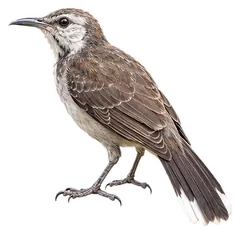 Floreana MockingbirdMimus trifasciatus
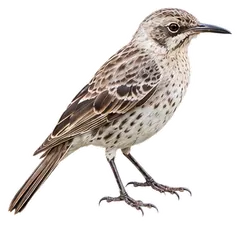 Espanola MockingbirdMimus macdonaldi
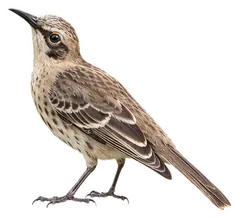 San Cristobal MockingbirdMimus melanotis
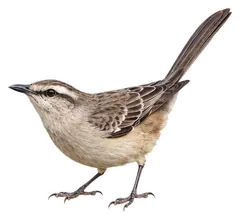
Download illustration
Free to use with credit: “Illustration: Bird Album (birdalbum.com)”. Drawn by AI from a reference photo by Quentin Vandemoortele. ↗
Heard it but can't see it? Mingji identifies birds by sound and photo, on your phone.
In other languages
- EnglishChalk-browed Mockingbird
- 简体中文淡褐小嘲鸫
- 繁體中文淡褐小嘲鶇
- 日本語マミジロマネシツグミ
- DeutschCamposspottdrossel
- FrançaisMoqueur plombé
- EspañolSinsonte calandria
- Portuguêssabiá-do-campo
- ItalianoMimo cigliabianche
- NederlandsCampospotlijster
- РусскийБелобровый пересмешник
- Svenskacamposhärmtrast
- DanskCampos Spottedrossel
- Polskiprzedrzeźniacz białobrewy