 Bird Album
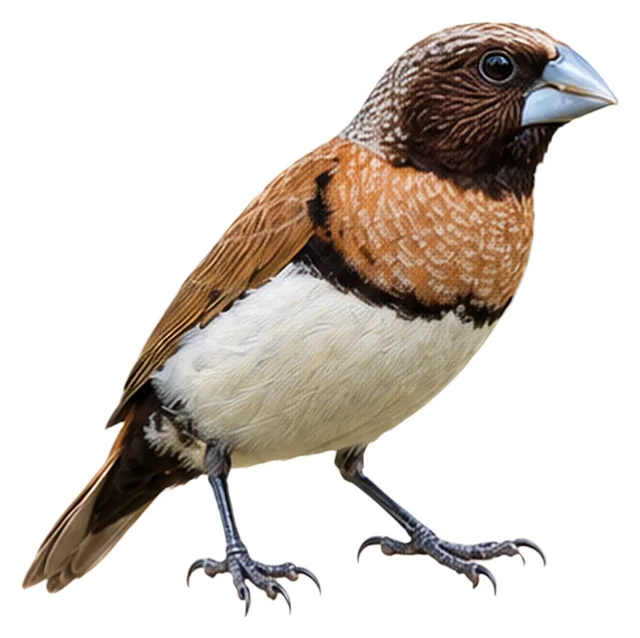
Chestnut-breasted Mannikin
Lonchura castaneothorax (Gould, 1837)
14 gWeight
The chestnut-breasted mannikin (Lonchura castaneothorax), also known as the chestnut-breasted munia or bully bird (in Australia), is a small brown-backed munia with a black face and greyish crown and nape.
Busiest months: October–January · Most records: Australia, French Polynesia, Papua New Guinea
Where and when it's recorded

Chestnut-breasted Mannikin has been recorded at 132 of the 8,171 birding hotspots we track, in 6 countries and regions.
Records by month Southern Hemisphere
Where it's recorded most
- Sandy Camp Road WetlandsAustralia2,438 records
- Oxley Creek CommonAustralia2,239 records
- Townsville Town Common Conservation ParkAustralia1,384 records
More places
- Lake Samsonvale – Golds Scrub LaneAustralia1,263 records
- Kingfisher Park Birdwatchers LodgeAustralia1,213 records
- Muirhead bushlandAustralia1,102 records
- Hasties Swamp National ParkAustralia1,000 records
- Kedron Brook Wetlands ReserveAustralia973 records
- Tyto WetlandsAustralia770 records
- Archerfield WetlandsAustralia645 records
Countries and regions with the most records
eBird records via GBIF up to 2024-12-31. A record means someone listed it; more records partly mean more birders, not more birds.
About
The chestnut-breasted mannikin (Lonchura castaneothorax), also known as the chestnut-breasted munia or bully bird (in Australia), is a small brown-backed munia with a black face and greyish crown and nape. It has a broad ferruginous breast bar above a white belly. The species' natural range includes Australia, Indonesia, and Papua New Guinea.
Excerpt from Wikipedia, CC BY-SA 4.0 · authors · Read more on Wikipedia
Questions
How big is the Chestnut-breasted Mannikin?
The Chestnut-breasted Mannikin weighs around 14 g.
Where does the Chestnut-breasted Mannikin live?
Its breeding range: Australasia: New Guinea and northwest to southeastern Australia. It is most often recorded in Australia, French Polynesia and Papua New Guinea.
When is the best time to see the Chestnut-breasted Mannikin?
At the hotspots we track, it is recorded most in January, October, November and December (Southern Hemisphere).
Is the Chestnut-breasted Mannikin endangered?
The IUCN Red List classifies the Chestnut-breasted Mannikin as Least Concern.
What does the Chestnut-breasted Mannikin eat?
Main food: Seeds.
What family is the Chestnut-breasted Mannikin in?
It belongs to the family Waxbills, Munias & Allies (Estrildidae), order Passerines (Passeriformes).
At a glance
- Weight
- 14 g
- Habitat
- Wetland
- Diet
- Seeds
- Lifestyle
- Varied
- Migration
- Resident (barely migrates)
- Conservation
- Least Concern
More measurements
- Wing
- 54 mm
- Tail
- 38 mm
- Bill
- 12 mm
- Tarsus
- 15 mm
Averages from the AVONET dataset; length from field guides where available.
Range
Australasia: New Guinea and northwest to southeastern Australia
Breeding range, IOC World Bird List 15.2
Classification
- Order
- Passerines Passeriformes
- Family
- Waxbills, Munias & Allies Estrildidae
- Genus
- Lonchura
Other birds in the genus Lonchura
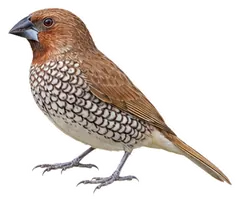 Scaly-breasted MuniaLonchura punctulata
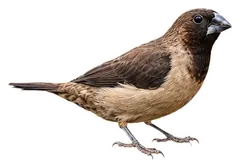 Black-throated MuniaLonchura kelaarti
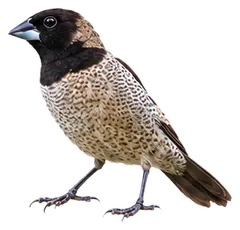 Black-faced MuniaLonchura molucca
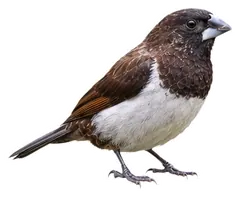 White-rumped MuniaLonchura striata
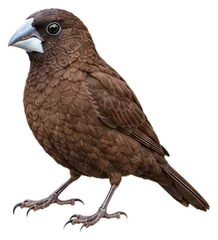 Dusky MuniaLonchura fuscans
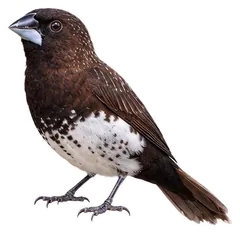 White-bellied MuniaLonchura leucogastra
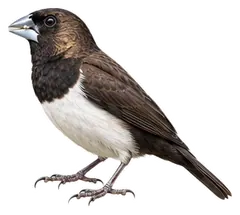 Javan MuniaLonchura leucogastroides
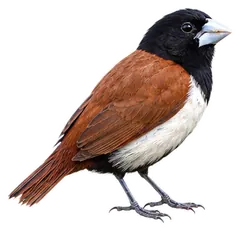 Tricolored MuniaLonchura malacca
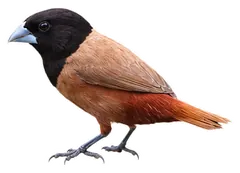 Chestnut MuniaLonchura atricapilla
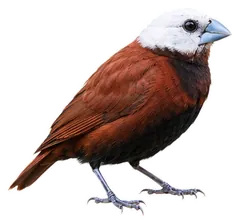 White-capped MuniaLonchura ferruginosa
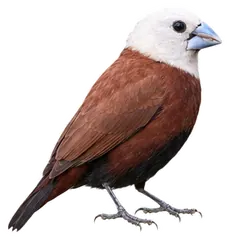 White-headed MuniaLonchura maja
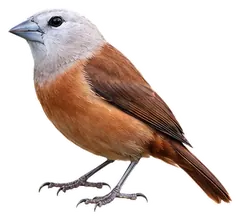 Pale-headed MuniaLonchura pallida
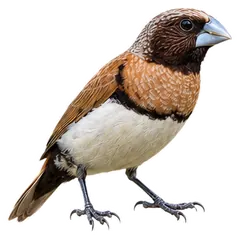
Download illustration
Free to use with credit: “Illustration: Bird Album (birdalbum.com)”. Drawn by AI from a reference photo by Kevin Yonando. ↗
Heard it but can't see it? Mingji identifies birds by sound and photo, on your phone.
In other languages
- EnglishChestnut-breasted Mannikin
- 简体中文栗胸文鸟
- 繁體中文栗胸文鳥
- 日本語シマコキン
- DeutschBraunbrustnonne
- FrançaisCapucin donacole
- EspañolCapuchino pechicastaño
- Portuguêscapuchinho-de-peito-castanho
- ItalianoMunia pettocastano
- NederlandsBruinborstrietvink
- РусскийКаштановогрудая муния
- Svenskabrunbröstad munia
- DanskBrunbrystet Sivfinke
- Polskimniszka przepasana