 Bird Album
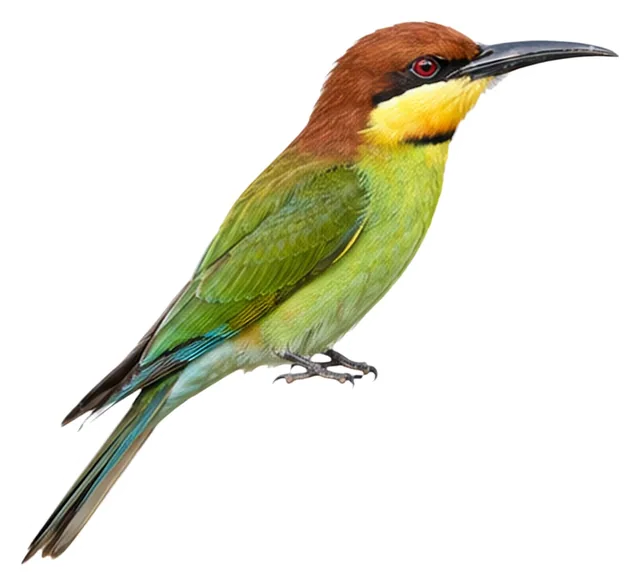
Chestnut-headed Bee-eater
Merops leschenaulti Vieillot, 1817
≈21 cmLength27 gWeight
It has a chestnut crown, yellow face and throat, a single black line through the eye, and a mainly green body.
Busiest months: February–March · Most records: India, Thailand, Sri Lanka
How to identify
Field marks
- Crown and nape dark chestnut
- Face and throat yellow, with black eyestripe
- Mainly green overall; rump and lower belly blue
- Bill slender, curved, and black
Male, female and young
Sexes similar; juvenile is duller, with green forehead and forecrown.
Where and when it's recorded

Chestnut-headed Bee-eater has been recorded at 434 of the 8,171 birding hotspots we track, in 13 countries and regions.
Records by month Northern Hemisphere
Where it's recorded most
- College of Veterinary and Animal Sciences, PookodeIndia1,135 records
- KalatangIndia834 records
- Salim Ali Centre for Ornithology and Natural HistoryIndia702 records
More places
- Khao Yai NPThailand676 records
- Kaeng Krachan NP – Baan Maka Nature LodgeThailand659 records
- Chidyatapu Biological ParkIndia635 records
- Thattekkad Bird SanctuaryIndia570 records
- Mahananda WLS – Rongtong and Shivakhola ForestIndia552 records
- Yala National ParkSri Lanka538 records
- Kaeng Krachan NPThailand516 records
Countries and regions with the most records
eBird records via GBIF up to 2024-12-31. A record means someone listed it; more records partly mean more birders, not more birds.
About
The chestnut-headed bee-eater (Merops leschenaulti), or bay-headed bee-eater, is a bird in the bee-eater family Meropidae. It breeds on the Indian subcontinent and adjoining regions, ranging from India, Bangladesh and Sri Lanka across Southeast Asia to Indonesia.
Excerpt from Wikipedia, CC BY-SA 4.0 · authors · Read more on Wikipedia
Questions
How big is the Chestnut-headed Bee-eater?
The Chestnut-headed Bee-eater is about ≈21 cm long and weighs around 27 g.
Where does the Chestnut-headed Bee-eater live?
Its breeding range: Oriental: Himalayas from northwestern India and southwestern India and Sri Lanka to Andaman Islands, southern China, Vietnam, and northern Malay Peninsula; disjunctly Java and Bali. It is most often recorded in India, Thailand and Sri Lanka.
When is the best time to see the Chestnut-headed Bee-eater?
At the hotspots we track, it is recorded most in February and March (Northern Hemisphere).
Is the Chestnut-headed Bee-eater endangered?
The IUCN Red List classifies the Chestnut-headed Bee-eater as Least Concern.
What does the Chestnut-headed Bee-eater eat?
Main food: Insects & other invertebrates.
What family is the Chestnut-headed Bee-eater in?
It belongs to the family Bee-eaters (Meropidae), order Coraciiformes.
At a glance
- Length
- ≈21 cm
- Weight
- 27 g
- Habitat
- Woodland
- Diet
- Insects & other invertebrates
- Lifestyle
- Perches in trees
- Migration
- Resident (barely migrates)
- Conservation
- Least Concern
More measurements
- Wing
- 106 mm
- Tail
- 80 mm
- Bill
- 38 mm
- Tarsus
- 11 mm
Averages from the AVONET dataset; length from field guides where available.
Range
Oriental: Himalayas from northwestern India and southwestern India and Sri Lanka to Andaman Islands, southern China, Vietnam, and northern Malay Peninsula; disjunctly Java and Bali
Breeding range, IOC World Bird List 15.2
Subspecies · 1
- Merops leschenaulti leschenaulti India and Sri Lanka to sc China, Indochina and Malay Pen.
Classification
- Order
- Coraciiformes
- Family
- Bee-eaters Meropidae
- Genus
- Merops
Other birds in the genus Merops
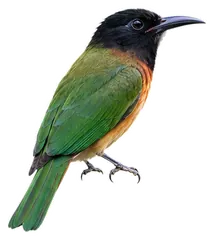 Black-headed Bee-eaterMerops breweri
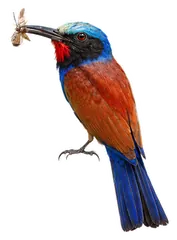 Blue-headed Bee-eaterMerops muelleri
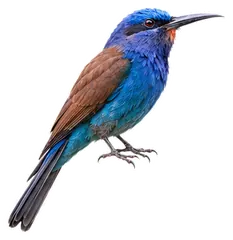 Blue-moustached Bee-eaterMerops mentalis
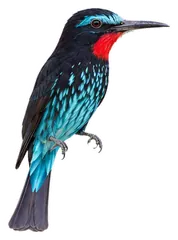 Black Bee-eaterMerops gularis
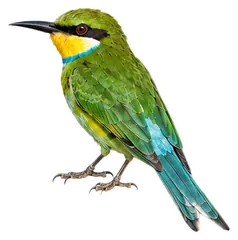 Swallow-tailed Bee-eaterMerops hirundineus
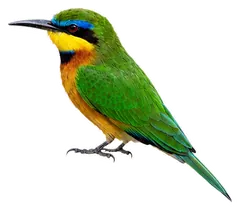 Little Bee-eaterMerops pusillus
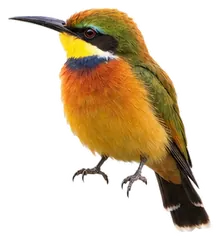 Blue-breasted Bee-eaterMerops variegatus
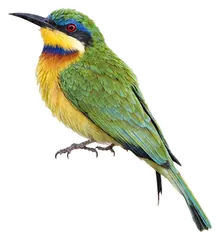 Ethiopian Bee-eaterMerops lafresnayii
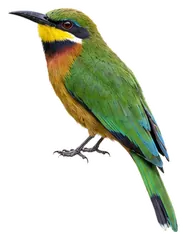 Cinnamon-chested Bee-eaterMerops oreobates
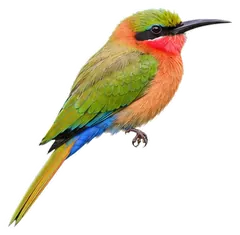 Red-throated Bee-eaterMerops bulocki
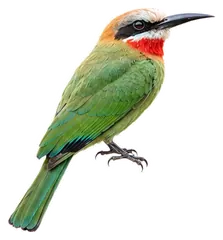 White-fronted Bee-eaterMerops bullockoides
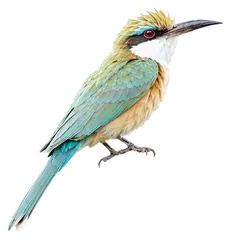 Somali Bee-eaterMerops revoilii
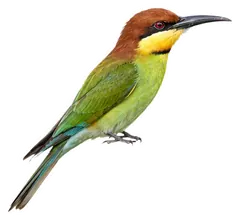
Download illustration
Free to use with credit: “Illustration: Bird Album (birdalbum.com)”. Drawn by AI from a reference photo by Charles J. Sharp. ↗

Heard it but can't see it? Mingji identifies birds by sound and photo, on your phone.
In other languages
- EnglishChestnut-headed Bee-eater
- 简体中文栗头蜂虎
- 繁體中文栗頭蜂虎
- 日本語チャガシラハチクイ
- DeutschBraunkopfspint
- FrançaisGuêpier de Leschenault
- EspañolAbejaruco cabecirrufo
- Portuguêsabelharuco-acastanhado
- ItalianoGruccione testacastana
- NederlandsBruinkopbijeneter
- РусскийБуроголовая щурка
- Svenskarosthuvad biätare
- DanskRustbiæder
- Polskiżołna obrożna