 Bird Album
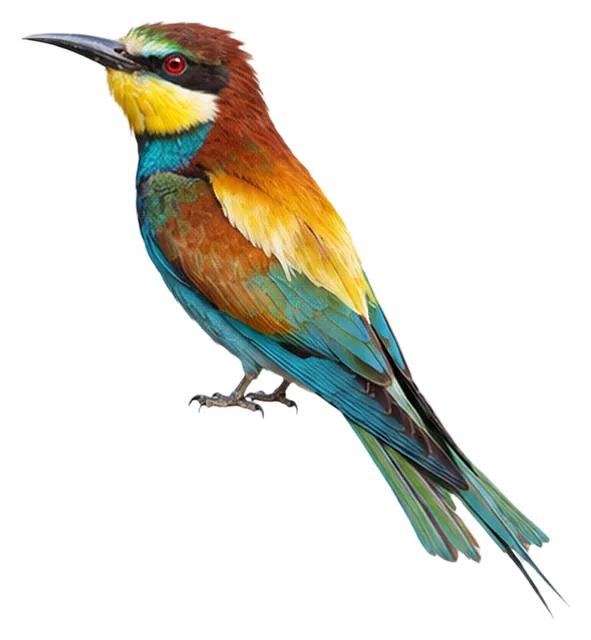
European Bee-eater
Merops apiaster Linnaeus, 1758
23–30 cmLength47 cmWingspan57 gWeight
It has a yellow throat, a black eyestripe, and a chestnut crown, with long feathers projecting from the center of the tail in the breeding season.
Busiest months: May · Most records: Spain, Israel, Portugal
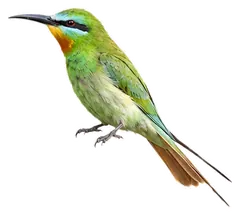
Looks like Blue-cheeked Bee-eater
How to identify
Field marks
- Throat yellow, with a black bar below
- Black eyestripe; crown to nape chestnut
- Back golden-yellow; belly blue-green
- Tail blue-green; central tail feathers elongated in breeding plumage
Male, female and young
Sexes similar; female scapulars are often greener rather than golden-yellow; juvenile is duller.
Voice
Melodious, flowing, loud “pruuk-pruuk” or “prruip-prruip”; often heard before it is seen.
Similar species
Where and when it's recorded
Busiest months: May · Most records: Spain, Israel, Portugal

European Bee-eater has been recorded at 1,323 of the 8,276 birding hotspots we track, in 108 countries and regions.
Records by month Northern Hemisphere
Where it's recorded most
- International Birding and Research Center Eilat (IBRCE)Israel1,780 records
- Aras Kuş Halkalama İstasyonuTürkiye1,485 records
- Desembocadura del Guadalhorce – ÁreaSpain1,371 records
More places
- Sureste PNat – Ruta del Soto GutiérrezSpain830 records
- Observatorio de CazallaSpain804 records
- RivaTürkiye700 records
- Dehesa de AbajoSpain678 records
- Poleg MarshIsrael652 records
- Embalse de Las Cañas RNSpain650 records
- Antikythira Bird ObservatoryGreece647 records
Countries and regions with the most records
eBird records via GBIF up to 2024-12-31. A record means someone listed it; more records partly mean more birders, not more birds.
About
The European bee-eater (Merops apiaster) is a bird species in the bee-eater family, Meropidae. It has the largest range of any bee-eater species, breeding in southern and central Europe, northern and southern Africa, and western Asia. Except for the resident southern African population, the species is strongly migratory, wintering in tropical Africa.
Excerpt from Wikipedia, CC BY-SA 4.0 · authors · Read more on Wikipedia
Questions
How big is the European Bee-eater?
The European Bee-eater is about 23–30 cm long, with a wingspan of 47 cm and weighs around 57 g.
Where does the European Bee-eater live?
Its breeding range: Palearctic, Africa: northwestern Africa, southwestern Europe to Central Asia; South Africa. It is most often recorded in Spain, Israel and Portugal.
When is the best time to see the European Bee-eater?
At the hotspots we track, it is recorded most in May (Northern Hemisphere).
Is the European Bee-eater endangered?
The IUCN Red List classifies the European Bee-eater as Least Concern.
What does the European Bee-eater eat?
Main food: Insects & other invertebrates.
What family is the European Bee-eater in?
It belongs to the family Bee-eaters (Meropidae), order Coraciiformes.
At a glance
- Length
- 23–30 cm
- Wingspan
- 47 cm
- Weight
- 57 g
- Habitat
- Woodland
- Diet
- Insects & other invertebrates
- Lifestyle
- Perches in trees
- Migration
- Migratory
- Conservation
- Least Concern
More measurements
- Wing
- 144 mm
- Tail
- 102 mm
- Bill
- 42 mm
- Tarsus
- 13 mm
Averages from the AVONET dataset; length from field guides where available.
Range
Palearctic, Africa: northwestern Africa, southwestern Europe to Central Asia; South Africa
Breeding range, IOC World Bird List 15.2
Classification
- Order
- Coraciiformes
- Family
- Bee-eaters Meropidae
- Genus
- Merops
Other birds in the genus Merops
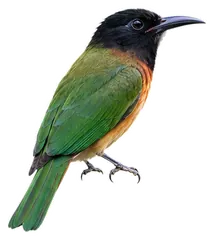 Black-headed Bee-eaterMerops breweri
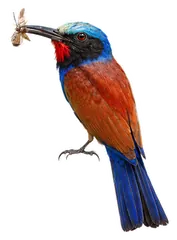 Blue-headed Bee-eaterMerops muelleri
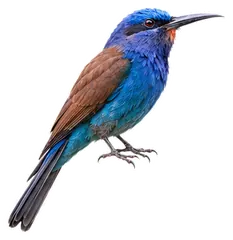 Blue-moustached Bee-eaterMerops mentalis
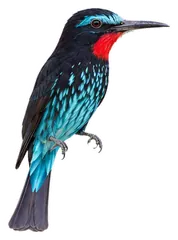 Black Bee-eaterMerops gularis
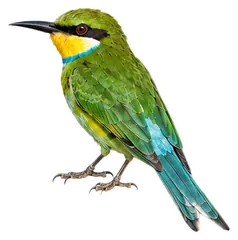 Swallow-tailed Bee-eaterMerops hirundineus
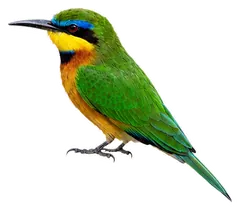 Little Bee-eaterMerops pusillus
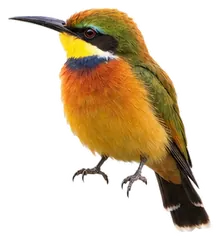 Blue-breasted Bee-eaterMerops variegatus
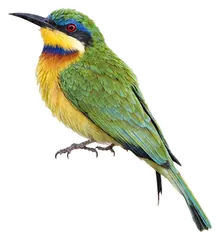 Ethiopian Bee-eaterMerops lafresnayii
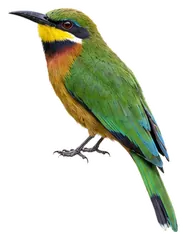 Cinnamon-chested Bee-eaterMerops oreobates
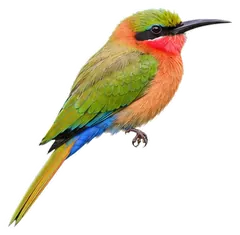 Red-throated Bee-eaterMerops bulocki
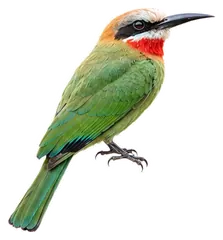 White-fronted Bee-eaterMerops bullockoides
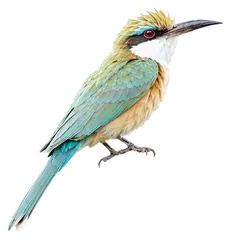 Somali Bee-eaterMerops revoilii
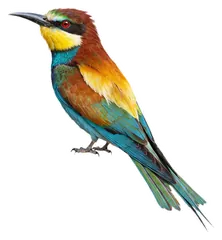
Download illustration
Free to use with credit: “Illustration: Bird Album (birdalbum.com)”. Drawn by AI from a reference photo by brugorraiztelefonicanet. ↗
Heard it but can't see it? Mingji identifies birds by sound and photo, on your phone.