 Bird Album
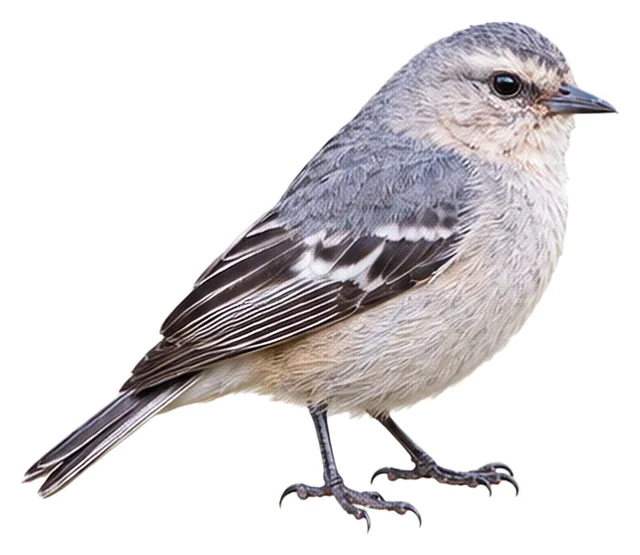
Cinereous Conebill
Conirostrum cinereum d'Orbigny & Lafresnaye, 1838
8.8 gWeight
The cinereous conebill (Conirostrum cinereum) is a species of bird in the tanager family Thraupidae.
Busiest months: October–November · Most records: Ecuador, Peru, Chile
Where and when it's recorded
Busiest months: October–November · Most records: Ecuador, Peru, Chile

Cinereous Conebill has been recorded at 69 of the 8,276 birding hotspots we track, in 4 countries and regions.
Records by month Southern Hemisphere
Where it's recorded most
- Reserva YanacochaEcuador1,682 records
- Jardín Botánico de QuitoEcuador1,447 records
- Humedal Lucre-HuacarpayPeru1,251 records
More places
- Río Lluta – DesembocaduraChile973 records
- Tambo Cóndor Bird LodgeEcuador638 records
- MolinosChile544 records
- PutreChile540 records
- Reserva Zuro LomaEcuador540 records
- Sitio Arqueológico TambomachayPeru479 records
- Hostería San José de PuemboEcuador403 records
Countries and regions with the most records
eBird records via GBIF up to 2024-12-31. A record means someone listed it; more records partly mean more birders, not more birds.
About
The cinereous conebill (Conirostrum cinereum) is a species of bird in the tanager family Thraupidae. Its range extends from south-western Colombia et northern Chile and Bolivia. Its natural habitats are subtropical or tropical moist shrubland, subtropical or tropical high-altitude shrubland, and heavily degraded former forest.
Excerpt from Wikipedia, CC BY-SA 4.0 · authors · Read more on Wikipedia
Questions
How big is the Cinereous Conebill?
The Cinereous Conebill weighs around 8.8 g.
Where does the Cinereous Conebill live?
Its breeding range: South America: Colombia to northern Chile. It is most often recorded in Ecuador, Peru and Chile.
When is the best time to see the Cinereous Conebill?
At the hotspots we track, it is recorded most in October and November (Southern Hemisphere).
Is the Cinereous Conebill endangered?
The IUCN Red List classifies the Cinereous Conebill as Least Concern.
What does the Cinereous Conebill eat?
Main food: Insects & other invertebrates.
What family is the Cinereous Conebill in?
It belongs to the family Tanagers & Allies (Thraupidae), order Passerines (Passeriformes).
At a glance
- Weight
- 8.8 g
- Habitat
- Shrubland
- Diet
- Insects & other invertebrates
- Lifestyle
- Perches in trees
- Migration
- Resident (barely migrates)
- Conservation
- Least Concern
More measurements
- Wing
- 62 mm
- Tail
- 53 mm
- Bill
- 12 mm
- Tarsus
- 18 mm
Averages from the AVONET dataset; length from field guides where available.
Range
South America: Colombia to northern Chile
Breeding range, IOC World Bird List 15.2
Classification
- Order
- Passerines Passeriformes
- Family
- Tanagers & Allies Thraupidae
- Genus
- Conirostrum
Other birds in the genus Conirostrum
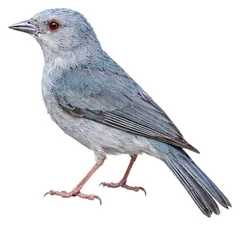 Pearly-breasted ConebillConirostrum margaritae
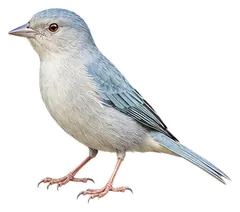 Bicolored ConebillConirostrum bicolor
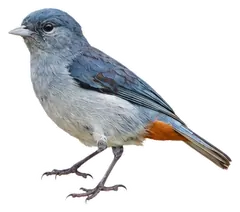 Chestnut-vented ConebillConirostrum speciosum
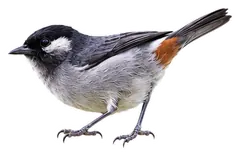 White-eared ConebillConirostrum leucogenys
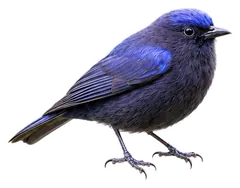 Capped ConebillConirostrum albifrons
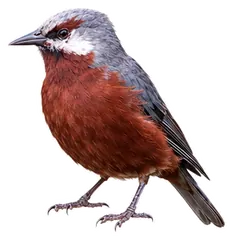 Giant ConebillConirostrum binghami
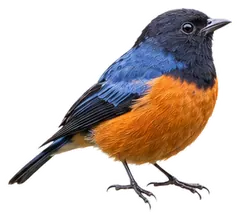 Blue-backed ConebillConirostrum sitticolor
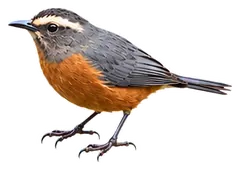 White-browed ConebillConirostrum ferrugineiventre
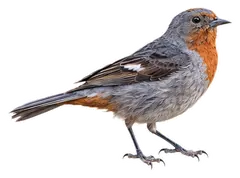 Tamarugo ConebillConirostrum tamarugense
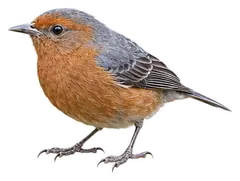 Rufous-browed ConebillConirostrum rufum
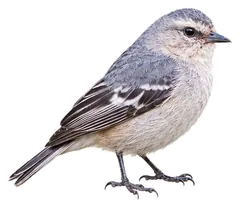
Download illustration
Free to use with credit: “Illustration: Bird Album (birdalbum.com)”. Drawn by AI from reference photos. ↗
Heard it but can't see it? Mingji identifies birds by sound and photo, on your phone.
In other languages
- EnglishCinereous Conebill
- 简体中文朱红锥嘴雀
- 繁體中文朱紅錐嘴森鶯
- 日本語マルハシミツドリ
- DeutschWeißstirn-Spitzschnabel
- FrançaisConirostre cendré
- EspañolConirrostro cinéreo
- Portuguêsfiguinha-cinzenta
- ItalianoConibecco cenerino
- NederlandsGrijze Spitssnavel
- РусскийСерый конусоклюв
- Svenskagrå kägelnäbb
- DanskHvidbrynet Keglenæb
- Polskiprostodziobek szary