 Bird Album
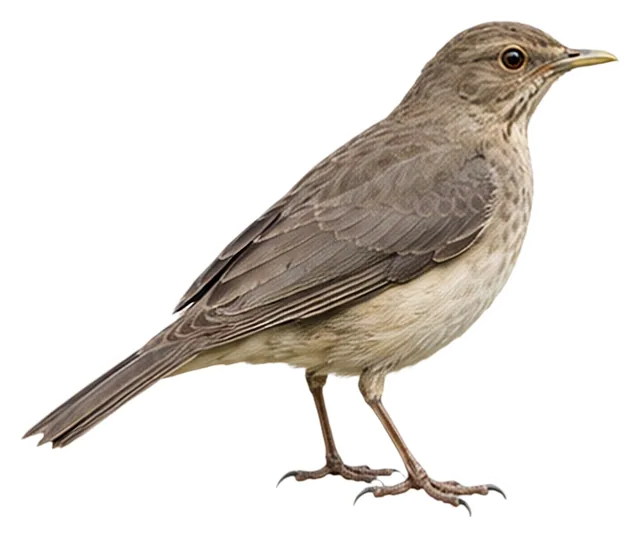
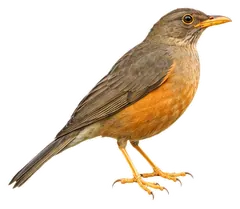
Clay-colored Thrush
Turdus grayi Bonaparte, 1838
23–27 cmLength80 gWeight
The clay-colored thrush (Turdus grayi) is a common Middle American bird of the thrush family (Turdidae).
Busiest months: February–March · Most records: Costa Rica, United States, Panama
Where and when it's recorded
Busiest months: February–March · Most records: Costa Rica, United States, Panama

Clay-colored Thrush has been recorded at 398 of the 8,276 birding hotspots we track, in 10 countries and regions.
Records by month Northern Hemisphere
Where it's recorded most
- Arenal Observatory LodgeCosta Rica12,561 records
- Estero Llano Grande SP WBCUnited States12,385 records
- Estación Biológica La Selva-OTSCosta Rica10,102 records
More places
- Quinta Mazatlan WBCUnited States7,404 records
- Bentsen-Rio Grande Val. SP WBC (Mission)United States6,857 records
- Hotel BougainvilleaCosta Rica6,820 records
- Rancho NaturalistaCosta Rica6,523 records
- Santa Ana NWRUnited States5,273 records
- Selva Verde LodgeCosta Rica5,049 records
- Galeria de Colibrí y Soda Cinchona - Mirador San FernandoCosta Rica4,922 records
Countries and regions with the most records
eBird records via GBIF up to 2024-12-31. A record means someone listed it; more records partly mean more birders, not more birds.
About
The clay-colored thrush (Turdus grayi) is a common Middle American bird of the thrush family (Turdidae). It is the national bird of Costa Rica, where it is well known as the yigüirro (Spanish: ). Other common names include clay-colored robin.
Excerpt from Wikipedia, CC BY-SA 4.0 · authors · Read more on Wikipedia
Questions
How big is the Clay-colored Thrush?
The Clay-colored Thrush is about 23–27 cm long and weighs around 80 g.
Where does the Clay-colored Thrush live?
Its breeding range: Middle America, South America: Mexico to Colombia. It is most often recorded in Costa Rica, United States and Panama.
When is the best time to see the Clay-colored Thrush?
At the hotspots we track, it is recorded most in February and March (Northern Hemisphere).
Is the Clay-colored Thrush endangered?
The IUCN Red List classifies the Clay-colored Thrush as Least Concern.
What does the Clay-colored Thrush eat?
Main food: Omnivore.
What family is the Clay-colored Thrush in?
It belongs to the family Thrushes (Turdidae), order Passerines (Passeriformes).
At a glance
- Length
- 23–27 cm
- Weight
- 80 g
- Habitat
- Forest
- Diet
- Omnivore
- Lifestyle
- Varied
- Migration
- Resident (barely migrates)
- Conservation
- Least Concern
More measurements
- Wing
- 118 mm
- Tail
- 102 mm
- Bill
- 21 mm
- Tarsus
- 34 mm
Averages from the AVONET dataset; length from field guides where available.
Range
Middle America, South America: Mexico to Colombia
Breeding range, IOC World Bird List 15.2
Classification
- Order
- Passerines Passeriformes
- Family
- Thrushes Turdidae
- Genus
- Turdus
Other birds in the genus Turdus
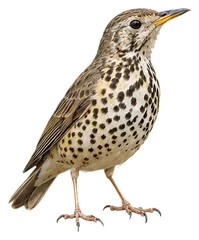 Ethiopian ThrushTurdus simensis
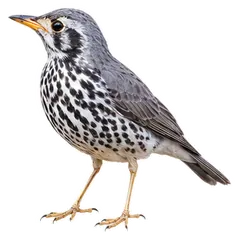 Groundscraper ThrushTurdus litsitsirupa
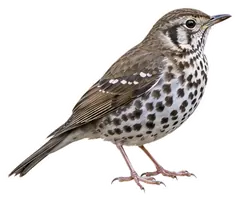 Chinese ThrushTurdus mupinensis
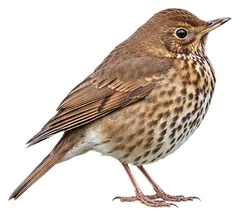 Song ThrushTurdus philomelos
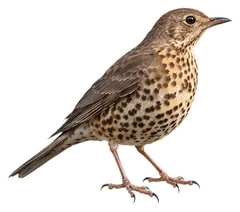 Mistle ThrushTurdus viscivorus
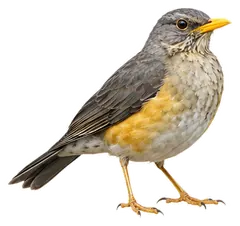 African ThrushTurdus pelios
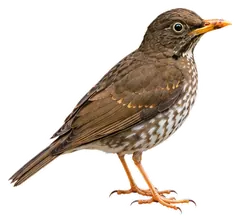 Principe ThrushTurdus xanthorhynchus
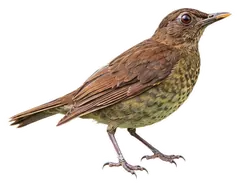 Sao Tome ThrushTurdus olivaceofuscus
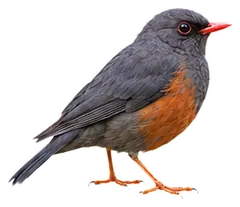 Abyssinian ThrushTurdus abyssinicus
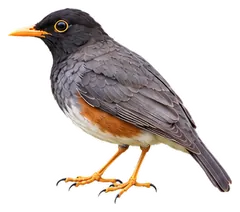 Taita ThrushTurdus helleri
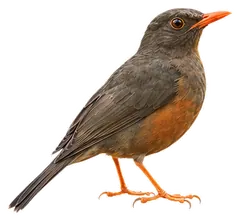 Usambara ThrushTurdus roehli
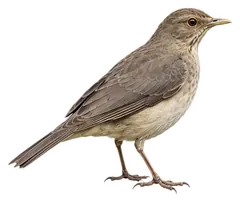
 Olive ThrushTurdus olivaceus
Download illustration
Free to use with credit: “Illustration: Bird Album (birdalbum.com)”. Drawn by AI from a reference photo by Sebastián Restrepo Calle. ↗
Heard it but can't see it? Mingji identifies birds by sound and photo, on your phone.