 Bird Album
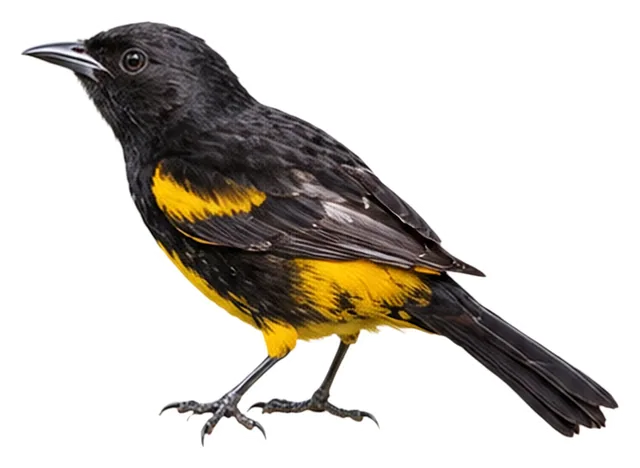
Cuban Oriole
Icterus melanopsis (Wagler, 1829)
36 gWeight
The Cuban oriole (Icterus melanopsis) is a species of songbird in the family Icteridae.
Busiest months: March · Most records: Cuba
Where and when it's recorded
Busiest months: March · Most records: Cuba

Cuban Oriole has been recorded at 19 of the 8,276 birding hotspots we track, in 1 country or region.
Records by month Northern Hemisphere
Where it's recorded most
- PN Ciénaga de Zapata – Santo TomasCuba358 records
- Soplillar – Sabanas de PalpiteCuba345 records
- Refugio de Fauna BermejaCuba324 records
More places
- Criadero de CocodrilosCuba278 records
- Casa Ana BirdingCuba247 records
- Reserva de la Biosfera Sierra del Rosario – Las TerrazasCuba246 records
- Cueva de los PortalesCuba173 records
- Cayo CocoCuba158 records
- Playa LargaCuba148 records
- Zapata – La TurbaCuba140 records
Countries and regions with the most records
eBird records via GBIF up to 2024-12-31. A record means someone listed it; more records partly mean more birders, not more birds.
About
The Cuban oriole (Icterus melanopsis) is a species of songbird in the family Icteridae. It is endemic to Cuba.
Excerpt from Wikipedia, CC BY-SA 4.0 · authors · Read more on Wikipedia
Questions
How big is the Cuban Oriole?
The Cuban Oriole weighs around 36 g.
Where does the Cuban Oriole live?
Its breeding range: North America: Cuba. It is most often recorded in Cuba.
When is the best time to see the Cuban Oriole?
At the hotspots we track, it is recorded most in March (Northern Hemisphere).
Is the Cuban Oriole endangered?
The IUCN Red List classifies the Cuban Oriole as Least Concern.
What does the Cuban Oriole eat?
Main food: Omnivore.
What family is the Cuban Oriole in?
It belongs to the family Oropendolas, New World Orioles, Blackbirds (Icteridae), order Passerines (Passeriformes).
At a glance
- Weight
- 36 g
- Habitat
- Forest
- Diet
- Omnivore
- Lifestyle
- Perches in trees
- Migration
- Resident (barely migrates)
- Conservation
- Least Concern
More measurements
- Wing
- 93 mm
- Tail
- 84 mm
- Bill
- 23 mm
- Tarsus
- 23 mm
Averages from the AVONET dataset; length from field guides where available.
Range
North America: Cuba
Breeding range, IOC World Bird List 15.2
Classification
- Order
- Passerines Passeriformes
- Family
- Oropendolas, New World Orioles, Blackbirds Icteridae
- Genus
- Icterus
Other birds in the genus Icterus
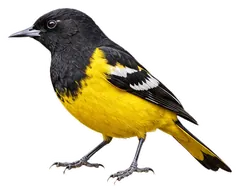 Scott's OrioleIcterus parisorum
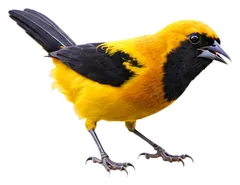 Yellow-backed OrioleIcterus chrysater
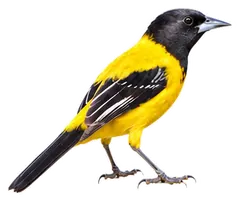 Audubon's OrioleIcterus graduacauda
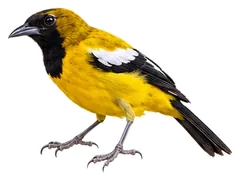 Jamaican OrioleIcterus leucopteryx
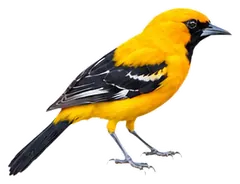 Orange OrioleIcterus auratus
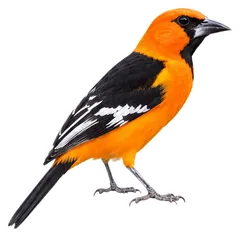 Altamira OrioleIcterus gularis
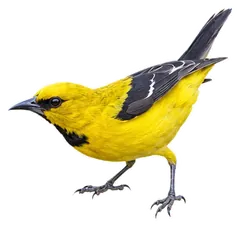 Yellow OrioleIcterus nigrogularis
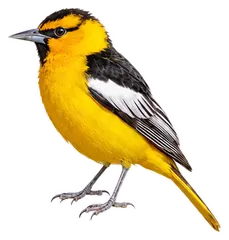 Bullock's OrioleIcterus bullockiorum
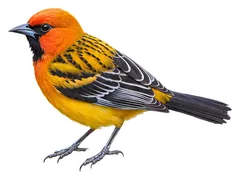 Streak-backed OrioleIcterus pustulatus
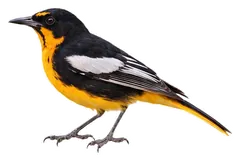 Black-backed OrioleIcterus abeillei
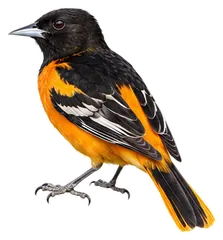 Baltimore OrioleIcterus galbula
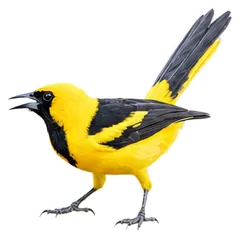 Yellow-tailed OrioleIcterus mesomelas
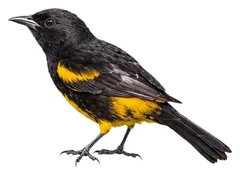
Download illustration
Free to use with credit: “Illustration: Bird Album (birdalbum.com)”. Drawn by AI from a reference photo by Allan Hopkins. ↗
Heard it but can't see it? Mingji identifies birds by sound and photo, on your phone.