 Bird Album
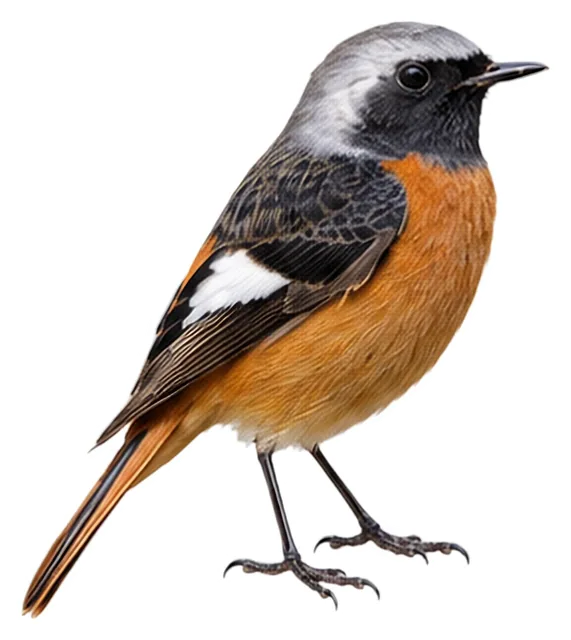
Daurian Redstart
Phoenicurus auroreus (Pallas, 1776)
14–15 cmLength16 gWeight
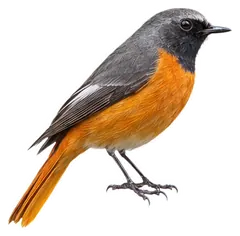
This bird has a single conspicuous white wing patch and orange on the rump and sides of the tail.
Busiest months: November–December · Most records: China, South Korea, Japan
How to identify
Field marks
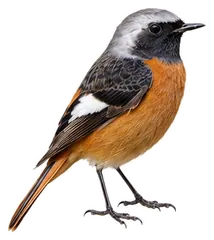
- Both sexes have a white inverted triangular wing patch
- Breeding-season male with a gray crown and black face and chin
- Breeding-season male with an orange breast and rump and a black tail with orange sides
- Female upperparts warm rufous; rump and tail-sides orange
Male, female and young
Sexes differ markedly: breeding-season male with a gray head and black face; female with warm rufous upperparts and paler underparts; juvenile male resembles the male but is duller.
Where and when it's recorded

Daurian Redstart has been recorded at 1,518 of the 8,171 birding hotspots we track, in 13 countries and regions.
Records by month Northern Hemisphere
Where it's recorded most
- Taipei – Tianliaoyang WetlandTaiwan (China)2,485 records
- Yeliu IBATaiwan (China)2,091 records
- Mai Po Nature ReserveHong Kong (China)1,725 records
More places
- Nanhui DongtanChina1,418 records
- Kinmen – Botanical GardenChina1,004 records
- Taichung – Taichung Metropolitan ParkTaiwan (China)1,004 records
- Jinshan – Jinshan Youth Activity CenterTaiwan (China)911 records
- Matsu – Dongyin Vegetable FarmChina909 records
- Taipei – Gongliao Dexin TempleTaiwan (China)853 records
- Po ToiHong Kong (China)838 records
Countries and regions with the most records
eBird records via GBIF up to 2024-12-31. A record means someone listed it; more records partly mean more birders, not more birds.
About
The Daurian redstart (Phoenicurus auroreus) is a small passerine bird from temperate Asia. The species was first described by Peter Simon Pallas in 1776.
Excerpt from Wikipedia, CC BY-SA 4.0 · authors · Read more on Wikipedia
Questions
How big is the Daurian Redstart?
The Daurian Redstart is about 14–15 cm long and weighs around 16 g.
Where does the Daurian Redstart live?
Its breeding range: Palearctic: central, eastern. It is most often recorded in China, South Korea and Japan.
When is the best time to see the Daurian Redstart?
At the hotspots we track, it is recorded most in November and December (Northern Hemisphere).
Is the Daurian Redstart endangered?
The IUCN Red List classifies the Daurian Redstart as Least Concern.
What does the Daurian Redstart eat?
Main food: Insects & other invertebrates.
What family is the Daurian Redstart in?
It belongs to the family Chats, Old World Flycatchers (Muscicapidae), order Passerines (Passeriformes).
At a glance
- Length
- 14–15 cm
- Weight
- 16 g
- Habitat
- Forest
- Diet
- Insects & other invertebrates
- Lifestyle
- Perches in trees
- Migration
- Migratory
- Conservation
- Least Concern
More measurements
- Wing
- 72 mm
- Tail
- 66 mm
- Bill
- 14 mm
- Tarsus
- 22 mm
Averages from the AVONET dataset; length from field guides where available.
Range
Palearctic: central, eastern
Breeding range, IOC World Bird List 15.2
Subspecies · 2
- Phoenicurus auroreus leucopterus e Himalayas to c, e China | non-breeding: to n Indochina
- Phoenicurus auroreus auroreus sc Siberia and Mongolia to Korea and ne China | non-breeding: to se China
Classification
- Order
- Passerines Passeriformes
- Family
- Chats, Old World Flycatchers Muscicapidae
- Genus
- Phoenicurus
Other birds in the genus Phoenicurus
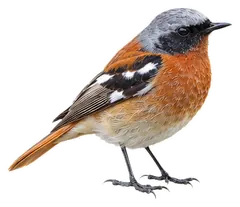 Eversmann's RedstartPhoenicurus erythronotus
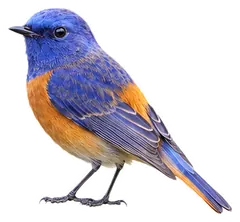 Blue-fronted RedstartPhoenicurus frontalis
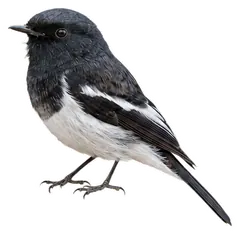 Blue-capped RedstartPhoenicurus coeruleocephala
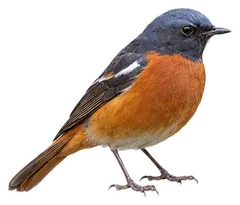 White-throated RedstartPhoenicurus schisticeps
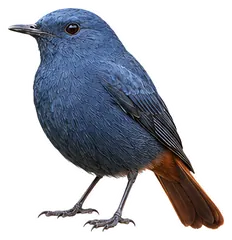 Plumbeous Water RedstartPhoenicurus fuliginosus
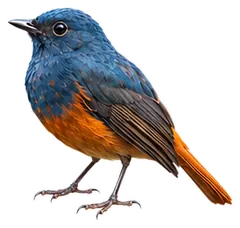 Luzon Water RedstartPhoenicurus bicolor
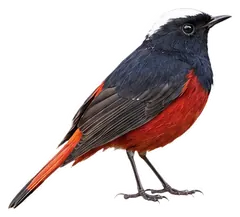 White-capped RedstartPhoenicurus leucocephalus
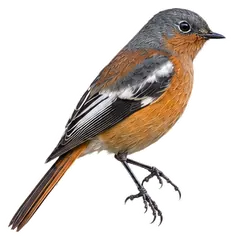 Przevalski's RedstartPhoenicurus alaschanicus
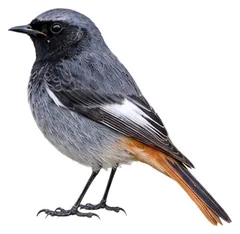 Black RedstartPhoenicurus ochruros
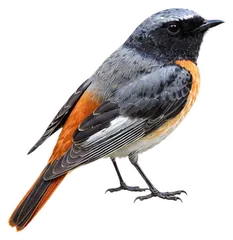 Common RedstartPhoenicurus phoenicurus
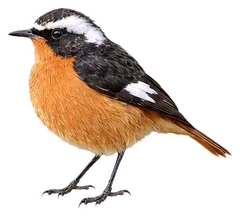 Moussier's RedstartPhoenicurus moussieri
 Hodgson's RedstartPhoenicurus hodgsoni
Download illustration
Free to use with credit: “Illustration: Bird Album (birdalbum.com)”. Drawn by AI from a reference photo by Laitche. ↗
Heard it but can't see it? Mingji identifies birds by sound and photo, on your phone.