 Bird Album
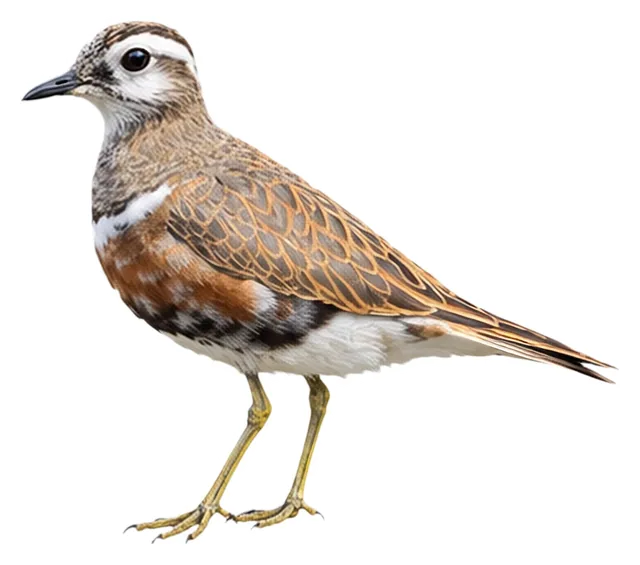
Eurasian Dotterel
Eudromias morinellus (Linnaeus, 1758)
≈24 cmLength108 gWeight
It has a conspicuous white supercilium, with a chestnut breast and black belly in adults in summer.
Busiest months: September–October · Most records: United Kingdom, Portugal, Spain
Looks like European Golden Plover
How to identify
Field marks
- Conspicuous white supercilium in all seasonal plumages
- Adults have a white line along the upper edge of the chestnut breast in summer
- Adults have a black belly in summer
- Yellow legs and feet; short black bill
Male, female and young
The female has brighter plumage than the male.
Voice
A soft “pyurr” in flight; the female sings simple, repeated whistles.
Similar species
Where and when it's recorded

Eurasian Dotterel has been recorded at 206 of the 8,171 birding hotspots we track, in 46 countries and regions.
Records by month Northern Hemisphere
Where it's recorded most
- PN Sudoeste Alentejano e Costa Vicentina – Vale SantoPortugal205 records
- LinosaItaly143 records
- St Mary'sUnited Kingdom130 records
More places
- Cabo Gata PNat – Rambla MoralesSpain97 records
- PN Arrábida – cabo Espichel – área geralPortugal68 records
- El Estrecho PNat – Los LancesSpain63 records
- RivaTürkiye56 records
- Spurn Bird Observatory Recording AreaUnited Kingdom34 records
- Besh Barmag bottleneckAzerbaijan34 records
- Titchwell Marsh RSPB ReserveUnited Kingdom32 records
Countries and regions with the most records
eBird records via GBIF up to 2024-12-31. A record means someone listed it; more records partly mean more birders, not more birds.
Questions
How big is the Eurasian Dotterel?
The Eurasian Dotterel is about ≈24 cm long and weighs around 108 g.
Where does the Eurasian Dotterel live?
Its breeding range: Palearctic: high Arctic coastal tundra; alpine zone of temperate Europe and Asia: northern British Isles, Scandinavia, northwestern Russia (including Novaya Zemlya and New Siberian Islands, north of northwestern, northeastern Siberia) to Chukotskiy Peninsula (northeastern Siberia) and western Alaska (including St. Lawrence Island, northern Bering Sea); south to Pyrenees, Alps and Carpathians; Altai of northeastern Kazakhstan, south-central Russia, northwestern Mongolia, and far northern Xinjiang (northwestern China), and montane north-central, eastern, Mongolia. It is most often recorded in United Kingdom, Portugal and Spain.
When is the best time to see the Eurasian Dotterel?
At the hotspots we track, it is recorded most in September and October (Northern Hemisphere).
Is the Eurasian Dotterel endangered?
The IUCN Red List classifies the Eurasian Dotterel as Least Concern.
What does the Eurasian Dotterel eat?
Main food: Insects & other invertebrates.
What family is the Eurasian Dotterel in?
It belongs to the family Plovers (Charadriidae), order Charadriiformes.
At a glance
- Length
- ≈24 cm
- Weight
- 108 g
- Habitat
- Grassland
- Diet
- Insects & other invertebrates
- Lifestyle
- Active on the ground
- Migration
- Migratory
- Conservation
- Least Concern
More measurements
- Wing
- 147 mm
- Tail
- 66 mm
- Bill
- 19 mm
- Tarsus
- 36 mm
Averages from the AVONET dataset; length from field guides where available.
Range
Palearctic: high Arctic coastal tundra; alpine zone of temperate Europe and Asia: northern British Isles, Scandinavia, northwestern Russia (including Novaya Zemlya and New Siberian Islands, north of northwestern, northeastern Siberia) to Chukotskiy Peninsula (northeastern Siberia) and western Alaska (including St. Lawrence Island, northern Bering Sea); south to Pyrenees, Alps and Carpathians; Altai of northeastern Kazakhstan, south-central Russia, northwestern Mongolia, and far northern Xinjiang (northwestern China), and montane north-central, eastern, Mongolia
Breeding range, IOC World Bird List 15.2
Classification
- Order
- Charadriiformes
- Family
- Plovers Charadriidae
- Genus
- Eudromias
More from the family Plovers
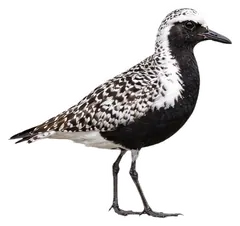 Grey PloverPluvialis squatarola
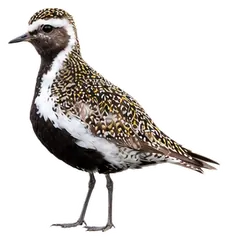 European Golden PloverPluvialis apricaria
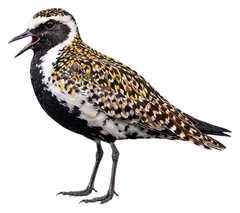 Pacific Golden PloverPluvialis fulva
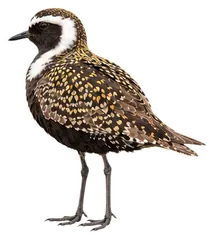 American Golden PloverPluvialis dominica
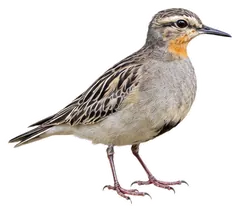 Tawny-throated DotterelOreopholus ruficollis
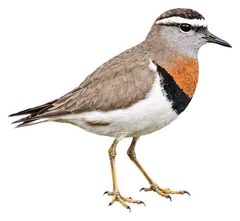 Rufous-chested DotterelZonibyx modestus
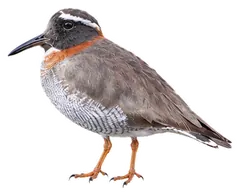 Diademed Sandpiper-PloverPhegornis mitchellii
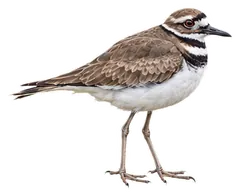 KilldeerCharadrius vociferus
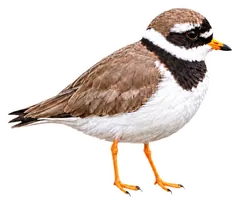 Common Ringed PloverCharadrius hiaticula
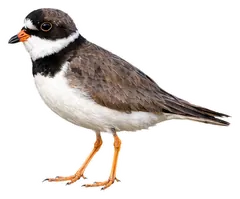 Semipalmated PloverCharadrius semipalmatus
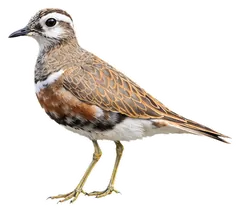
Download illustration
Free to use with credit: “Illustration: Bird Album (birdalbum.com)”. Drawn by AI from a reference photo by Lorenzo Vinciguerra. ↗
Heard it but can't see it? Mingji identifies birds by sound and photo, on your phone.