 Bird Album
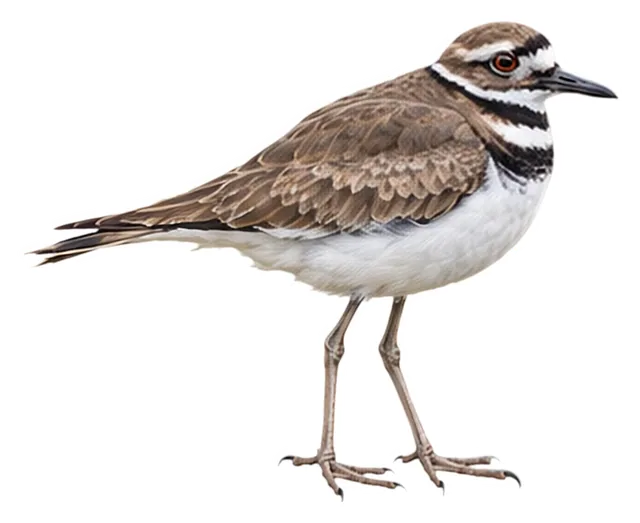
Killdeer
Charadrius vociferus Linnaeus, 1758
96 gWeight
The killdeer (Charadrius vociferus) is a large plover found in the Americas.
Busiest months: May · Most records: United States, Canada, Mexico
Where and when it's recorded
Busiest months: May · Most records: United States, Canada, Mexico

Killdeer has been recorded at 1,246 of the 8,276 birding hotspots we track, in 46 countries and regions.
Records by month Northern Hemisphere
Where it's recorded most
- Riparian Preserve at Gilbert Water RanchUnited States23,270 records
- Montrose Point Bird Sanctuary, Lincoln Park, ChicagoUnited States20,705 records
- Hornsby BendUnited States17,673 records
More places
- Parker River NWRUnited States17,335 records
- Sweetwater WetlandsUnited States15,979 records
- Magee Marsh – BoardwalkUnited States15,576 records
- Howard Marsh MetroparkUnited States15,530 records
- Cape Island – South Cape May MeadowsUnited States14,192 records
- IRWD San Joaquin Marsh & Wildlife Sanctuary, IrvineUnited States14,188 records
- Estero Llano Grande SP WBCUnited States14,137 records
Countries and regions with the most records
eBird records via GBIF up to 2024-12-31. A record means someone listed it; more records partly mean more birders, not more birds.
About
The killdeer (Charadrius vociferus) is a large plover found in the Americas. Its shrill, two-syllable call is often heard, sounding like "kill deer". It was described and given its current scientific name in 1758 by Carl Linnaeus in the 10th edition of his Systema Naturae.
Excerpt from Wikipedia, CC BY-SA 4.0 · authors · Read more on Wikipedia
Questions
How big is the Killdeer?
The Killdeer weighs around 96 g.
Where does the Killdeer live?
Its breeding range: North America, Middle America, South America: inland subarctic to temperate North America to Central America; coastal Ecuador to Peru. It is most often recorded in United States, Canada and Mexico.
When is the best time to see the Killdeer?
At the hotspots we track, it is recorded most in May (Northern Hemisphere).
Is the Killdeer endangered?
The IUCN Red List classifies the Killdeer as Near Threatened.
What does the Killdeer eat?
Main food: Omnivore.
What family is the Killdeer in?
It belongs to the family Plovers (Charadriidae), order Charadriiformes.
At a glance
- Weight
- 96 g
- Habitat
- Wetland
- Diet
- Omnivore
- Lifestyle
- Active on the ground
- Migration
- Migratory
- Conservation
- Near Threatened
More measurements
- Wing
- 159 mm
- Tail
- 86 mm
- Bill
- 22 mm
- Tarsus
- 34 mm
Averages from the AVONET dataset; length from field guides where available.
Range
North America, Middle America, South America: inland subarctic to temperate North America to Central America; coastal Ecuador to Peru
Breeding range, IOC World Bird List 15.2
Classification
- Order
- Charadriiformes
- Family
- Plovers Charadriidae
- Genus
- Charadrius
Other birds in the genus Charadrius
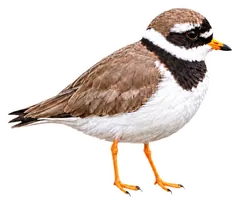 Common Ringed PloverCharadrius hiaticula
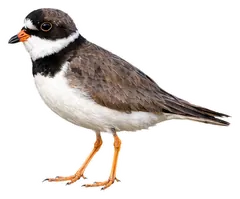 Semipalmated PloverCharadrius semipalmatus
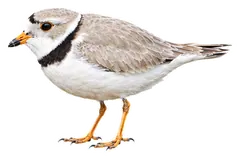 Piping PloverCharadrius melodus
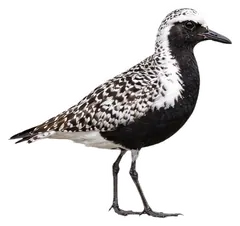 Grey PloverPluvialis squatarola
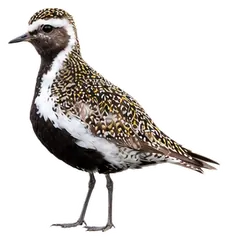 European Golden PloverPluvialis apricaria
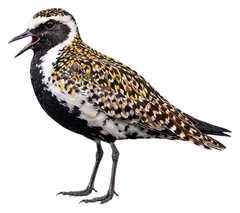 Pacific Golden PloverPluvialis fulva
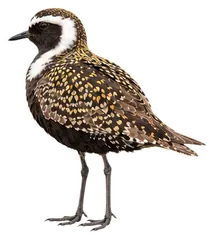 American Golden PloverPluvialis dominica
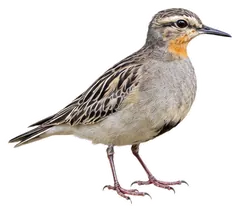 Tawny-throated DotterelOreopholus ruficollis
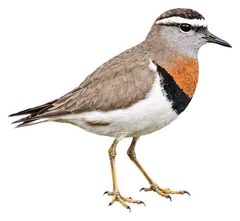 Rufous-chested DotterelZonibyx modestus
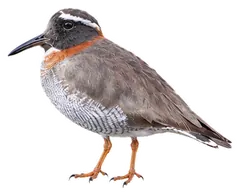 Diademed Sandpiper-PloverPhegornis mitchellii
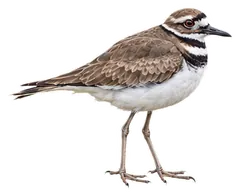
Download illustration
Free to use with credit: “Illustration: Bird Album (birdalbum.com)”. Drawn by AI from a reference photo by Dan LaVorgna. ↗
Heard it but can't see it? Mingji identifies birds by sound and photo, on your phone.