 Bird Album
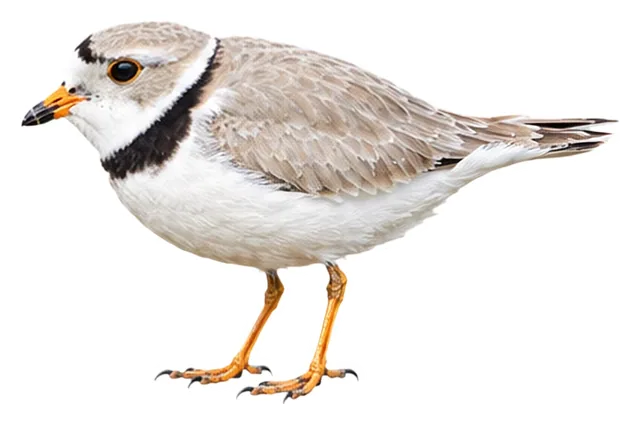
Piping Plover
Charadrius melodus Ord, 1824
54 gWeight
The piping plover (Charadrius melodus) is a small, sand-colored shorebird that nests and feeds along coastal sand and gravel beaches in North America.
Busiest months: May · Most records: United States, Canada, Cuba
Where and when it's recorded

Piping Plover has been recorded at 224 of the 8,171 birding hotspots we track, in 14 countries and regions.
Records by month Northern Hemisphere
Where it's recorded most
- Montrose Point Bird Sanctuary, Lincoln Park, ChicagoUnited States7,811 records
- Fort De Soto ParkUnited States6,515 records
- Bolivar Flats Shorebird SanctuaryUnited States6,505 records
More places
- Parker River NWRUnited States6,316 records
- Milford Point, CT AudubonUnited States6,183 records
- San Carlos Bay/Bunche Beach PreserveUnited States4,458 records
- Stone Harbor PointUnited States3,097 records
- Whitefish PointUnited States3,010 records
- Sandy HookUnited States2,919 records
- Chincoteague NWRUnited States2,662 records
Countries and regions with the most records
eBird records via GBIF up to 2024-12-31. A record means someone listed it; more records partly mean more birders, not more birds.
About
The piping plover (Charadrius melodus) is a small, sand-colored shorebird that nests and feeds along coastal sand and gravel beaches in North America. The adult has yellow-orange-red legs, a black band across the forehead from eye to eye, and a black stripe running along the breast line. This chest band is usually thicker in males during the breeding season, and it is the only reliable way to tell the sexes apart.
Excerpt from Wikipedia, CC BY-SA 4.0 · authors · Read more on Wikipedia
Questions
How big is the Piping Plover?
The Piping Plover weighs around 54 g.
Where does the Piping Plover live?
Its breeding range: North America: inland southeastern Alberta to southwestern Ontario (south-central Canada) and Great Lakes south to eastern Colorado and northern Kansas; coastal southern Newfoundland (eastern Canada) to North Carolina. It is most often recorded in United States, Canada and Cuba.
When is the best time to see the Piping Plover?
At the hotspots we track, it is recorded most in May (Northern Hemisphere).
Is the Piping Plover endangered?
The IUCN Red List classifies the Piping Plover as Near Threatened.
What does the Piping Plover eat?
Main food: Fish, shrimp & shellfish.
What family is the Piping Plover in?
It belongs to the family Plovers (Charadriidae), order Charadriiformes.
At a glance
- Weight
- 54 g
- Habitat
- Coast & tidal flats
- Diet
- Fish, shrimp & shellfish
- Lifestyle
- Active on the ground
- Migration
- Migratory
- Conservation
- Near Threatened
More measurements
- Wing
- 115 mm
- Tail
- 50 mm
- Bill
- 15 mm
- Tarsus
- 22 mm
Averages from the AVONET dataset; length from field guides where available.
Range
North America: inland southeastern Alberta to southwestern Ontario (south-central Canada) and Great Lakes south to eastern Colorado and northern Kansas; coastal southern Newfoundland (eastern Canada) to North Carolina
Breeding range, IOC World Bird List 15.2
Classification
- Order
- Charadriiformes
- Family
- Plovers Charadriidae
- Genus
- Charadrius
Other birds in the genus Charadrius
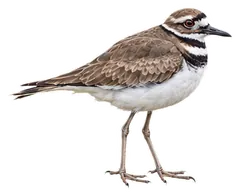 KilldeerCharadrius vociferus
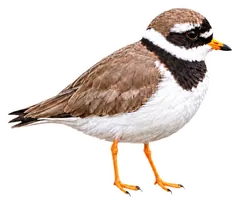 Common Ringed PloverCharadrius hiaticula
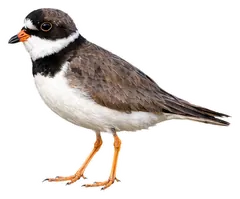 Semipalmated PloverCharadrius semipalmatus
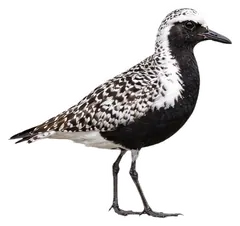 Grey PloverPluvialis squatarola
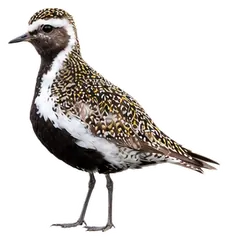 European Golden PloverPluvialis apricaria
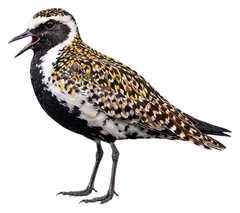 Pacific Golden PloverPluvialis fulva
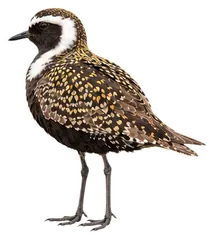 American Golden PloverPluvialis dominica
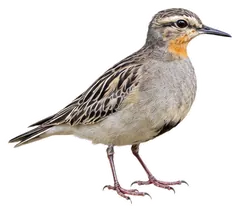 Tawny-throated DotterelOreopholus ruficollis
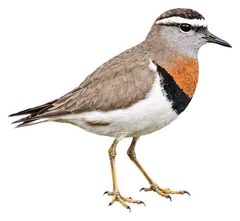 Rufous-chested DotterelZonibyx modestus
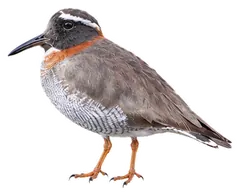 Diademed Sandpiper-PloverPhegornis mitchellii
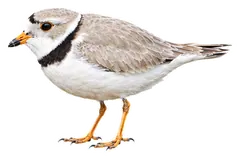
Download illustration
Free to use with credit: “Illustration: Bird Album (birdalbum.com)”. Drawn by AI from a reference photo by Simon Tolzmann. ↗
Heard it but can't see it? Mingji identifies birds by sound and photo, on your phone.