 Bird Album
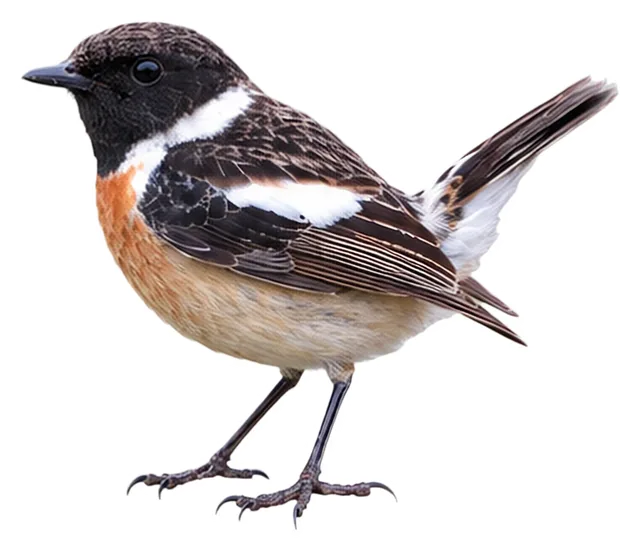
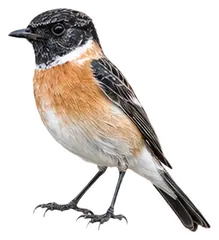
European Stonechat
Saxicola rubicola (Linnaeus, 1766)
12–13 cmLength15 gWeight
The European stonechat (Saxicola rubicola) is a small passerine bird that was formerly classed as a subspecies of the common stonechat.
Busiest months: October · Most records: Spain, Portugal, United Kingdom
Where and when it's recorded

European Stonechat has been recorded at 1,081 of the 8,171 birding hotspots we track, in 69 countries and regions.
Records by month Northern Hemisphere
Where it's recorded most
- Lezíria Grande de Vila Franca de Xira – área geralPortugal4,185 records
- Minsmere RSPB ReserveUnited Kingdom3,479 records
- PN Sudoeste Alentejano e Costa Vicentina – CabranosaPortugal2,915 records
More places
- RNL Estuário do Douro – área geralPortugal2,374 records
- El Oso – Laguna y entornoSpain2,371 records
- Desembocadura del Guadalhorce – ÁreaSpain2,368 records
- Thursley CommonUnited Kingdom2,146 records
- Paul da BarrocaPortugal2,130 records
- La Janda – ÁreaSpain1,987 records
- Lagoa dos SalgadosPortugal1,949 records
Countries and regions with the most records
eBird records via GBIF up to 2024-12-31. A record means someone listed it; more records partly mean more birders, not more birds.
About
The European stonechat (Saxicola rubicola) is a small passerine bird that was formerly classed as a subspecies of the common stonechat. Long considered a member of the thrush family, Turdidae, genetic evidence has placed it and its relatives in the Old World flycatcher family, Muscicapidae. It is found across Europe, as far east as Ukraine and the South Caucasus, and in parts of North Africa.
Excerpt from Wikipedia, CC BY-SA 4.0 · authors · Read more on Wikipedia
Questions
How big is the European Stonechat?
The European Stonechat is about 12–13 cm long and weighs around 15 g.
Where does the European Stonechat live?
Its breeding range: Palearctic: western, southern Europe and northern Africa. It is most often recorded in Spain, Portugal and United Kingdom.
When is the best time to see the European Stonechat?
At the hotspots we track, it is recorded most in October (Northern Hemisphere).
What does the European Stonechat eat?
Main food: Insects & other invertebrates.
What family is the European Stonechat in?
It belongs to the family Chats, Old World Flycatchers (Muscicapidae), order Passerines (Passeriformes).
At a glance
- Length
- 12–13 cm
- Weight
- 15 g
- Habitat
- Shrubland
- Diet
- Insects & other invertebrates
- Lifestyle
- Perches in trees
- Migration
- Partial migrant
More measurements
- Wing
- 65 mm
- Tail
- 45 mm
- Bill
- 15 mm
- Tarsus
- 22 mm
Averages from the AVONET dataset; length from field guides where available.
Range
Palearctic: western, southern Europe and northern Africa
Breeding range, IOC World Bird List 15.2
Classification
- Order
- Passerines Passeriformes
- Family
- Chats, Old World Flycatchers Muscicapidae
- Genus
- Saxicola
Other birds in the genus Saxicola
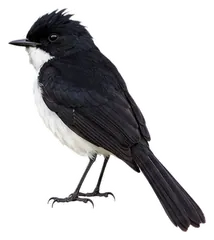 Jerdon's Bush ChatSaxicola jerdoni
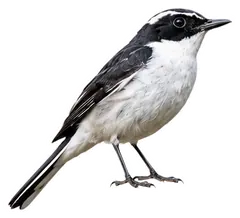 Grey Bush ChatSaxicola ferreus
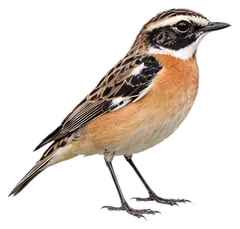 WhinchatSaxicola rubetra
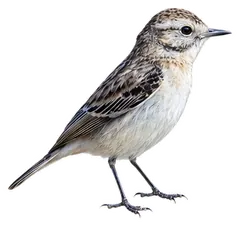 White-browed Bush ChatSaxicola macrorhynchus
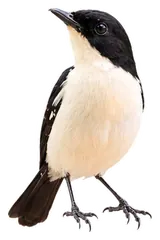 White-bellied Bush ChatSaxicola gutturalis
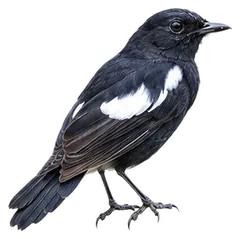 Pied Bush ChatSaxicola caprata
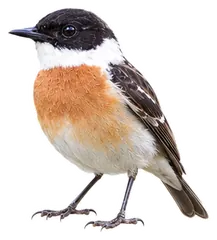 White-throated Bush ChatSaxicola insignis
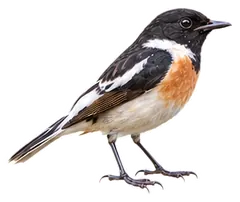 White-tailed StonechatSaxicola leucurus
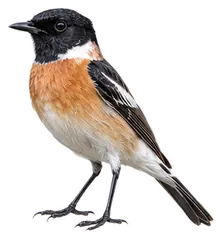 Amur StonechatSaxicola stejnegeri
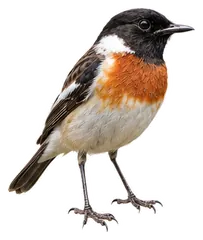 African StonechatSaxicola torquatus
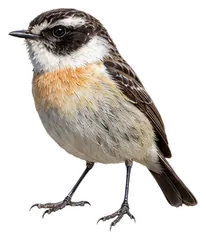 Reunion StonechatSaxicola tectes
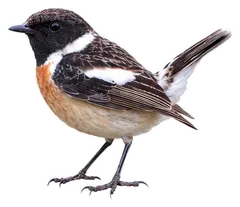
 Siberian StonechatSaxicola maurus
Download illustration
Free to use with credit: “Illustration: Bird Album (birdalbum.com)”. Drawn by AI from a reference photo by Erik Eckstein. ↗
Heard it but can't see it? Mingji identifies birds by sound and photo, on your phone.
In other languages
- EnglishEuropean Stonechat
- 简体中文欧石䳭
- 繁體中文黑喉鴝
- 日本語ヨーロッパノビタキ
- DeutschSchwarzkehlchen
- FrançaisTarier pâtre
- EspañolTarabilla europea
- Portuguêscartaxo-europeu
- ItalianoSaltimpalo
- NederlandsRoodborsttapuit
- РусскийЗападный черноголовый чекан
- Svenskasvarthakad buskskvätta
- DanskSortstrubet Bynkefugl
- Polskikląskawka (zwyczajna)