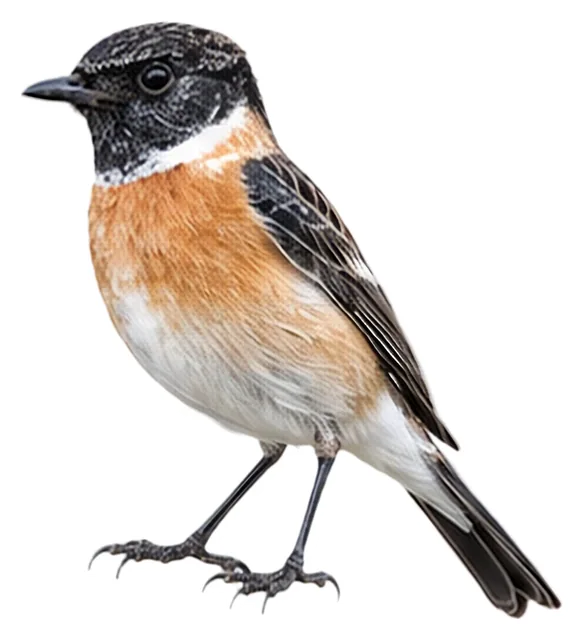
Siberian Stonechat
Saxicola maurus (Pallas, 1773)
≈13 cmLength13 gWeight
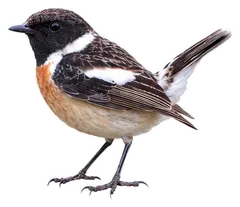
This bird often perches on scrub tops, fences and wires, and the breeding-season male has a black head and white collar.
Busiest months: November–February · Most records: India, Nepal, Israel
How to identify
Field marks
- Breeding-season male with black upperparts and head
- Male in breeding plumage with a white collar, white scapular patches and a white rump
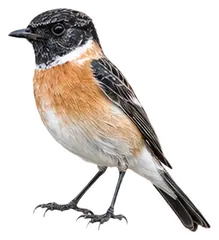
- Usually less orange on the breast than European Stonechat
Male, female and young
Female with pale rufous upperparts and head, white neck patches that do not form a complete collar, and a pale pinkish-yellow rump without streaks.
Voice
Male call resembles two pebbles being struck together; song high-pitched and twittering.
Where and when it's recorded
Busiest months: November–February · Most records: India, Nepal, Israel

Siberian Stonechat has been recorded at 766 of the 8,276 birding hotspots we track, in 58 countries and regions.
Records by month Northern Hemisphere
Where it's recorded most
- Baruipur MarshesIndia1,436 records
- Kanha NP – Mukki ZoneIndia1,239 records
- KattampallyIndia1,218 records
More places
- Viva Wetlands, VirarIndia963 records
- Aras Kuş Halkalama İstasyonuTürkiye915 records
- Sultanpur National ParkIndia881 records
- Maguri BeelIndia796 records
- Bharatpur – Keoladeo Ghana NPIndia736 records
- Vetal Tekdi/HillIndia733 records
- Gajoldoba Barrage JGIndia701 records
Countries and regions with the most records
eBird records via GBIF up to 2024-12-31. A record means someone listed it; more records partly mean more birders, not more birds.
About
The Siberian stonechat or Asian stonechat (Saxicola maurus) is a recently validated species of the Old World flycatcher family (Muscicapidae). Like the other thrush-like flycatchers, it was often placed in the Turdidae in the past. It breeds in the East Palearctic including in easternmost Europe and winters in the Old World tropics.
Excerpt from Wikipedia, CC BY-SA 4.0 · authors · Read more on Wikipedia
Questions
How big is the Siberian Stonechat?
The Siberian Stonechat is about ≈13 cm long and weighs around 13 g.
Where does the Siberian Stonechat live?
Its breeding range: Palearctic: eastern Caucasus, southeastern Turkey and western Iran, central Siberia, Central Asia and the Himalayas to western, central China. It is most often recorded in India, Nepal and Israel.
When is the best time to see the Siberian Stonechat?
At the hotspots we track, it is recorded most in January, February, November and December (Northern Hemisphere).
What does the Siberian Stonechat eat?
Main food: Insects & other invertebrates.
What family is the Siberian Stonechat in?
It belongs to the family Chats, Old World Flycatchers (Muscicapidae), order Passerines (Passeriformes).
At a glance
- Length
- ≈13 cm
- Weight
- 13 g
- Habitat
- Shrubland
- Diet
- Insects & other invertebrates
- Lifestyle
- Perches in trees
- Migration
- Partial migrant
More measurements
- Wing
- 69 mm
- Tail
- 49 mm
- Bill
- 15 mm
- Tarsus
- 21 mm
Averages from the AVONET dataset; length from field guides where available.
Range
Palearctic: eastern Caucasus, southeastern Turkey and western Iran, central Siberia, Central Asia and the Himalayas to western, central China
Breeding range, IOC World Bird List 15.2
Subspecies · 1
- Saxicola maurus przewalskii Tibet to c China, n Myanmar and n Thailand | non-breeding: to s, se Asia
Classification
- Order
- Passerines Passeriformes
- Family
- Chats, Old World Flycatchers Muscicapidae
- Genus
- Saxicola
Other birds in the genus Saxicola
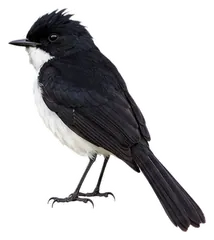 Jerdon's Bush ChatSaxicola jerdoni
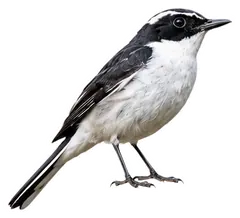 Grey Bush ChatSaxicola ferreus
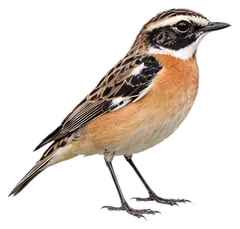 WhinchatSaxicola rubetra
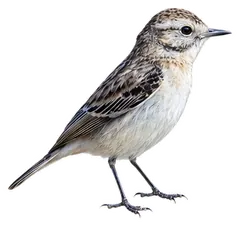 White-browed Bush ChatSaxicola macrorhynchus
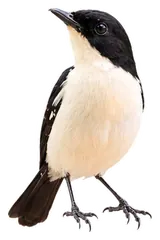 White-bellied Bush ChatSaxicola gutturalis
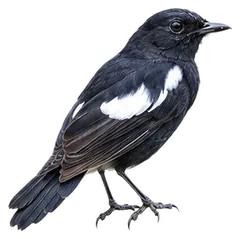 Pied Bush ChatSaxicola caprata
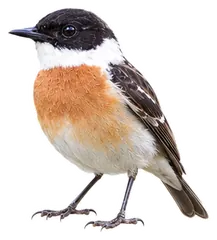 White-throated Bush ChatSaxicola insignis
 White-tailed StonechatSaxicola leucurus
 Amur StonechatSaxicola stejnegeri
 African StonechatSaxicola torquatus
 Reunion StonechatSaxicola tectes
 European StonechatSaxicola rubicola
Download illustration
Free to use with credit: “Illustration: Bird Album (birdalbum.com)”. Drawn by AI from a reference photo by Mprasannak. ↗

Heard it but can't see it? Mingji identifies birds by sound and photo, on your phone.
In other languages
- EnglishSiberian Stonechat
- 简体中文黑喉石䳭
- 繁體中文黑喉石䳭
- 日本語シベリアノビタキ
- DeutschPallasschwarzkehlchen
- FrançaisTarier de Sibérie
- EspañolTarabilla Siberiana
- Portuguêscartaxo-asiático
- ItalianoSaltimpalo siberiano
- NederlandsAziatische Roodborsttapuit
- РусскийАзиатский черноголовый чекан
- Svenskavitgumpad buskskvätta
- DanskSibirisk Bynkefugl
- Polskikląskawka syberyjska