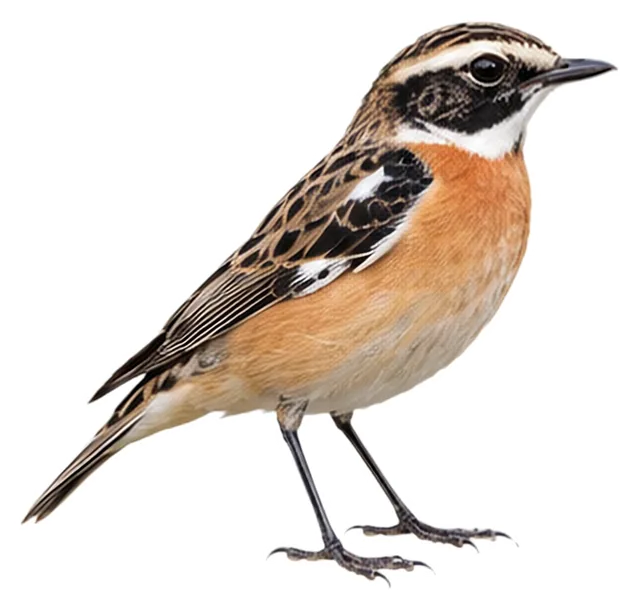
Whinchat
Saxicola rubetra (Linnaeus, 1758)
12–14 cmLength17 gWeight
The whinchat (Saxicola rubetra) is a small migratory passerine bird breeding in Europe and western Asia and wintering in central Africa.
Busiest months: September · Most records: United Kingdom, Spain, Israel
Where and when it's recorded
Busiest months: September · Most records: United Kingdom, Spain, Israel

Whinchat has been recorded at 1,338 of the 8,276 birding hotspots we track, in 104 countries and regions.
Records by month Northern Hemisphere
Where it's recorded most
- Spurn Bird Observatory Recording AreaUnited Kingdom790 records
- Fair IsleUnited Kingdom780 records
- St Mary'sUnited Kingdom670 records
More places
- Antikythira Bird ObservatoryGreece659 records
- Wanstead FlatsUnited Kingdom657 records
- RivaTürkiye640 records
- Spata fieldsGreece458 records
- Portland BillUnited Kingdom453 records
- Aras Kuş Halkalama İstasyonuTürkiye453 records
- International Birding and Research Center Eilat (IBRCE)Israel450 records
Countries and regions with the most records
eBird records via GBIF up to 2024-12-31. A record means someone listed it; more records partly mean more birders, not more birds.
About
The whinchat (Saxicola rubetra) is a small migratory passerine bird breeding in Europe and western Asia and wintering in central Africa. At one time considered to be in the thrush family, Turdidae, it is now placed in the Old World flycatcher family, Muscicapidae. Both sexes have a strong supercilium, brownish upper parts mottled darker, a pale throat and breast, a pale buff to whitish belly, and a blackish tail with white bases to the outer tail feathers, but in the breeding season, the male has an orange-buff throat and breast.
Excerpt from Wikipedia, CC BY-SA 4.0 · authors · Read more on Wikipedia
Questions
How big is the Whinchat?
The Whinchat is about 12–14 cm long and weighs around 17 g.
Where does the Whinchat live?
Its breeding range: Palearctic: Europe to central Russia and northwestern Mongolia. It is most often recorded in United Kingdom, Spain and Israel.
When is the best time to see the Whinchat?
At the hotspots we track, it is recorded most in September (Northern Hemisphere).
Is the Whinchat endangered?
The IUCN Red List classifies the Whinchat as Least Concern.
What does the Whinchat eat?
Main food: Insects & other invertebrates.
What family is the Whinchat in?
It belongs to the family Chats, Old World Flycatchers (Muscicapidae), order Passerines (Passeriformes).
At a glance
- Length
- 12–14 cm
- Weight
- 17 g
- Habitat
- Shrubland
- Diet
- Insects & other invertebrates
- Lifestyle
- Perches in trees
- Migration
- Migratory
- Conservation
- Least Concern
More measurements
- Wing
- 76 mm
- Tail
- 47 mm
- Bill
- 15 mm
- Tarsus
- 22 mm
Averages from the AVONET dataset; length from field guides where available.
Range
Palearctic: Europe to central Russia and northwestern Mongolia
Breeding range, IOC World Bird List 15.2
Classification
- Order
- Passerines Passeriformes
- Family
- Chats, Old World Flycatchers Muscicapidae
- Genus
- Saxicola
Other birds in the genus Saxicola
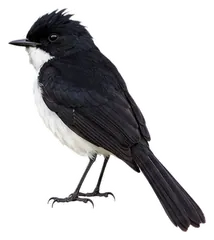 Jerdon's Bush ChatSaxicola jerdoni
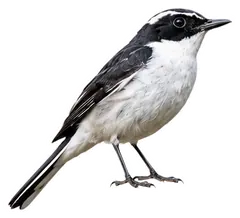 Grey Bush ChatSaxicola ferreus
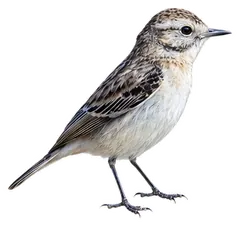 White-browed Bush ChatSaxicola macrorhynchus
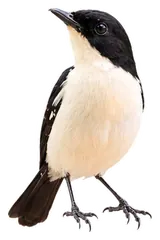 White-bellied Bush ChatSaxicola gutturalis
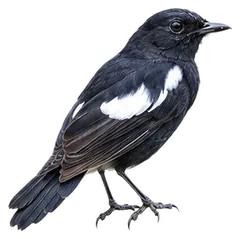 Pied Bush ChatSaxicola caprata
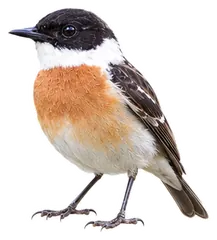 White-throated Bush ChatSaxicola insignis
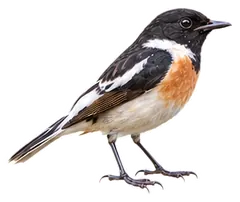 White-tailed StonechatSaxicola leucurus
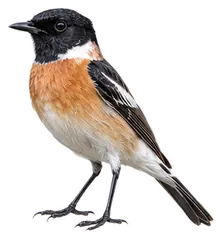 Amur StonechatSaxicola stejnegeri
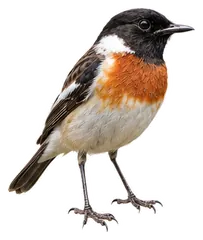 African StonechatSaxicola torquatus
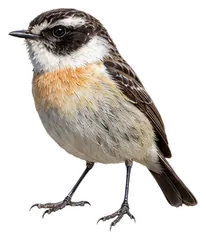 Reunion StonechatSaxicola tectes
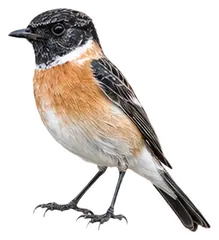 Siberian StonechatSaxicola maurus
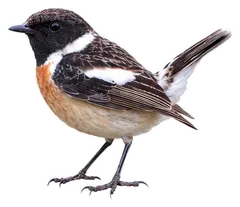 European StonechatSaxicola rubicola
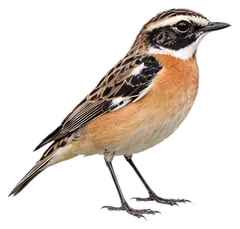
Download illustration
Free to use with credit: “Illustration: Bird Album (birdalbum.com)”. Drawn by AI from a reference photo by Mourad Harzallah. ↗
Heard it but can't see it? Mingji identifies birds by sound and photo, on your phone.