 Bird Album
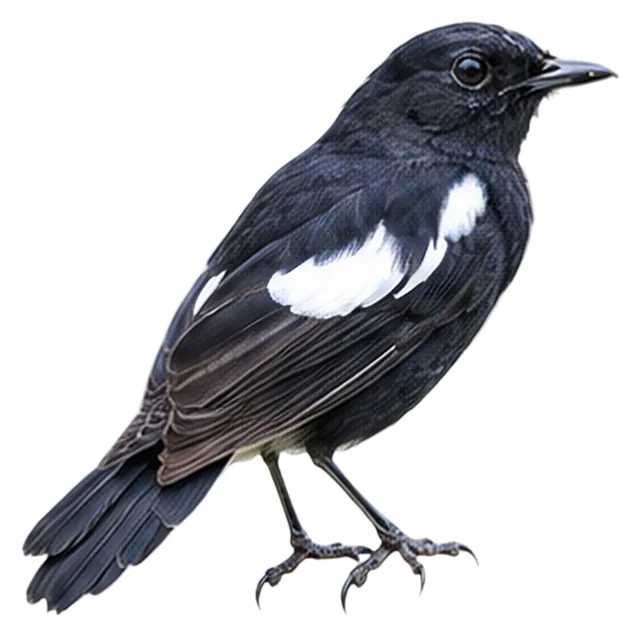
Pied Bush Chat
Saxicola caprata (Linnaeus, 1766)
≈14 cmLength19 cmWingspan15 gWeight
The male is mainly black with a white wing patch and often perches on scrub, the tops of small trees or wires.
Busiest months: February · Most records: India, Cambodia, Thailand
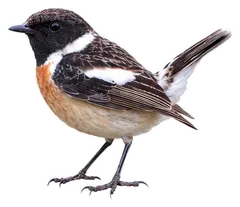
Looks like Siberian Stonechat
How to identify
Field marks
- Male black, with only the rump, wing patch and lower belly white
- White wing patch
- Rump white near the tail
- Tail upturned during song or when excited
Male, female and young
Female lacks a white wing patch and is paler, usually with brown streaks; juvenile has scaly underparts and dark upperparts.
Voice
Clear whistles, transcribed by some as the English phrase “we are tea for two”, with “tea” higher in pitch.
Similar species
Where and when it's recorded

Pied Bush Chat has been recorded at 642 of the 8,171 birding hotspots we track, in 29 countries and regions.
Records by month Northern Hemisphere
Where it's recorded most
- GKVK CampusIndia3,239 records
- Hoskote / Hosakote KereIndia2,702 records
- Saul Kere / Sowl KereIndia2,647 records
More places
- Bharatpur – Keoladeo Ghana NPIndia2,600 records
- Hessaraghatta KereIndia2,152 records
- Doddanekundi KereIndia1,972 records
- Muthanallur KereIndia1,734 records
- Krishnampathi Lake, SeeranaickenpalayamIndia1,674 records
- Panchayat Union Middle School, KrishnampudurIndia1,632 records
- Okhla Bird SanctuaryIndia1,563 records
Countries and regions with the most records
eBird records via GBIF up to 2024-12-31. A record means someone listed it; more records partly mean more birders, not more birds.
About
The pied bush chat (Saxicola caprata) is a small passerine bird found ranging from West Asia and Central Asia to the Indian subcontinent and Southeast Asia. About sixteen subspecies are recognized through its wide range with many island forms. It is a familiar bird of countryside and open scrub or grassland where it is found perched at the top of short thorn trees or other shrubs, looking out for insect prey.
Excerpt from Wikipedia, CC BY-SA 4.0 · authors · Read more on Wikipedia
Questions
How big is the Pied Bush Chat?
The Pied Bush Chat is about ≈14 cm long, with a wingspan of 19 cm and weighs around 15 g.
Where does the Pied Bush Chat live?
Its breeding range: Palearctic, Oriental, Australasia: northeastern Iran through Southeast Asia to New Guinea and Bismarck Archipelago. It is most often recorded in India, Cambodia and Thailand.
When is the best time to see the Pied Bush Chat?
At the hotspots we track, it is recorded most in February (Northern Hemisphere).
Is the Pied Bush Chat endangered?
The IUCN Red List classifies the Pied Bush Chat as Least Concern.
What does the Pied Bush Chat eat?
Main food: Insects & other invertebrates.
What family is the Pied Bush Chat in?
It belongs to the family Chats, Old World Flycatchers (Muscicapidae), order Passerines (Passeriformes).
At a glance
- Length
- ≈14 cm
- Wingspan
- 19 cm
- Weight
- 15 g
- Habitat
- Shrubland
- Diet
- Insects & other invertebrates
- Lifestyle
- Perches in trees
- Migration
- Migratory
- Conservation
- Least Concern
More measurements
- Wing
- 70 mm
- Tail
- 52 mm
- Bill
- 15 mm
- Tarsus
- 21 mm
Averages from the AVONET dataset; length from field guides where available.
Range
Palearctic, Oriental, Australasia: northeastern Iran through Southeast Asia to New Guinea and Bismarck Archipelago
Breeding range, IOC World Bird List 15.2
Subspecies · 1
- Saxicola caprata burmanicus c, se India to Myanmar, s China, Thailand and Indochina
Classification
- Order
- Passerines Passeriformes
- Family
- Chats, Old World Flycatchers Muscicapidae
- Genus
- Saxicola
Other birds in the genus Saxicola
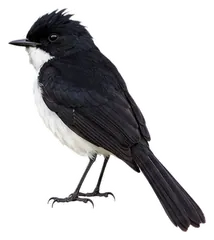 Jerdon's Bush ChatSaxicola jerdoni
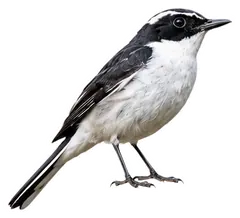 Grey Bush ChatSaxicola ferreus
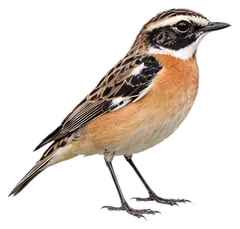 WhinchatSaxicola rubetra
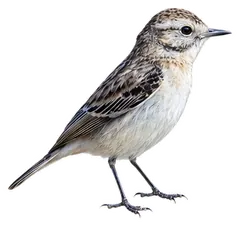 White-browed Bush ChatSaxicola macrorhynchus
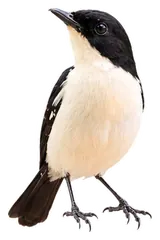 White-bellied Bush ChatSaxicola gutturalis
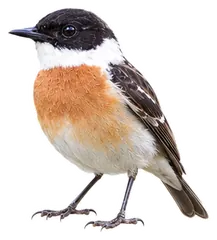 White-throated Bush ChatSaxicola insignis
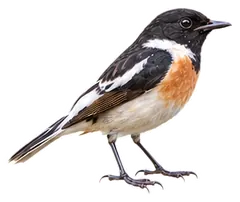 White-tailed StonechatSaxicola leucurus
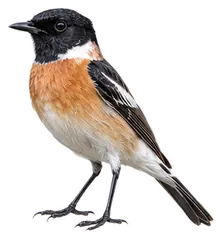 Amur StonechatSaxicola stejnegeri
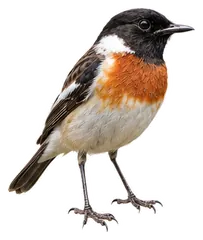 African StonechatSaxicola torquatus
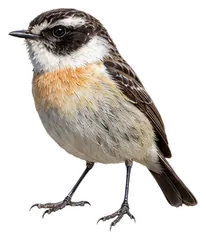 Reunion StonechatSaxicola tectes
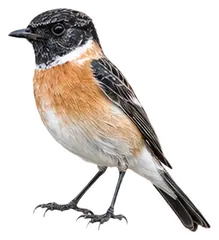 Siberian StonechatSaxicola maurus
 European StonechatSaxicola rubicola
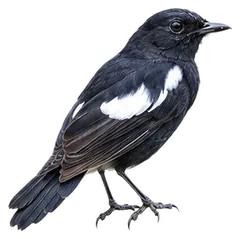
Download illustration
Free to use with credit: “Illustration: Bird Album (birdalbum.com)”. Drawn by AI from a reference photo by QuestaGame. ↗
Heard it but can't see it? Mingji identifies birds by sound and photo, on your phone.