 Bird Album
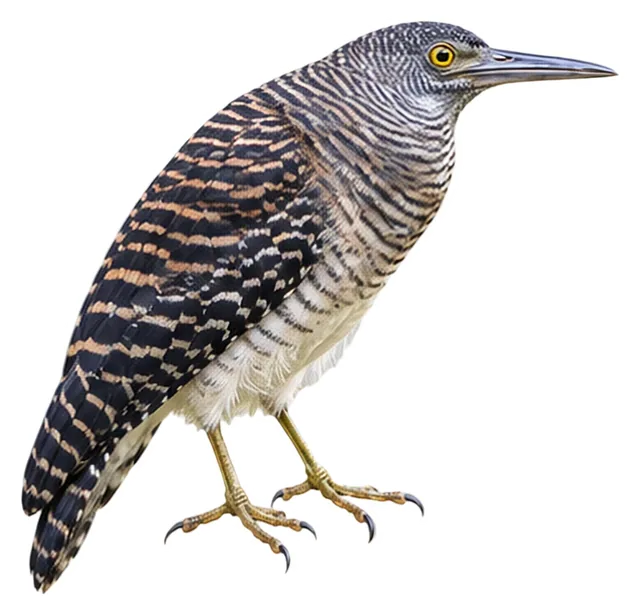
Forest Bittern
Zonerodius heliosylus (Lesson, RP & Garnot, 1828)
65–71 cmLength802 gWeight
The forest bittern (Zonerodius heliosylus) is a bird indigenous to New Guinea.
Busiest months: July · Most records: Papua New Guinea, Indonesia
Where and when it's recorded
Busiest months: July · Most records: Papua New Guinea, Indonesia

Forest Bittern has been recorded at 10 of the 8,276 birding hotspots we track, in 2 countries and regions.
Records by month Southern Hemisphere
Where it's recorded most
- Varirata National ParkPapua New Guinea88 records
- Fly River – between Kiunga and Elevala RiverPapua New Guinea11 records
- Kwatu LodgePapua New Guinea9 records
More places
- PorotonaPapua New Guinea4 records
- Alex Waisimon's PropertyIndonesia3 records
- Sera (formerly Crater Mountain) Biological Research StationPapua New Guinea2 records
- Brown River/Vanapa River lowlandsPapua New Guinea1 record
- Elevala RiverPapua New Guinea1 record
- Elevala River – between Fly River and Ketu RiverPapua New Guinea1 record
- NimbokrangIndonesia1 record
Countries and regions with the most records
eBird records via GBIF up to 2024-12-31. A record means someone listed it; more records partly mean more birders, not more birds.
About
The forest bittern (Zonerodius heliosylus) is a bird indigenous to New Guinea. It is the only member of the genus Zonerodius and is also known as the New Guinea tiger heron.
Excerpt from Wikipedia, CC BY-SA 4.0 · authors · Read more on Wikipedia
Questions
How big is the Forest Bittern?
The Forest Bittern is about 65–71 cm long and weighs around 802 g.
Where does the Forest Bittern live?
Its breeding range: Australasia: Salawati (Raja Ampat Islands, northwest of New Guinea), Aru Islands (southwest of New Guinea) and New Guinea. It is most often recorded in Papua New Guinea and Indonesia.
When is the best time to see the Forest Bittern?
At the hotspots we track, it is recorded most in July (Southern Hemisphere).
Is the Forest Bittern endangered?
The IUCN Red List classifies the Forest Bittern as Near Threatened.
What does the Forest Bittern eat?
Main food: Fish, shrimp & shellfish.
What family is the Forest Bittern in?
It belongs to the family Herons, Bitterns (Ardeidae), order Pelecaniformes.
At a glance
- Length
- 65–71 cm
- Weight
- 802 g
- Habitat
- Rivers & streams
- Diet
- Fish, shrimp & shellfish
- Lifestyle
- Active on the ground
- Migration
- Resident (barely migrates)
- Conservation
- Near Threatened
More measurements
- Wing
- 303 mm
- Tail
- 124 mm
- Bill
- 94 mm
- Tarsus
- 95 mm
Averages from the AVONET dataset; length from field guides where available.
Range
Australasia: Salawati (Raja Ampat Islands, northwest of New Guinea), Aru Islands (southwest of New Guinea) and New Guinea
Breeding range, IOC World Bird List 15.2
Classification
- Order
- Pelecaniformes
- Family
- Herons, Bitterns Ardeidae
- Genus
- Zonerodius
More from the family Herons, Bitterns
 White-crested Tiger HeronTigriornis leucolopha
 Rufescent Tiger HeronTigrisoma lineatum
 Bare-throated Tiger HeronTigrisoma mexicanum
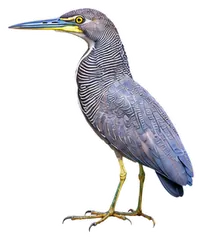 Fasciated Tiger HeronTigrisoma fasciatum
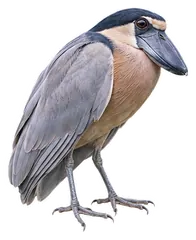 Boat-billed HeronCochlearius cochlearius
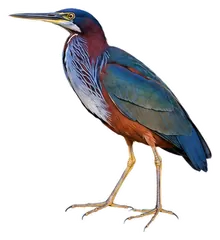 Agami HeronAgamia agami
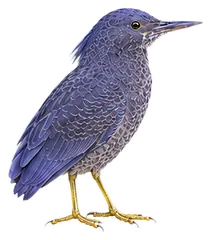 Zigzag HeronZebrilus undulatus
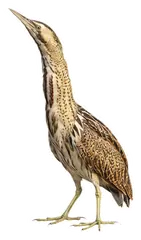 Eurasian BitternBotaurus stellaris
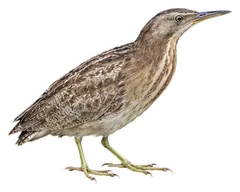 Australasian BitternBotaurus poiciloptilus
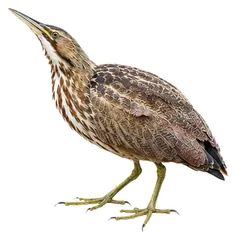 American BitternBotaurus lentiginosus
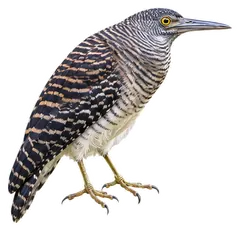
Download illustration
Free to use with credit: “Illustration: Bird Album (birdalbum.com)”. Drawn by AI from a reference photo by Janos Olah. ↗
Heard it but can't see it? Mingji identifies birds by sound and photo, on your phone.