 Bird Album
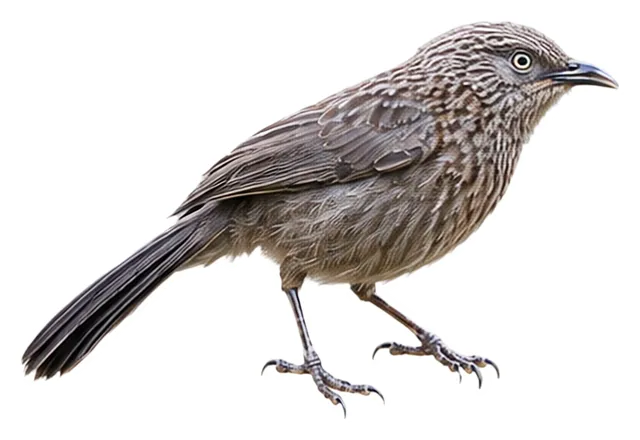
Giant Babax
Pterorhinus waddelli (Dresser, 1905)
31–34 cmLength46 gWeight
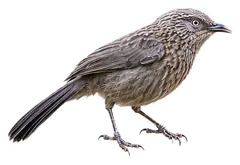
This bird is stout, with a long tail and dark stripes on brown feathers.
Busiest months: October · Most records: China
How to identify
Field marks
- Long tail
- Curved bill
- Brown feathers with dark stripes
Voice
Sometimes melodious and flute-like, sometimes harsh chattering.
Where and when it's recorded

Giant Babax has been recorded at 13 of the 8,171 birding hotspots we track, in 1 country or region.
Records by month Northern Hemisphere
Where it's recorded most
- Shugseb NunneryChina97 records
- Baishuwang Scenic AreaChina15 records
- Lalu Wetland NNRChina12 records
More places
- NorbulingkaChina11 records
- Sekila Mountain PassChina6 records
- Basongtso National Forest ParkChina4 records
- Lhasa [urban area & surroundings]China4 records
- Yamdrok LakeChina3 records
- Sekila National Forest ParkChina1 record
- Ganden MonasteryChina1 record
Countries and regions with the most records
eBird records via GBIF up to 2024-12-31. A record means someone listed it; more records partly mean more birders, not more birds.
About
The giant babax (Pterorhinus waddelli) is a species of bird in the laughingthrush family Leiothrichidae, found in northeast India and southern Tibet. It prefers the low bushes at the edge of the southern Tibetan plateau, but it can adapt to both dry and cold mountain habitats. It is also commonly seen around villages and monasteries, where it feeds off scraps.
Excerpt from Wikipedia, CC BY-SA 4.0 · authors · Read more on Wikipedia
Questions
How big is the Giant Babax?
The Giant Babax is about 31–34 cm long and weighs around 46 g.
Where does the Giant Babax live?
Its breeding range: Palearctic: Tibet. It is most often recorded in China.
When is the best time to see the Giant Babax?
At the hotspots we track, it is recorded most in October (Northern Hemisphere).
Is the Giant Babax endangered?
The IUCN Red List classifies the Giant Babax as Least Concern.
What does the Giant Babax eat?
Main food: Omnivore.
What family is the Giant Babax in?
It belongs to the family Laughingthrushes & Allies (Leiothrichidae), order Passerines (Passeriformes).
At a glance
- Length
- 31–34 cm
- Weight
- 46 g
- Habitat
- Shrubland
- Diet
- Omnivore
- Lifestyle
- Perches in trees
- Migration
- Resident (barely migrates)
- Conservation
- Least Concern
More measurements
- Wing
- 130 mm
- Tail
- 158 mm
- Bill
- 36 mm
- Tarsus
- 42 mm
Averages from the AVONET dataset; length from field guides where available.
Range
Palearctic: Tibet
Breeding range, IOC World Bird List 15.2
Subspecies · 2
- Pterorhinus waddelli waddelli se Tibet
- Pterorhinus waddelli jomo e Nepal, w Bhutan and sc Tibet
Classification
- Order
- Passerines Passeriformes
- Family
- Laughingthrushes & Allies Leiothrichidae
- Genus
- Pterorhinus
Other birds in the genus Pterorhinus
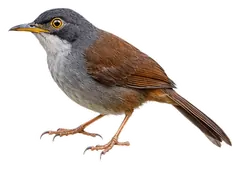 Wayanad LaughingthrushPterorhinus delesserti
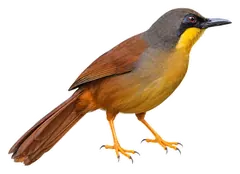 Rufous-vented LaughingthrushPterorhinus gularis
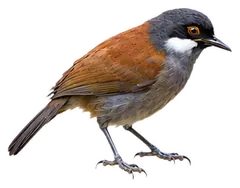 White-cheeked LaughingthrushPterorhinus vassali
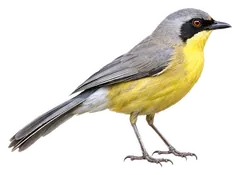 Yellow-throated LaughingthrushPterorhinus galbanus
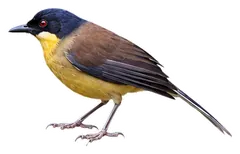 Blue-crowned LaughingthrushPterorhinus courtoisi
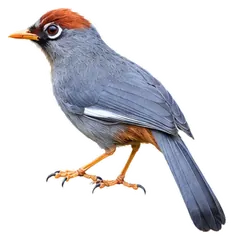 Chestnut-capped LaughingthrushPterorhinus mitratus
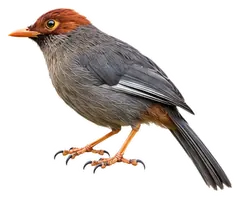 Chestnut-hooded LaughingthrushPterorhinus treacheri
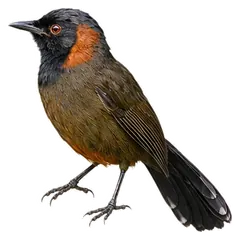 Rufous-necked LaughingthrushPterorhinus ruficollis
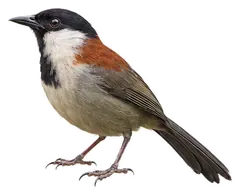 Chestnut-backed LaughingthrushPterorhinus nuchalis
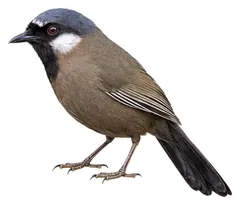 Black-throated LaughingthrushPterorhinus chinensis
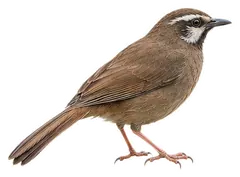 White-browed LaughingthrushPterorhinus sannio
 Masked LaughingthrushPterorhinus perspicillatus
Download illustration
Free to use with credit: “Illustration: Bird Album (birdalbum.com)”. Drawn by AI from a reference photo by Zhaoqi Leng. ↗
Heard it but can't see it? Mingji identifies birds by sound and photo, on your phone.