 Bird Album
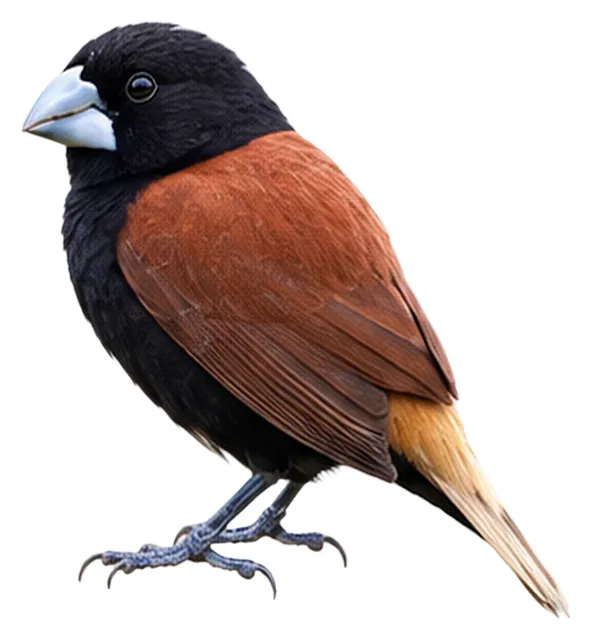
Great-billed Mannikin
Lonchura grandis (Sharpe, 1882)
14 gWeight
The great-billed mannikin or grand munia (Lonchura grandis) is a species of estrildid finch found in northern and eastern New Guinea.
Busiest months: August · Most records: Indonesia, Papua New Guinea
Where and when it's recorded

Great-billed Mannikin has been recorded at 8 of the 8,171 birding hotspots we track, in 2 countries and regions.
Records by month Southern Hemisphere
Where it's recorded most
- NimbokrangIndonesia43 records
- Varirata National ParkPapua New Guinea25 records
- Brown River/Vanapa River lowlandsPapua New Guinea5 records
More places
- Nimbokrang – Jalan Korea swamp forestIndonesia3 records
- GaruahiPapua New Guinea2 records
- Nimbokrang – KM 8Indonesia2 records
- Alex Waisimon's PropertyIndonesia2 records
- Pacific Adventist UniversityPapua New Guinea1 record
Countries and regions with the most records
eBird records via GBIF up to 2024-12-31. A record means someone listed it; more records partly mean more birders, not more birds.
About
The great-billed mannikin or grand munia (Lonchura grandis) is a species of estrildid finch found in northern and eastern New Guinea. It is found in wetlands habitat. The status of the species is evaluated as Least Concern.
Excerpt from Wikipedia, CC BY-SA 4.0 · authors · Read more on Wikipedia
Questions
How big is the Great-billed Mannikin?
The Great-billed Mannikin weighs around 14 g.
Where does the Great-billed Mannikin live?
Its breeding range: Australasia: northern, southeastern New Guinea. It is most often recorded in Indonesia and Papua New Guinea.
When is the best time to see the Great-billed Mannikin?
At the hotspots we track, it is recorded most in August (Southern Hemisphere).
Is the Great-billed Mannikin endangered?
The IUCN Red List classifies the Great-billed Mannikin as Least Concern.
What does the Great-billed Mannikin eat?
Main food: Seeds.
What family is the Great-billed Mannikin in?
It belongs to the family Waxbills, Munias & Allies (Estrildidae), order Passerines (Passeriformes).
At a glance
- Weight
- 14 g
- Habitat
- Grassland
- Diet
- Seeds
- Lifestyle
- Perches in trees
- Migration
- Resident (barely migrates)
- Conservation
- Least Concern
More measurements
- Wing
- 51 mm
- Tail
- 40 mm
- Bill
- 14 mm
- Tarsus
- 16 mm
Averages from the AVONET dataset; length from field guides where available.
Range
Australasia: northern, southeastern New Guinea
Breeding range, IOC World Bird List 15.2
Classification
- Order
- Passerines Passeriformes
- Family
- Waxbills, Munias & Allies Estrildidae
- Genus
- Lonchura
Other birds in the genus Lonchura
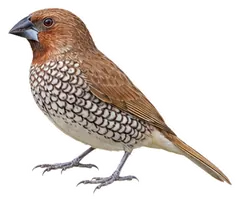 Scaly-breasted MuniaLonchura punctulata
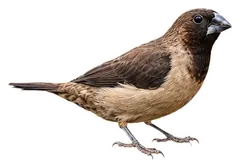 Black-throated MuniaLonchura kelaarti
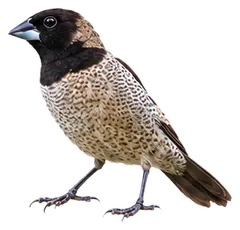 Black-faced MuniaLonchura molucca
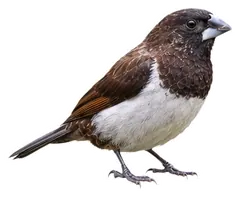 White-rumped MuniaLonchura striata
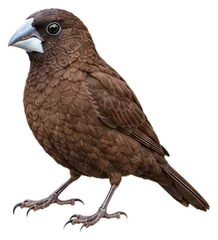 Dusky MuniaLonchura fuscans
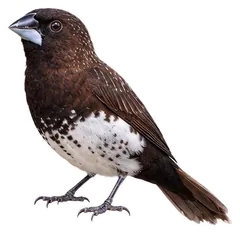 White-bellied MuniaLonchura leucogastra
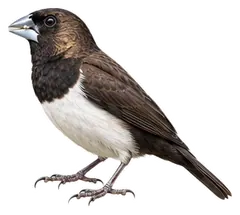 Javan MuniaLonchura leucogastroides
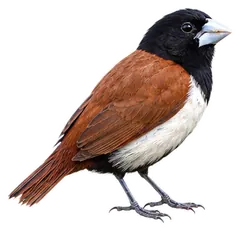 Tricolored MuniaLonchura malacca
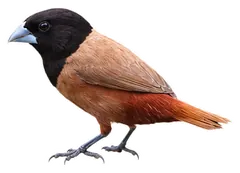 Chestnut MuniaLonchura atricapilla
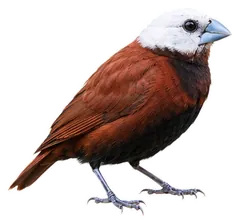 White-capped MuniaLonchura ferruginosa
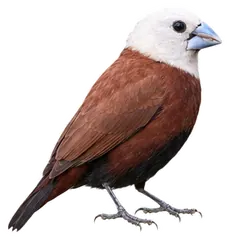 White-headed MuniaLonchura maja
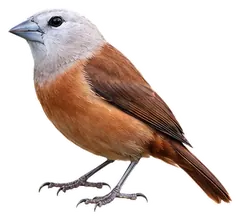 Pale-headed MuniaLonchura pallida
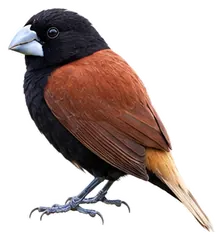
Download illustration
Free to use with credit: “Illustration: Bird Album (birdalbum.com)”. Drawn by AI from a reference photo by Marc Thibault. ↗
Heard it but can't see it? Mingji identifies birds by sound and photo, on your phone.