 Bird Album
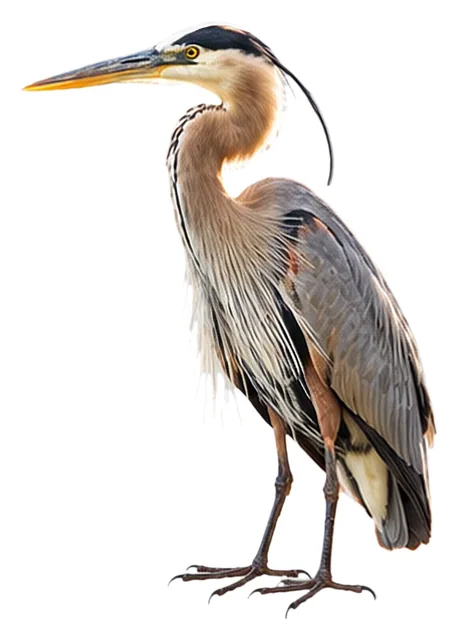
Great Blue Heron
Ardea herodias Linnaeus, 1758
2.5 kgWeight
The great blue heron (Ardea herodias) is a large wading bird in the heron family (Ardeidae), common near shores of open water and wetlands over most of North and Central America, as well as Northwestern South America, the Caribbean, and the Galápagos Islands.
Busiest months: May · Most records: United States, Canada, Mexico
Where and when it's recorded
Busiest months: May · Most records: United States, Canada, Mexico

Great Blue Heron has been recorded at 1,467 of the 8,276 birding hotspots we track, in 46 countries and regions.
Records by month Northern Hemisphere
Where it's recorded most
- John Heinz NWR – impoundmentUnited States23,174 records
- Edwin B. Forsythe NWRUnited States22,327 records
- Union Bay Natural Area/Montlake FillUnited States22,235 records
More places
- Bombay Hook National Wildlife RefugeUnited States21,948 records
- Riparian Preserve at Gilbert Water RanchUnited States19,899 records
- Billy Frank Jr. Nisqually NWRUnited States19,086 records
- Magee Marsh – BoardwalkUnited States18,915 records
- Reifel Bird SanctuaryCanada18,800 records
- Parker River NWRUnited States18,074 records
- HUNTLEY MEADOWS PARKUnited States17,690 records
Countries and regions with the most records
eBird records via GBIF up to 2024-12-31. A record means someone listed it; more records partly mean more birders, not more birds.
About
The great blue heron (Ardea herodias) is a large wading bird in the heron family (Ardeidae), common near shores of open water and wetlands over most of North and Central America, as well as Northwestern South America, the Caribbean, and the Galápagos Islands. It is occasionally found in the Azores and is a rare vagrant to Europe. An all-white population found in South Florida, the Florida Keys, and the Caribbean islands, is known as the great white heron.
Excerpt from Wikipedia, CC BY-SA 4.0 · authors · Read more on Wikipedia
Questions
How big is the Great Blue Heron?
The Great Blue Heron weighs around 2.5 kg.
Where does the Great Blue Heron live?
Its breeding range: North America, Middle America: widespread. It is most often recorded in United States, Canada and Mexico.
When is the best time to see the Great Blue Heron?
At the hotspots we track, it is recorded most in May (Northern Hemisphere).
Is the Great Blue Heron endangered?
The IUCN Red List classifies the Great Blue Heron as Least Concern.
What does the Great Blue Heron eat?
Main food: Fish, shrimp & shellfish.
What family is the Great Blue Heron in?
It belongs to the family Herons, Bitterns (Ardeidae), order Pelecaniformes.
At a glance
- Weight
- 2.5 kg
- Habitat
- Wetland
- Diet
- Fish, shrimp & shellfish
- Lifestyle
- Active on the ground
- Migration
- Partial migrant
- Conservation
- Least Concern
More measurements
- Wing
- 466 mm
- Tail
- 165 mm
- Bill
- 144 mm
- Tarsus
- 168 mm
Averages from the AVONET dataset; length from field guides where available.
Range
North America, Middle America: widespread
Breeding range, IOC World Bird List 15.2
Classification
- Order
- Pelecaniformes
- Family
- Herons, Bitterns Ardeidae
- Genus
- Ardea
Other birds in the genus Ardea
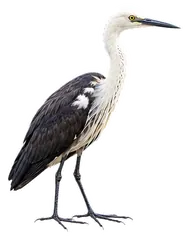 White-necked HeronArdea pacifica
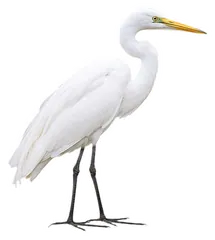 Great EgretArdea alba
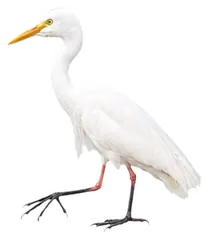 Yellow-billed EgretArdea brachyrhyncha
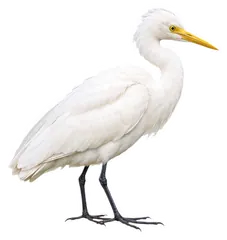 Medium EgretArdea intermedia
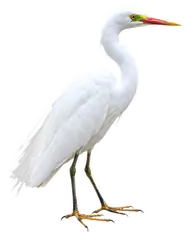 Plumed EgretArdea plumifera
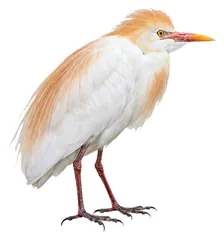 Western Cattle EgretArdea ibis
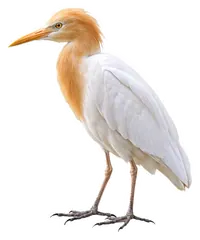 Eastern Cattle EgretArdea coromanda
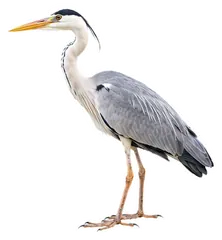 Grey HeronArdea cinerea
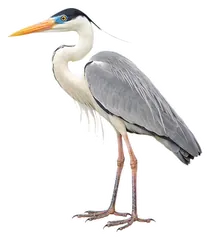 Cocoi HeronArdea cocoi
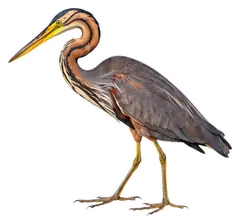 Purple HeronArdea purpurea
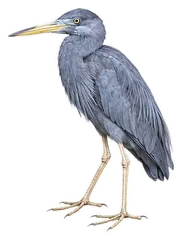 Humblot's HeronArdea humbloti
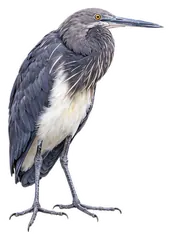 White-bellied HeronArdea insignis
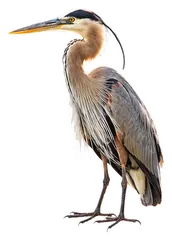
Download illustration
Free to use with credit: “Illustration: Bird Album (birdalbum.com)”. Drawn by AI from a reference photo by Leslie S. ↗
Heard it but can't see it? Mingji identifies birds by sound and photo, on your phone.