 Bird Album
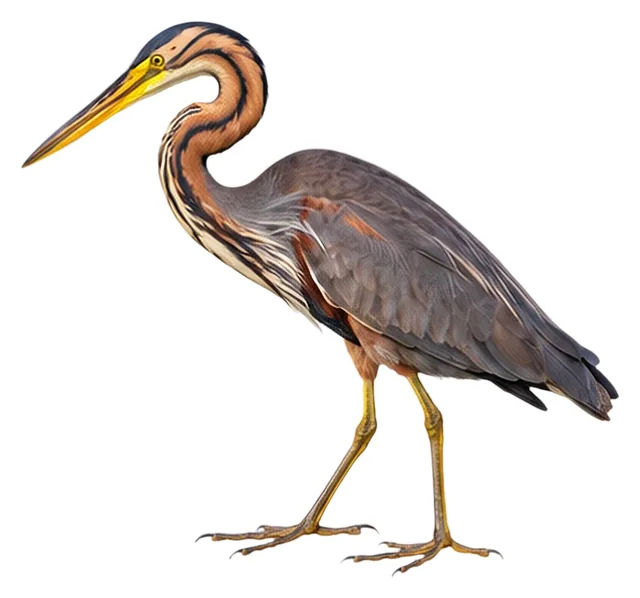
Purple Heron
Ardea purpurea Linnaeus, 1766
78–97 cmLength135 cmWingspan1.1 kgWeight
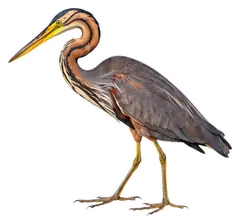
It is slightly smaller and more slender than Grey Heron, with darker rufous plumage, and favors hiding in reeds.
Busiest months: April–May · Most records: India, Spain, China
Looks like Grey Heron
How to identify
Field marks
- Black forehead and crown; black stripes on the nape extending into a fine crest
- Yellowish-brown sides of the head and neck with dark stripes
- Rufous breast; black belly and undertail-coverts
- Rufous-yellow bill, long and straight
Voice
A gruff “frarnk” call, quieter and higher-pitched than the call of Grey Heron.
Similar species
Where and when it's recorded
Busiest months: April–May · Most records: India, Spain, China

Purple Heron has been recorded at 2,358 of the 8,276 birding hotspots we track, in 133 countries and regions.
Records by month Northern Hemisphere
Where it's recorded most
- Changaram Wetlands – EzhupunnaIndia4,624 records
- Bharatpur – Keoladeo Ghana NPIndia4,188 records
- Saul Kere / Sowl KereIndia3,958 records
More places
- Hoskote / Hosakote KereIndia2,735 records
- Mai Po Nature ReserveHong Kong (China)2,402 records
- International Birding and Research Center Eilat (IBRCE)Israel2,385 records
- Sultanpur National ParkIndia2,242 records
- Okhla Bird SanctuaryIndia2,193 records
- Private estate near Green MubazzarahUnited Arab Emirates2,002 records
- Krishnampathi Lake, SeeranaickenpalayamIndia1,884 records
Countries and regions with the most records
eBird records via GBIF up to 2024-12-31. A record means someone listed it; more records partly mean more birders, not more birds.
About
The purple heron (Ardea purpurea) is a wide-ranging heron species. It breeds in Africa, central and southern Europe, and southern and eastern Palearctic. The Western Palearctic populations migrate between breeding and wintering habitats whereas the African and tropical-Asian populations are primarily sedentary, except for occasional dispersive movements.
Excerpt from Wikipedia, CC BY-SA 4.0 · authors · Read more on Wikipedia
Questions
How big is the Purple Heron?
The Purple Heron is about 78–97 cm long, with a wingspan of 135 cm and weighs around 1.1 kg.
Where does the Purple Heron live?
Its breeding range: Palearctic, Oriental, Africa: widespread. It is most often recorded in India, Spain and China.
When is the best time to see the Purple Heron?
At the hotspots we track, it is recorded most in April and May (Northern Hemisphere).
Is the Purple Heron endangered?
The IUCN Red List classifies the Purple Heron as Least Concern.
What does the Purple Heron eat?
Main food: Fish, shrimp & shellfish.
What family is the Purple Heron in?
It belongs to the family Herons, Bitterns (Ardeidae), order Pelecaniformes.
At a glance
- Length
- 78–97 cm
- Wingspan
- 135 cm
- Weight
- 1.1 kg
- Habitat
- Wetland
- Diet
- Fish, shrimp & shellfish
- Lifestyle
- Active on the ground
- Migration
- Migratory
- Conservation
- Least Concern
More measurements
- Wing
- 350 mm
- Tail
- 113 mm
- Bill
- 126 mm
- Tarsus
- 118 mm
Averages from the AVONET dataset; length from field guides where available.
Range
Palearctic, Oriental, Africa: widespread
Breeding range, IOC World Bird List 15.2
Classification
- Order
- Pelecaniformes
- Family
- Herons, Bitterns Ardeidae
- Genus
- Ardea
Other birds in the genus Ardea
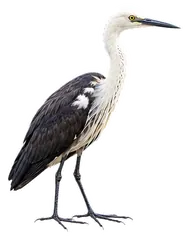 White-necked HeronArdea pacifica
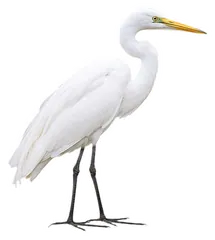 Great EgretArdea alba
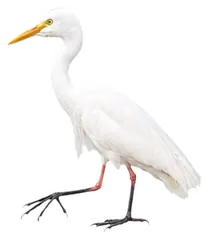 Yellow-billed EgretArdea brachyrhyncha
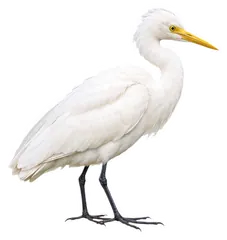 Medium EgretArdea intermedia
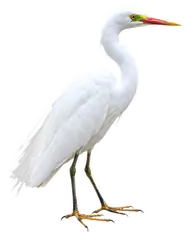 Plumed EgretArdea plumifera
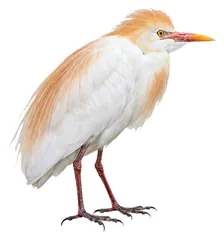 Western Cattle EgretArdea ibis
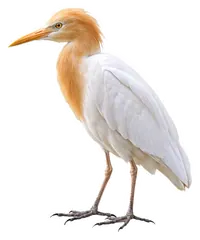 Eastern Cattle EgretArdea coromanda
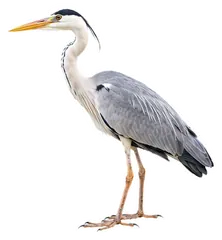 Grey HeronArdea cinerea
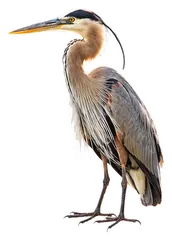 Great Blue HeronArdea herodias
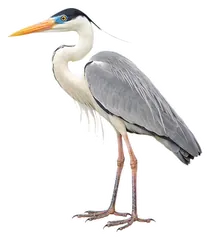 Cocoi HeronArdea cocoi
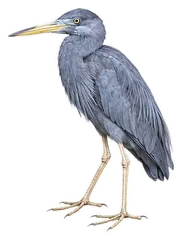 Humblot's HeronArdea humbloti
 White-bellied HeronArdea insignis
Download illustration
Free to use with credit: “Illustration: Bird Album (birdalbum.com)”. Drawn by AI from a reference photo by Pierre Dalous. ↗

Heard it but can't see it? Mingji identifies birds by sound and photo, on your phone.