 Bird Album
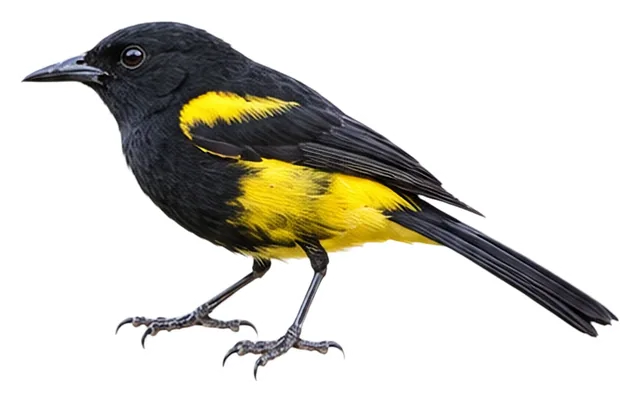
Hispaniolan Oriole
Icterus dominicensis (Linnaeus, 1766)
36 gWeight
The Hispaniolan oriole (Icterus dominicensis) is a species of bird in the family Icteridae.
Busiest months: March · Most records: Dominican Republic, Haiti
Where and when it's recorded
Busiest months: March · Most records: Dominican Republic, Haiti

Hispaniolan Oriole has been recorded at 20 of the 8,276 birding hotspots we track, in 2 countries and regions.
Records by month Northern Hemisphere
Where it's recorded most
- Rabo de GatoDominican Republic330 records
- Paraíso Caño HondoDominican Republic68 records
- ZapoténDominican Republic33 records
More places
- Monumento Natural Bahía de las CalderasDominican Republic32 records
- P. N. Los HaitisesDominican Republic29 records
- Cabo Rojo - PedernalesDominican Republic29 records
- Punta Cana Resort and ClubDominican Republic20 records
- Rancho BaiguateDominican Republic9 records
- ManicheHaiti8 records
- P.N. del EsteDominican Republic5 records
Countries and regions with the most records
eBird records via GBIF up to 2024-12-31. A record means someone listed it; more records partly mean more birders, not more birds.
About
The Hispaniolan oriole (Icterus dominicensis) is a species of bird in the family Icteridae. It is endemic to the Caribbean island of Hispaniola (split between the Dominican Republic and Haiti).
Excerpt from Wikipedia, CC BY-SA 4.0 · authors · Read more on Wikipedia
Questions
How big is the Hispaniolan Oriole?
The Hispaniolan Oriole weighs around 36 g.
Where does the Hispaniolan Oriole live?
Its breeding range: North America: Hispaniola. It is most often recorded in Dominican Republic and Haiti.
When is the best time to see the Hispaniolan Oriole?
At the hotspots we track, it is recorded most in March (Northern Hemisphere).
Is the Hispaniolan Oriole endangered?
The IUCN Red List classifies the Hispaniolan Oriole as Least Concern.
What does the Hispaniolan Oriole eat?
Main food: Omnivore.
What family is the Hispaniolan Oriole in?
It belongs to the family Oropendolas, New World Orioles, Blackbirds (Icteridae), order Passerines (Passeriformes).
At a glance
- Weight
- 36 g
- Habitat
- Forest
- Diet
- Omnivore
- Lifestyle
- Perches in trees
- Migration
- Resident (barely migrates)
- Conservation
- Least Concern
More measurements
- Wing
- 95 mm
- Tail
- 87 mm
- Bill
- 25 mm
- Tarsus
- 22 mm
Averages from the AVONET dataset; length from field guides where available.
Range
North America: Hispaniola
Breeding range, IOC World Bird List 15.2
Classification
- Order
- Passerines Passeriformes
- Family
- Oropendolas, New World Orioles, Blackbirds Icteridae
- Genus
- Icterus
Other birds in the genus Icterus
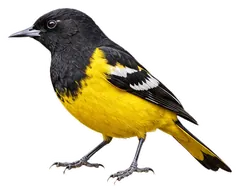 Scott's OrioleIcterus parisorum
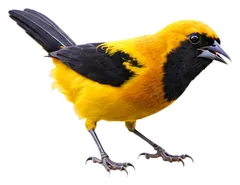 Yellow-backed OrioleIcterus chrysater
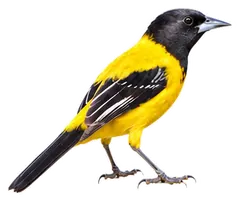 Audubon's OrioleIcterus graduacauda
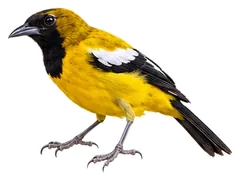 Jamaican OrioleIcterus leucopteryx
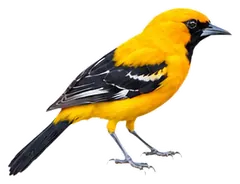 Orange OrioleIcterus auratus
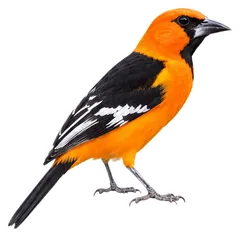 Altamira OrioleIcterus gularis
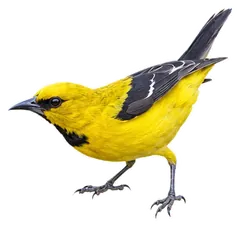 Yellow OrioleIcterus nigrogularis
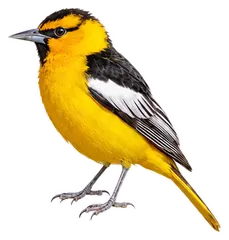 Bullock's OrioleIcterus bullockiorum
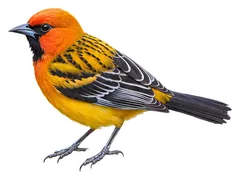 Streak-backed OrioleIcterus pustulatus
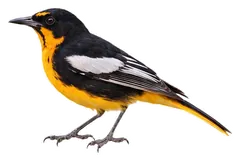 Black-backed OrioleIcterus abeillei
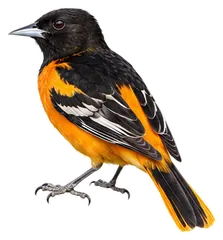 Baltimore OrioleIcterus galbula
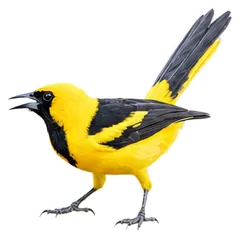 Yellow-tailed OrioleIcterus mesomelas
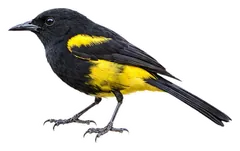
Download illustration
Free to use with credit: “Illustration: Bird Album (birdalbum.com)”. Drawn by AI from a reference photo by Pedro Genaro Rodriguez. ↗
Heard it but can't see it? Mingji identifies birds by sound and photo, on your phone.
In other languages
- EnglishHispaniolan Oriole
- 简体中文海地拟鹂
- 繁體中文安地列斯黑頂擬黃鸝
- 日本語ヒスパニオラムクドリモドキ
- DeutschHispaniolatrupial
- FrançaisOriole d’Hispaniola
- EspañolTurpial de La Española
- Portuguêscorrupião-haitiano
- ItalianoOriolo delle Grandi Antille
- NederlandsHispaniolatroepiaal
- РусскийДоминиканский трупиал
- Svenskahispaniolatrupial
- DanskOrangebuget Trupial
- Polskikacyk haitański