 Bird Album
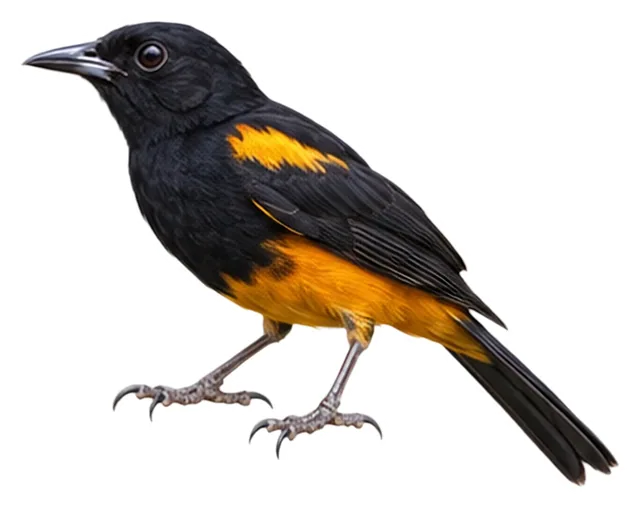
St. Lucia Oriole
Icterus laudabilis Sclater, PL, 1871
20–22 cmLength37 gWeight
The Saint Lucia oriole (Icterus laudablis) is a species of songbird endemic to Saint Lucia.
Busiest months: January · Most records: St. Lucia
Where and when it's recorded

St. Lucia Oriole has been recorded at 14 of the 8,171 birding hotspots we track, in 1 country or region.
Records by month Northern Hemisphere
Where it's recorded most
- Des Cartiers Rainforest TrailSt. Lucia198 records
- Millet Nature ReserveSt. Lucia70 records
- Anse ChastanetSt. Lucia56 records
More places
- Edmond Forest Reserve, Soufriere sideSt. Lucia55 records
- Quilesse Forest ReserveSt. Lucia51 records
- White-breasted Thrasher spotSt. Lucia35 records
- Anse CochonSt. Lucia32 records
- Bouton JunctionSt. Lucia31 records
- Marquis EstateSt. Lucia20 records
- SoufriereSt. Lucia16 records
Countries and regions with the most records
eBird records via GBIF up to 2024-12-31. A record means someone listed it; more records partly mean more birders, not more birds.
About
The Saint Lucia oriole (Icterus laudablis) is a species of songbird endemic to Saint Lucia. Locally known as the Corouge, it is in the family Icteridae and the genus Icterus (or New World orioles). Due to human development, this species of Oriole (a long with many others in the Caribbean) has seen significant population decline due to invasive species and habitat loss.
Excerpt from Wikipedia, CC BY-SA 4.0 · authors · Read more on Wikipedia
Questions
How big is the St. Lucia Oriole?
The St. Lucia Oriole is about 20–22 cm long and weighs around 37 g.
Where does the St. Lucia Oriole live?
Its breeding range: North America: St. Lucia. It is most often recorded in St. Lucia.
When is the best time to see the St. Lucia Oriole?
At the hotspots we track, it is recorded most in January (Northern Hemisphere).
Is the St. Lucia Oriole endangered?
The IUCN Red List classifies the St. Lucia Oriole as Endangered.
What does the St. Lucia Oriole eat?
Main food: Omnivore.
What family is the St. Lucia Oriole in?
It belongs to the family Oropendolas, New World Orioles, Blackbirds (Icteridae), order Passerines (Passeriformes).
At a glance
- Length
- 20–22 cm
- Weight
- 37 g
- Habitat
- Forest
- Diet
- Omnivore
- Lifestyle
- Perches in trees
- Migration
- Resident (barely migrates)
- Conservation
- Endangered
More measurements
- Wing
- 106 mm
- Tail
- 106 mm
- Bill
- 25 mm
- Tarsus
- 25 mm
Averages from the AVONET dataset; length from field guides where available.
Range
North America: St. Lucia
Breeding range, IOC World Bird List 15.2
Classification
- Order
- Passerines Passeriformes
- Family
- Oropendolas, New World Orioles, Blackbirds Icteridae
- Genus
- Icterus
Other birds in the genus Icterus
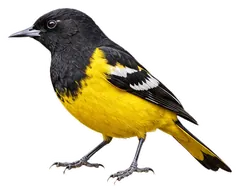 Scott's OrioleIcterus parisorum
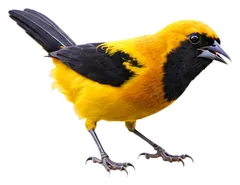 Yellow-backed OrioleIcterus chrysater
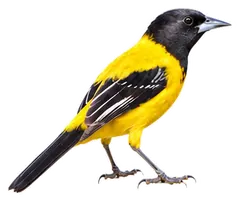 Audubon's OrioleIcterus graduacauda
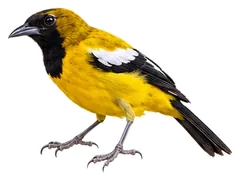 Jamaican OrioleIcterus leucopteryx
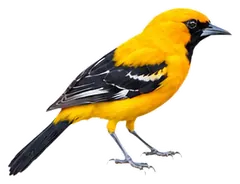 Orange OrioleIcterus auratus
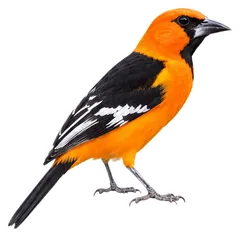 Altamira OrioleIcterus gularis
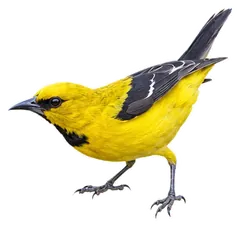 Yellow OrioleIcterus nigrogularis
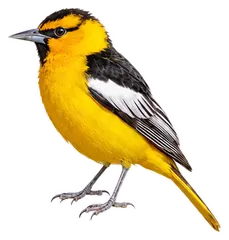 Bullock's OrioleIcterus bullockiorum
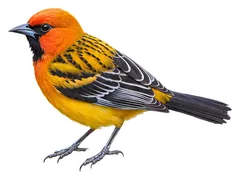 Streak-backed OrioleIcterus pustulatus
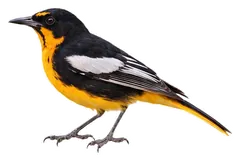 Black-backed OrioleIcterus abeillei
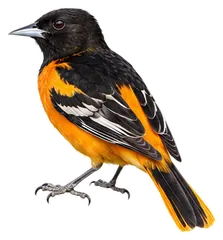 Baltimore OrioleIcterus galbula
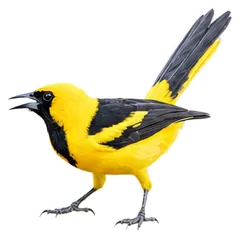 Yellow-tailed OrioleIcterus mesomelas
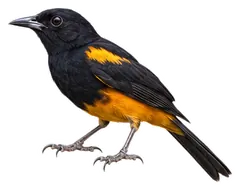
Download illustration
Free to use with credit: “Illustration: Bird Album (birdalbum.com)”. Drawn by AI from a reference photo by Judd Patterson. ↗
Heard it but can't see it? Mingji identifies birds by sound and photo, on your phone.
In other languages
- EnglishSt. Lucia Oriole
- 简体中文圣卢拟鹂
- 繁體中文聖露西亞擬黃鸝
- 日本語セントルシアムクドリモドキ
- DeutschSaint-Lucia-Trupial
- FrançaisOriole de Sainte-Lucie
- EspañolTurpial de Santa Lucía
- Portuguêscorrupião-de-santa-lúcia
- ItalianoOriolo di Saint Lucia
- NederlandsSint-Luciatroepiaal
- РусскийСанталюсийский трупиал
- Svenskasaintluciatrupial
- DanskSkt. Lucia-trupial
- Polskikacyk złotobrzuchy