 Bird Album
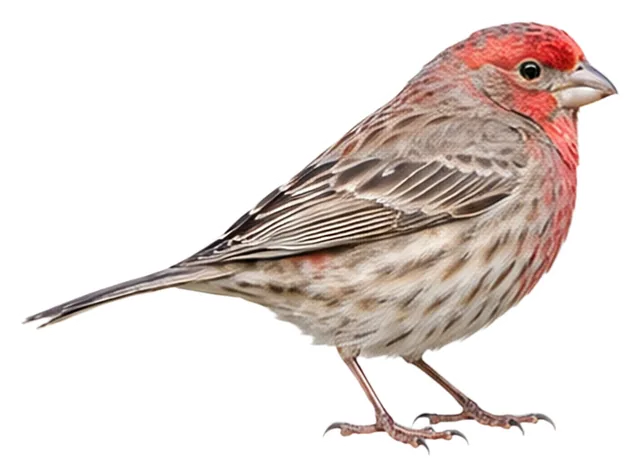
House Finch
Haemorhous mexicanus (Müller, PLS, 1776)
21 gWeight
The house finch (Haemorhous mexicanus) is a North American bird in the finch family.
Busiest months: April–May · Most records: United States, Canada, Mexico
Where and when it's recorded
Busiest months: April–May · Most records: United States, Canada, Mexico

House Finch has been recorded at 765 of the 8,276 birding hotspots we track, in 6 countries and regions.
Records by month Northern Hemisphere
Where it's recorded most
- Sweetwater WetlandsUnited States24,929 records
- Madera Canyon – Santa Rita LodgeUnited States24,267 records
- Paton Center for HummingbirdsUnited States22,738 records
More places
- Riparian Preserve at Gilbert Water RanchUnited States18,796 records
- Union Bay Natural Area/Montlake FillUnited States16,669 records
- IRWD San Joaquin Marsh & Wildlife Sanctuary, IrvineUnited States15,715 records
- Montrose Point Bird Sanctuary, Lincoln Park, ChicagoUnited States14,950 records
- Central ParkUnited States14,528 records
- Ash Canyon Bird SanctuaryUnited States13,898 records
- Rio Grande Nature Center SPUnited States13,681 records
Countries and regions with the most records
eBird records via GBIF up to 2024-12-31. A record means someone listed it; more records partly mean more birders, not more birds.
About
The house finch (Haemorhous mexicanus) is a North American bird in the finch family. It is native to Mexico and southwestern United States, but has since been introduced to the eastern part of North America and Hawaiʻi, and is found year-round in almost all parts of the United States and most of Mexico, with breeding grounds well into Canada as far north as northern Alberta. There are estimated to be 40 million house finches across North America, making it the second-most populous finch, just behind the American goldfinch.
Excerpt from Wikipedia, CC BY-SA 4.0 · authors · Read more on Wikipedia
Questions
How big is the House Finch?
The House Finch weighs around 21 g.
Where does the House Finch live?
Its breeding range: North America, Middle America: Canada, USA and Mexico. It is most often recorded in United States, Canada and Mexico.
When is the best time to see the House Finch?
At the hotspots we track, it is recorded most in April and May (Northern Hemisphere).
Is the House Finch endangered?
The IUCN Red List classifies the House Finch as Least Concern.
What does the House Finch eat?
Main food: Seeds.
What family is the House Finch in?
It belongs to the family Finches, Euphonias (Fringillidae), order Passerines (Passeriformes).
At a glance
- Weight
- 21 g
- Habitat
- Shrubland
- Diet
- Seeds
- Lifestyle
- Perches in trees
- Migration
- Partial migrant
- Conservation
- Least Concern
More measurements
- Wing
- 77 mm
- Tail
- 66 mm
- Bill
- 11 mm
- Tarsus
- 17 mm
Averages from the AVONET dataset; length from field guides where available.
Range
North America, Middle America: Canada, USA and Mexico
Breeding range, IOC World Bird List 15.2
Classification
- Order
- Passerines Passeriformes
- Family
- Finches, Euphonias Fringillidae
- Genus
- Haemorhous
Other birds in the genus Haemorhous
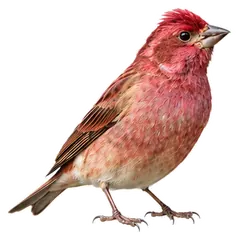 Purple FinchHaemorhous purpureus
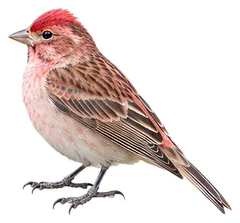 Cassin's FinchHaemorhous cassinii
 Eurasian ChaffinchFringilla coelebs
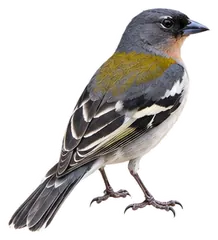 African ChaffinchFringilla spodiogenys
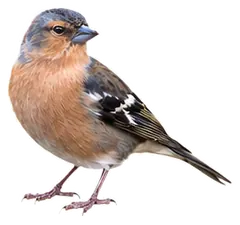 Azores ChaffinchFringilla moreletti
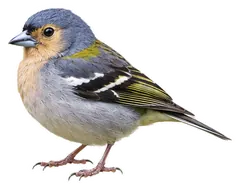 Madeira ChaffinchFringilla maderensis
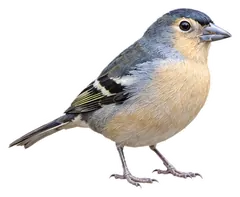 Canary Islands ChaffinchFringilla canariensis
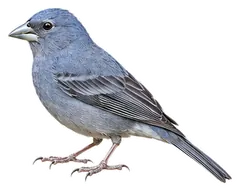 Tenerife Blue ChaffinchFringilla teydea
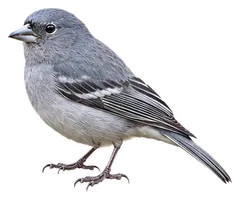 Gran Canaria Blue ChaffinchFringilla polatzeki
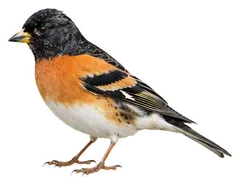 BramblingFringilla montifringilla
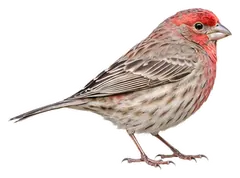
Download illustration
Free to use with credit: “Illustration: Bird Album (birdalbum.com)”. Drawn by AI from a reference photo by Juan Miguel Artigas Azas. ↗
Heard it but can't see it? Mingji identifies birds by sound and photo, on your phone.