 Bird Album
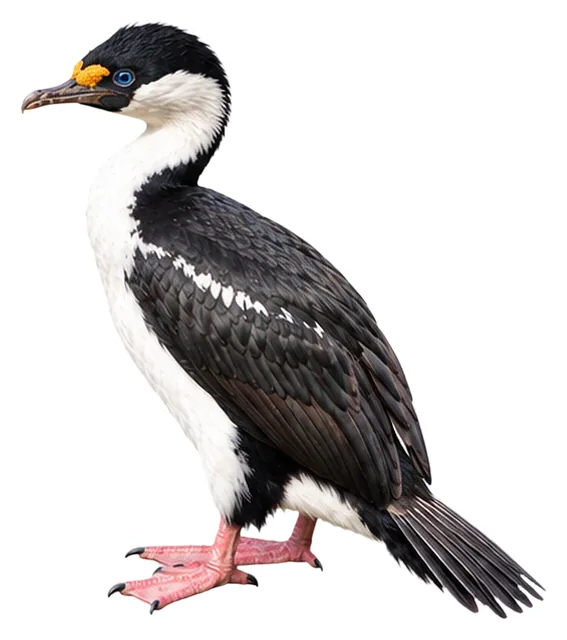
Imperial Shag
Leucocarbo atriceps (King, PP, 1828)
70–79 cmLength2 kgWeight
The imperial shag or imperial cormorant (Leucocarbo atriceps) is a black-and-white cormorant native to southern South America, islands of the Subantarctic, and the Antarctic Peninsula, primarily in rocky coastal regions, but locally also at large inland lakes.
Busiest months: November · Most records: Argentina, Falkland Islands, Chile
Where and when it's recorded
Busiest months: November · Most records: Argentina, Falkland Islands, Chile

Imperial Shag has been recorded at 35 of the 8,276 birding hotspots we track, in 4 countries and regions.
Records by month Southern Hemisphere
Where it's recorded most
- Transbordador Pargua-ChacaoChile1,626 records
- Punta LoyolaArgentina1,285 records
- Cape PembrokeFalkland Islands1,013 records
More places
- Canal BeagleArgentina882 records
- Sea Lion IslandFalkland Islands787 records
- Reserva Natural Urbana Bahía EncerradaArgentina748 records
- MN Islotes de PuñihuilChile551 records
- PN Tierra del Fuego ÁreaArgentina528 records
- Desembocadura Río PipoArgentina449 records
- QuillaipeChile312 records
Countries and regions with the most records
eBird records via GBIF up to 2024-12-31. A record means someone listed it; more records partly mean more birders, not more birds.
About
The imperial shag or imperial cormorant (Leucocarbo atriceps) is a black-and-white cormorant native to southern South America, islands of the Subantarctic, and the Antarctic Peninsula, primarily in rocky coastal regions, but locally also at large inland lakes. Some taxonomic authorities, including the International Ornithologists' Union, place it in the genus Leucocarbo, others in the genus Phalacrocorax. It is also known as the blue-eyed shag, blue-eyed cormorant and by many other names, and is one of a larger group of cormorants called blue-eyed shags.
Excerpt from Wikipedia, CC BY-SA 4.0 · authors · Read more on Wikipedia
Questions
How big is the Imperial Shag?
The Imperial Shag is about 70–79 cm long and weighs around 2 kg.
Where does the Imperial Shag live?
Its breeding range: South America: coastal southern South America, Falkland Islands, South Georgia and nearby islands, Antarctic Peninsula, and subantarctic islands of the southern Indian Ocean and Macquarie Island (southwestern Pacific Ocean). It is most often recorded in Argentina, Falkland Islands and Chile.
When is the best time to see the Imperial Shag?
At the hotspots we track, it is recorded most in November (Southern Hemisphere).
Is the Imperial Shag endangered?
The IUCN Red List classifies the Imperial Shag as Least Concern.
What does the Imperial Shag eat?
Main food: Fish, shrimp & shellfish.
What family is the Imperial Shag in?
It belongs to the family Cormorants, Shags (Phalacrocoracidae), order Suliformes.
At a glance
- Length
- 70–79 cm
- Weight
- 2 kg
- Habitat
- Ocean
- Diet
- Fish, shrimp & shellfish
- Lifestyle
- On the water surface
- Migration
- Partial migrant
- Conservation
- Least Concern
More measurements
- Wing
- 284 mm
- Tail
- 118 mm
- Bill
- 69 mm
- Tarsus
- 65 mm
Averages from the AVONET dataset; length from field guides where available.
Range
South America: coastal southern South America, Falkland Islands, South Georgia and nearby islands, Antarctic Peninsula, and subantarctic islands of the southern Indian Ocean and Macquarie Island (southwestern Pacific Ocean)
Breeding range, IOC World Bird List 15.2
Classification
- Order
- Suliformes
- Family
- Cormorants, Shags Phalacrocoracidae
- Genus
- Leucocarbo
Other birds in the genus Leucocarbo
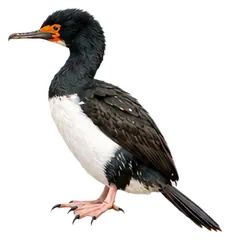 Rock ShagLeucocarbo magellanicus
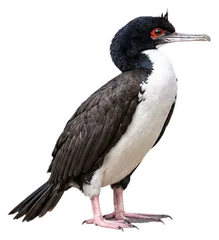 Guanay CormorantLeucocarbo bougainvilliorum
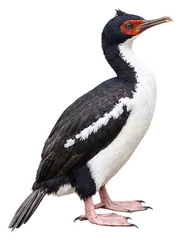 Bounty ShagLeucocarbo ranfurlyi
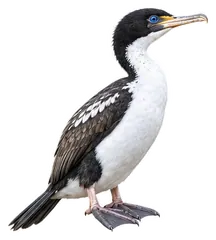 New Zealand King ShagLeucocarbo carunculatus
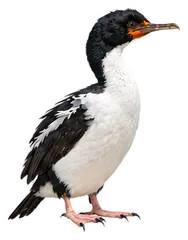 Chatham Islands ShagLeucocarbo onslowi
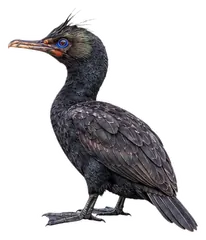 Stewart Island ShagLeucocarbo chalconotus
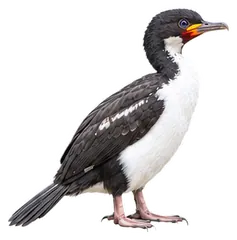 Auckland ShagLeucocarbo colensoi
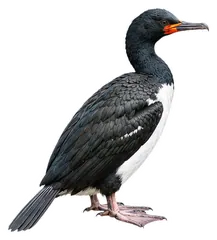 Campbell ShagLeucocarbo campbelli
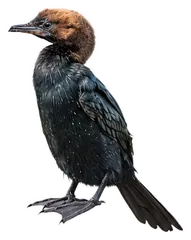 Pygmy CormorantMicrocarbo pygmaeus
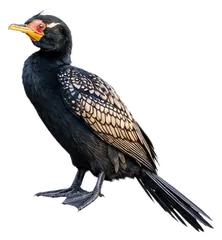 Reed CormorantMicrocarbo africanus
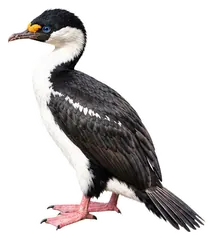
Download illustration
Free to use with credit: “Illustration: Bird Album (birdalbum.com)”. Drawn by AI from a reference photo by Rémi Bigonneau. ↗
Heard it but can't see it? Mingji identifies birds by sound and photo, on your phone.