 Bird Album
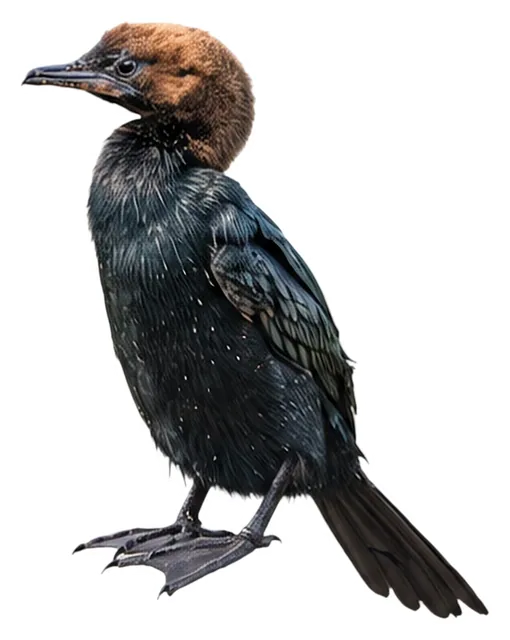
Pygmy Cormorant
Microcarbo pygmaeus (Pallas, 1773)
≈46 cmLength85 cmWingspan676 gWeight
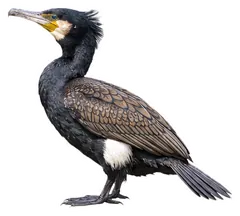
It is smaller than Great Cormorant, with a shorter bill.
Busiest months: May and August–October · Most records: Israel, Greece, Serbia
Looks like Great Cormorant
How to identify
Field marks
- Body length about 45 cm
- Adult summer plumage dark, with a bronze-green metallic gloss
- Bill shorter than in Great Cormorant
Similar species
Where and when it's recorded
Busiest months: May and August–October · Most records: Israel, Greece, Serbia

Pygmy Cormorant has been recorded at 353 of the 8,276 birding hotspots we track, in 44 countries and regions.
Records by month Northern Hemisphere
Where it's recorded most
- Kfar Ruppin fishpondsIsrael1,256 records
- Hama'apil FishpondsIsrael1,225 records
- Ma'ayan Tzvi FishpondsIsrael1,113 records
More places
- Ein Hamifratz FishpondsIsrael1,045 records
- Poda Protected AreaBulgaria1,008 records
- RivaTürkiye996 records
- Hula Valley – Lake AgmonIsrael982 records
- Dorćolski kej – combined eastern and western part, IBA Ušće Save u DunavSerbia961 records
- NR Škocjanski zatokSlovenia762 records
- Ma'agan Michael Fishponds & BeachIsrael717 records
Countries and regions with the most records
eBird records via GBIF up to 2024-12-31. A record means someone listed it; more records partly mean more birders, not more birds.
About
The pygmy cormorant (Microcarbo pygmaeus) is a member of the Phalacrocoracidae (cormorant) family of seabirds. It breeds in south-eastern Europe and south-western Asia. It is partially migratory, with northern populations wintering further south, mostly within its breeding range.
Excerpt from Wikipedia, CC BY-SA 4.0 · authors · Read more on Wikipedia
Questions
How big is the Pygmy Cormorant?
The Pygmy Cormorant is about ≈46 cm long, with a wingspan of 85 cm and weighs around 676 g.
Where does the Pygmy Cormorant live?
Its breeding range: Palearctic: inland southeastern Europe to Central Asia: northeastern Italy and northeastern Austria to central Kazakhstan, Tajikistan, and eastern Iraq. It is most often recorded in Israel, Greece and Serbia.
When is the best time to see the Pygmy Cormorant?
At the hotspots we track, it is recorded most in May, August, September and October (Northern Hemisphere).
Is the Pygmy Cormorant endangered?
The IUCN Red List classifies the Pygmy Cormorant as Least Concern.
What does the Pygmy Cormorant eat?
Main food: Fish, shrimp & shellfish.
What family is the Pygmy Cormorant in?
It belongs to the family Cormorants, Shags (Phalacrocoracidae), order Suliformes.
At a glance
- Length
- ≈46 cm
- Wingspan
- 85 cm
- Weight
- 676 g
- Habitat
- Wetland
- Diet
- Fish, shrimp & shellfish
- Lifestyle
- On the water surface
- Migration
- Partial migrant
- Conservation
- Least Concern
More measurements
- Wing
- 201 mm
- Tail
- 142 mm
- Bill
- 37 mm
- Tarsus
- 36 mm
Averages from the AVONET dataset; length from field guides where available.
Range
Palearctic: inland southeastern Europe to Central Asia: northeastern Italy and northeastern Austria to central Kazakhstan, Tajikistan, and eastern Iraq
Breeding range, IOC World Bird List 15.2
Classification
- Order
- Suliformes
- Family
- Cormorants, Shags Phalacrocoracidae
- Genus
- Microcarbo
Other birds in the genus Microcarbo
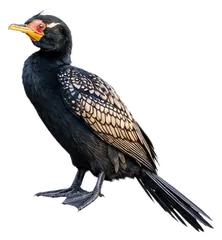 Reed CormorantMicrocarbo africanus
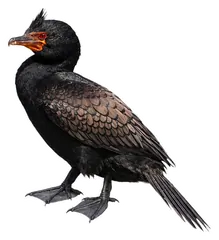 Crowned CormorantMicrocarbo coronatus
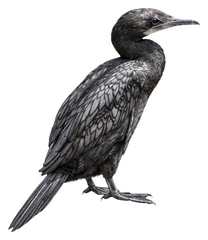 Little CormorantMicrocarbo niger
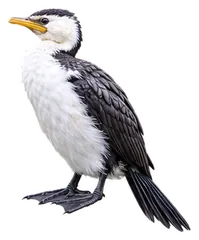 Little Pied CormorantMicrocarbo melanoleucos
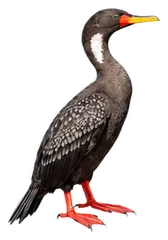 Red-legged CormorantPoikilocarbo gaimardi
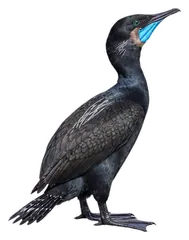 Brandt's CormorantUrile penicillatus
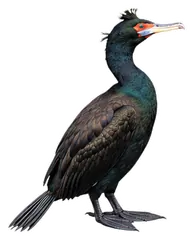 Red-faced CormorantUrile urile
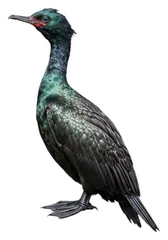 Pelagic CormorantUrile pelagicus
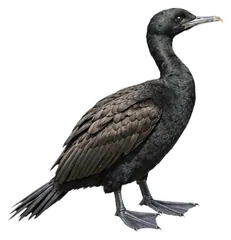 Bank CormorantPhalacrocorax neglectus
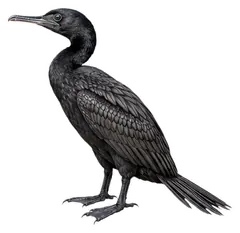 Socotra CormorantPhalacrocorax nigrogularis
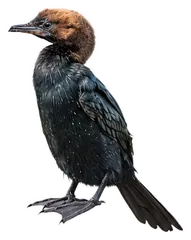
Download illustration
Free to use with credit: “Illustration: Bird Album (birdalbum.com)”. Drawn by AI from a reference photo by Jakob Stanič. ↗
Heard it but can't see it? Mingji identifies birds by sound and photo, on your phone.