 Bird Album
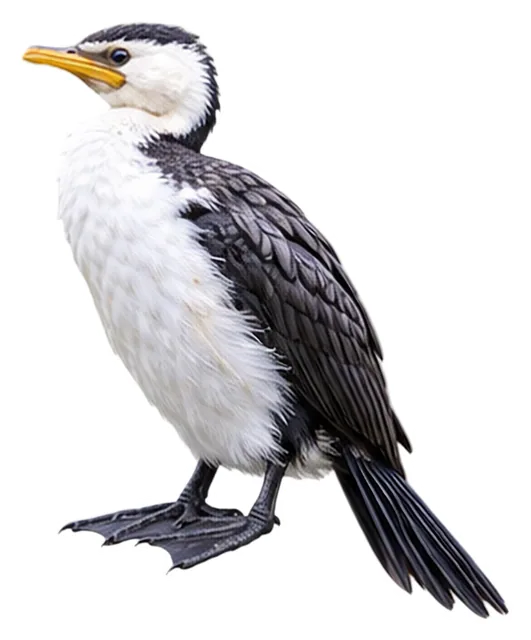
Little Pied Cormorant
Microcarbo melanoleucos (Vieillot, 1817)
727 gWeight
Busiest months: January and October–November · Most records: Australia, New Zealand, Indonesia
Where and when it's recorded

Little Pied Cormorant has been recorded at 394 of the 8,171 birding hotspots we track, in 10 countries and regions.
Records by month Southern Hemisphere
Where it's recorded most
- Western Treatment PlantAustralia8,568 records
- Jerrabomberra Wetlands Nature ReserveAustralia5,994 records
- Sandy Camp Road WetlandsAustralia5,718 records
More places
- Centennial ParkAustralia3,414 records
- Royal Botanic Gardens MelbourneAustralia3,201 records
- Dowse LagoonAustralia2,967 records
- Herdsman LakeAustralia2,874 records
- Albert ParkAustralia2,824 records
- Lake Samsonvale – Golds Scrub LaneAustralia2,809 records
- Cattana WetlandsAustralia2,574 records
Countries and regions with the most records
eBird records via GBIF up to 2024-12-31. A record means someone listed it; more records partly mean more birders, not more birds.
About
The little pied cormorant, little shag or little pied shag (Microcarbo melanoleucos) (Māori: kawaupaka) is a common species of Australasian waterbird, found around the coasts, islands, estuaries, and inland waters of Australia, New Guinea, New Zealand, Timor-Leste and Indonesia, and around the islands of the south-western Pacific and the subantarctic. It is a small short-billed cormorant usually black above and white below with a yellow bill and small crest, although a mostly black white-throated form predominates in New Zealand. Three subspecies are recognised.
Excerpt from Wikipedia, CC BY-SA 4.0 · authors · Read more on Wikipedia
Questions
How big is the Little Pied Cormorant?
The Little Pied Cormorant weighs around 727 g.
Where does the Little Pied Cormorant live?
Its breeding range: Australasia: Lesser Sundas and Australasia to Solomon Islands, New Caledonia and New Zealand. It is most often recorded in Australia, New Zealand and Indonesia.
When is the best time to see the Little Pied Cormorant?
At the hotspots we track, it is recorded most in January, October and November (Southern Hemisphere).
Is the Little Pied Cormorant endangered?
The IUCN Red List classifies the Little Pied Cormorant as Least Concern.
What does the Little Pied Cormorant eat?
Main food: Fish, shrimp & shellfish.
What family is the Little Pied Cormorant in?
It belongs to the family Cormorants, Shags (Phalacrocoracidae), order Suliformes.
At a glance
- Weight
- 727 g
- Habitat
- Wetland
- Diet
- Fish, shrimp & shellfish
- Lifestyle
- On the water surface
- Migration
- Resident (barely migrates)
- Conservation
- Least Concern
More measurements
- Wing
- 219 mm
- Tail
- 153 mm
- Bill
- 37 mm
- Tarsus
- 38 mm
Averages from the AVONET dataset; length from field guides where available.
Range
Australasia: Lesser Sundas and Australasia to Solomon Islands, New Caledonia and New Zealand
Breeding range, IOC World Bird List 15.2
Classification
- Order
- Suliformes
- Family
- Cormorants, Shags Phalacrocoracidae
- Genus
- Microcarbo
Other birds in the genus Microcarbo
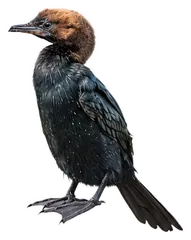 Pygmy CormorantMicrocarbo pygmaeus
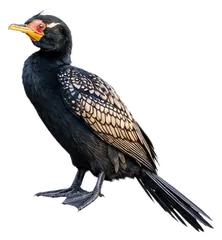 Reed CormorantMicrocarbo africanus
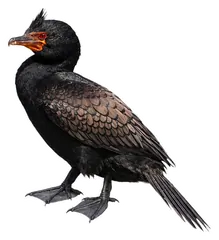 Crowned CormorantMicrocarbo coronatus
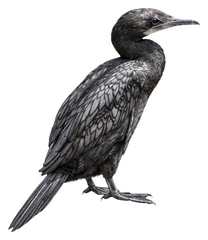 Little CormorantMicrocarbo niger
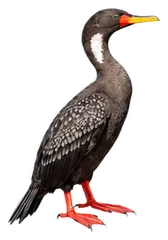 Red-legged CormorantPoikilocarbo gaimardi
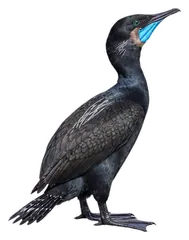 Brandt's CormorantUrile penicillatus
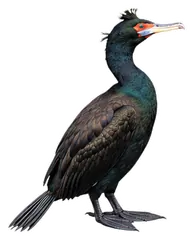 Red-faced CormorantUrile urile
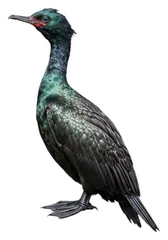 Pelagic CormorantUrile pelagicus
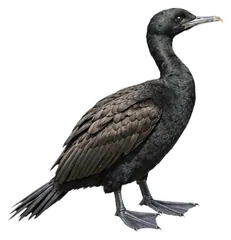 Bank CormorantPhalacrocorax neglectus
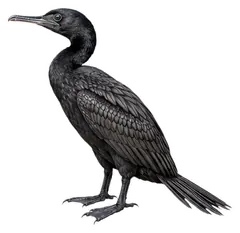 Socotra CormorantPhalacrocorax nigrogularis
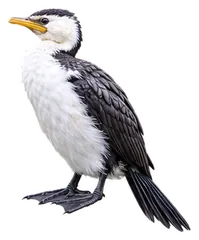
Download illustration
Free to use with credit: “Illustration: Bird Album (birdalbum.com)”. Drawn by AI from a reference photo by Alan Melville. ↗
Heard it but can't see it? Mingji identifies birds by sound and photo, on your phone.
In other languages
- EnglishLittle Pied Cormorant
- 简体中文小斑鸬鹚
- 繁體中文小斑鸕鷀
- 日本語シロハラコビトウ
- DeutschKräuselscharbe
- FrançaisCormoran pie
- EspañolCormorán piquicorto
- Portuguêscorvo-marinho-alvinegro-pequeno
- ItalianoCormorano bianconero minore
- NederlandsKleine Bonte Aalscholver
- РусскийПёстрый баклан
- Svenskasvartvit skarv
- DanskBroget Dværgskarv
- Polskikormoran białolicy