 Bird Album
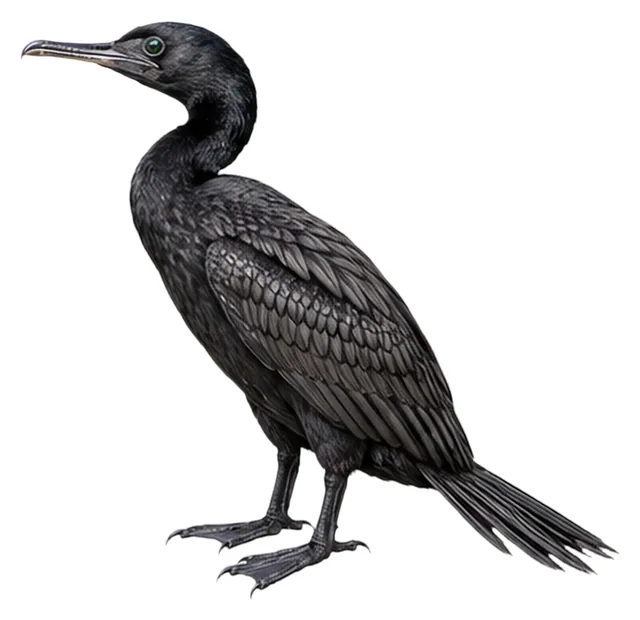
Socotra Cormorant
Phalacrocorax nigrogularis Ogilvie-Grant & Forbes, HO, 1899
80 cmLength1.6 kgWeight
The Socotra cormorant (Phalacrocorax nigrogularis) is a threatened species of cormorant that is endemic to the Persian Gulf and the south-east coast of the Arabian Peninsula.
Busiest months: November–January and March · Most records: Oman, Yemen, Qatar
Where and when it's recorded

Socotra Cormorant has been recorded at 16 of the 8,171 birding hotspots we track, in 6 countries and regions.
Records by month Northern Hemisphere
Where it's recorded most
- East KhawrOman42 records
- Abu Nakla STPQatar21 records
- QalansiyahYemen17 records
More places
- Wadi SirhanYemen17 records
- Khawr RawriOman16 records
- SocotraYemen8 records
- Dohat Arad LagoonBahrain8 records
- Al-Qurm ParkOman8 records
- Askar MarshBahrain5 records
- Irakhiya FarmQatar5 records
Countries and regions with the most records
eBird records via GBIF up to 2024-12-31. A record means someone listed it; more records partly mean more birders, not more birds.
About
The Socotra cormorant (Phalacrocorax nigrogularis) is a threatened species of cormorant that is endemic to the Persian Gulf and the south-east coast of the Arabian Peninsula. It is also sometimes known as the Socotran cormorant or, more rarely, as the Socotra shag. Individuals occasionally migrate as far west as the Red Sea coast.
Excerpt from Wikipedia, CC BY-SA 4.0 · authors · Read more on Wikipedia
Questions
How big is the Socotra Cormorant?
The Socotra Cormorant is about 80 cm long and weighs around 1.6 kg.
Where does the Socotra Cormorant live?
Its breeding range: Palearctic, Africa: Persian Gulf, Arabian Sea (off Oman), Gulf of Aden, Socotra and perhaps Red Sea (off Eritrea). It is most often recorded in Oman, Yemen and Qatar.
When is the best time to see the Socotra Cormorant?
At the hotspots we track, it is recorded most in January, March, November and December (Northern Hemisphere).
Is the Socotra Cormorant endangered?
The IUCN Red List classifies the Socotra Cormorant as Vulnerable.
What does the Socotra Cormorant eat?
Main food: Fish, shrimp & shellfish.
What family is the Socotra Cormorant in?
It belongs to the family Cormorants, Shags (Phalacrocoracidae), order Suliformes.
At a glance
- Length
- 80 cm
- Weight
- 1.6 kg
- Habitat
- Ocean
- Diet
- Fish, shrimp & shellfish
- Lifestyle
- On the water surface
- Migration
- Resident (barely migrates)
- Conservation
- Vulnerable
More measurements
- Wing
- 283 mm
- Tail
- 92 mm
- Bill
- 74 mm
- Tarsus
- 74 mm
Averages from the AVONET dataset; length from field guides where available.
Range
Palearctic, Africa: Persian Gulf, Arabian Sea (off Oman), Gulf of Aden, Socotra and perhaps Red Sea (off Eritrea)
Breeding range, IOC World Bird List 15.2
Classification
- Order
- Suliformes
- Family
- Cormorants, Shags Phalacrocoracidae
- Genus
- Phalacrocorax
Other birds in the genus Phalacrocorax
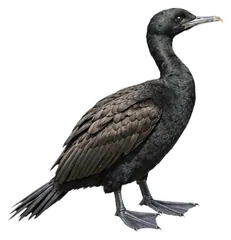 Bank CormorantPhalacrocorax neglectus
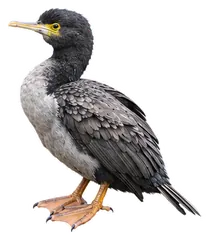 Pitt ShagPhalacrocorax featherstoni
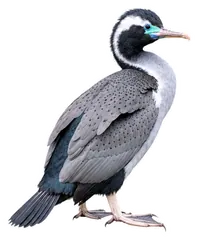 Spotted ShagPhalacrocorax punctatus
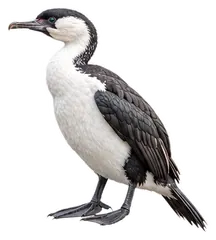 Black-faced CormorantPhalacrocorax fuscescens
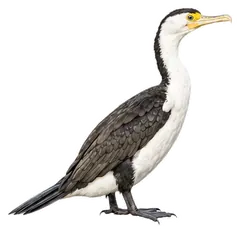 Australian Pied CormorantPhalacrocorax varius
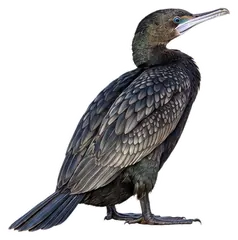 Little Black CormorantPhalacrocorax sulcirostris
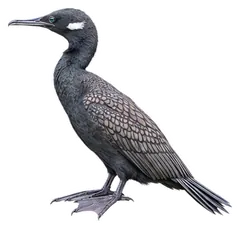 Indian CormorantPhalacrocorax fuscicollis
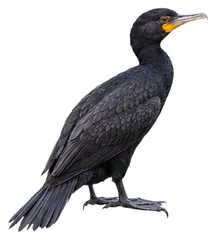 Cape CormorantPhalacrocorax capensis
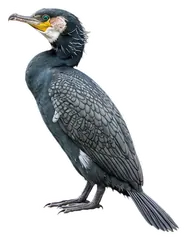 Japanese CormorantPhalacrocorax capillatus
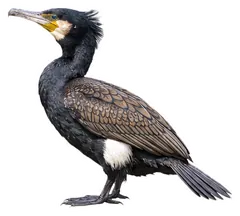 Great CormorantPhalacrocorax carbo
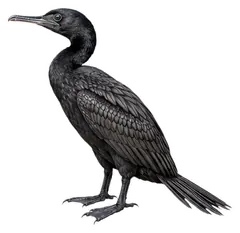
Download illustration
Free to use with credit: “Illustration: Bird Album (birdalbum.com)”. Drawn by AI from a reference photo by cog2022. ↗
Heard it but can't see it? Mingji identifies birds by sound and photo, on your phone.