 Bird Album
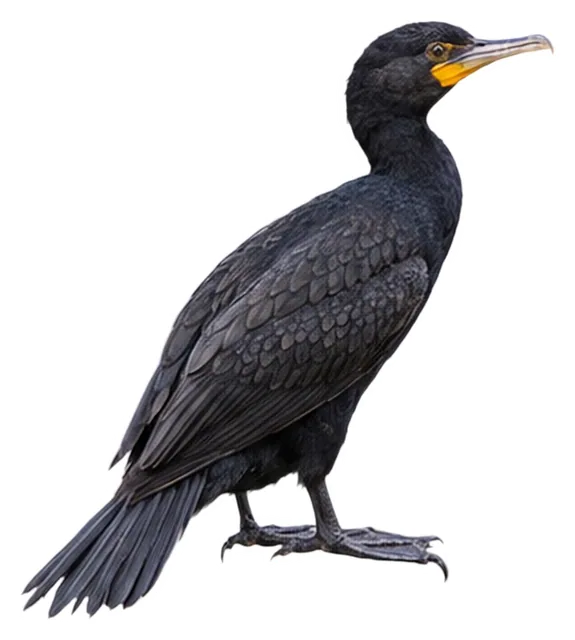
Cape Cormorant
Phalacrocorax capensis (Sparrman, 1788)
1.2 kgWeight
The Cape cormorant (Phalacrocorax capensis), also known as the Cape shag, is a member of the cormorant family.
Busiest months: September–November · Most records: South Africa, Namibia, Angola
Where and when it's recorded
Busiest months: September–November · Most records: South Africa, Namibia, Angola

Cape Cormorant has been recorded at 29 of the 8,276 birding hotspots we track, in 4 countries and regions.
Records by month Southern Hemisphere
Where it's recorded most
- Stony Point – Penguin ColonySouth Africa1,382 records
- Boulders BeachSouth Africa1,046 records
- Table Mt. NP – Cape of Good HopeSouth Africa650 records
More places
- Rooi-ElsSouth Africa470 records
- Table Mt. NP – Cape Point SectionSouth Africa448 records
- Walvis Bay Salt PansNamibia334 records
- Walvis Bay – Lagoon PromenadeNamibia301 records
- Swakopmund Salt WorksNamibia295 records
- West Coast NPSouth Africa250 records
- Strandfontein WTPSouth Africa195 records
Countries and regions with the most records
eBird records via GBIF up to 2024-12-31. A record means someone listed it; more records partly mean more birders, not more birds.
About
The Cape cormorant (Phalacrocorax capensis), also known as the Cape shag, is a member of the cormorant family. It is endemic to the southwestern coast of Africa, and classified as "Endangered" by the IUCN. The Cape cormorant is most closely related to the great cormorant and Japanese cormorant.
Excerpt from Wikipedia, CC BY-SA 4.0 · authors · Read more on Wikipedia
Questions
How big is the Cape Cormorant?
The Cape Cormorant weighs around 1.2 kg.
Where does the Cape Cormorant live?
Its breeding range: Africa: southern coastal Africa: southern Angola to southern tip of Africa. It is most often recorded in South Africa, Namibia and Angola.
When is the best time to see the Cape Cormorant?
At the hotspots we track, it is recorded most in September, October and November (Southern Hemisphere).
Is the Cape Cormorant endangered?
The IUCN Red List classifies the Cape Cormorant as Endangered.
What does the Cape Cormorant eat?
Main food: Fish, shrimp & shellfish.
What family is the Cape Cormorant in?
It belongs to the family Cormorants, Shags (Phalacrocoracidae), order Suliformes.
At a glance
- Weight
- 1.2 kg
- Habitat
- Ocean
- Diet
- Fish, shrimp & shellfish
- Lifestyle
- On the water surface
- Migration
- Resident (barely migrates)
- Conservation
- Endangered
More measurements
- Wing
- 253 mm
- Tail
- 99 mm
- Bill
- 57 mm
- Tarsus
- 60 mm
Averages from the AVONET dataset; length from field guides where available.
Range
Africa: southern coastal Africa: southern Angola to southern tip of Africa
Breeding range, IOC World Bird List 15.2
Classification
- Order
- Suliformes
- Family
- Cormorants, Shags Phalacrocoracidae
- Genus
- Phalacrocorax
Other birds in the genus Phalacrocorax
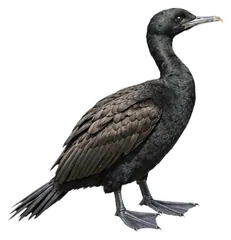 Bank CormorantPhalacrocorax neglectus
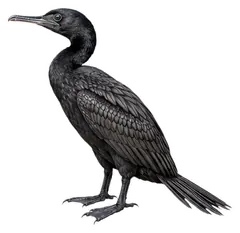 Socotra CormorantPhalacrocorax nigrogularis
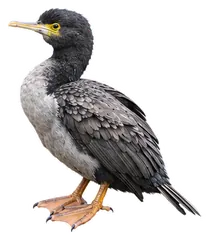 Pitt ShagPhalacrocorax featherstoni
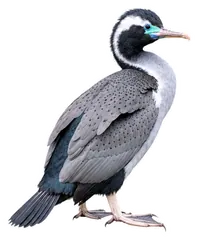 Spotted ShagPhalacrocorax punctatus
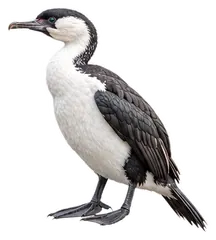 Black-faced CormorantPhalacrocorax fuscescens
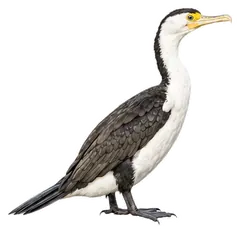 Australian Pied CormorantPhalacrocorax varius
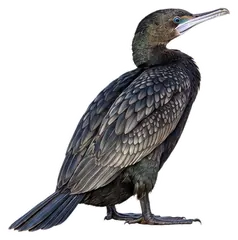 Little Black CormorantPhalacrocorax sulcirostris
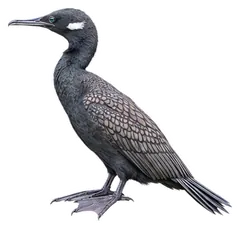 Indian CormorantPhalacrocorax fuscicollis
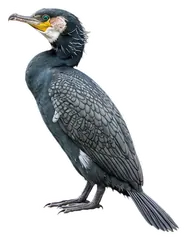 Japanese CormorantPhalacrocorax capillatus
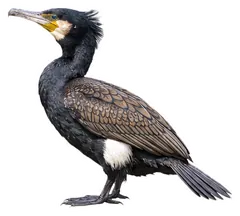 Great CormorantPhalacrocorax carbo
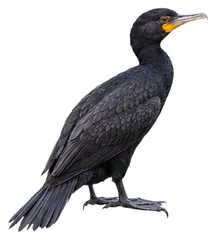
Download illustration
Free to use with credit: “Illustration: Bird Album (birdalbum.com)”. Drawn by AI from a reference photo by Chris Burney. ↗
Heard it but can't see it? Mingji identifies birds by sound and photo, on your phone.