 Bird Album
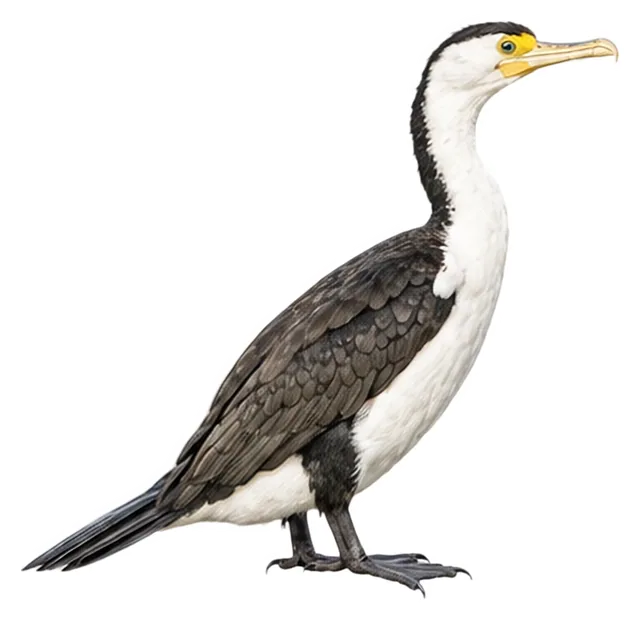
Australian Pied Cormorant
Phalacrocorax varius (Gmelin, JF, 1789)
1.9 kgWeight
The Australian pied cormorant (Phalacrocorax varius), also known as the pied cormorant, pied shag, or great pied cormorant, is a medium-sized member of the cormorant family.
Busiest months: November–January · Most records: Australia, New Zealand
Where and when it's recorded
Busiest months: November–January · Most records: Australia, New Zealand

Australian Pied Cormorant has been recorded at 287 of the 8,276 birding hotspots we track, in 2 countries and regions.
Records by month Southern Hemisphere
Where it's recorded most
- Western Treatment PlantAustralia7,059 records
- Centennial ParkAustralia3,662 records
- Kaikoura – offshore – Albatross Encounter pelagicNew Zealand3,104 records
More places
- Jawbone Flora and Fauna ReserveAustralia1,870 records
- Zealandia Te Mara a Tane Wildlife SanctuaryNew Zealand1,450 records
- Long Reef Aquatic ReserveAustralia1,250 records
- RhyllAustralia1,171 records
- Lake Samsonvale – Golds Scrub LaneAustralia1,056 records
- Hunter Wetlands National Park – Stockton SandspitAustralia940 records
- Tiritiri MatangiNew Zealand929 records
Countries and regions with the most records
eBird records via GBIF up to 2024-12-31. A record means someone listed it; more records partly mean more birders, not more birds.
About
The Australian pied cormorant (Phalacrocorax varius), also known as the pied cormorant, pied shag, or great pied cormorant, is a medium-sized member of the cormorant family. It is found around the coasts of Australasia. In New Zealand, it is usually known either as the pied shag or by its Māori name of kāruhiruhi.
Excerpt from Wikipedia, CC BY-SA 4.0 · authors · Read more on Wikipedia
Questions
How big is the Australian Pied Cormorant?
The Australian Pied Cormorant weighs around 1.9 kg.
Where does the Australian Pied Cormorant live?
Its breeding range: Australasia: coastal and inland Australia and North, South and Stewart islands (New Zealand). It is most often recorded in Australia and New Zealand.
When is the best time to see the Australian Pied Cormorant?
At the hotspots we track, it is recorded most in January, November and December (Southern Hemisphere).
Is the Australian Pied Cormorant endangered?
The IUCN Red List classifies the Australian Pied Cormorant as Least Concern.
What does the Australian Pied Cormorant eat?
Main food: Fish, shrimp & shellfish.
What family is the Australian Pied Cormorant in?
It belongs to the family Cormorants, Shags (Phalacrocoracidae), order Suliformes.
At a glance
- Weight
- 1.9 kg
- Habitat
- Coast & tidal flats
- Diet
- Fish, shrimp & shellfish
- Lifestyle
- On the water surface
- Migration
- Resident (barely migrates)
- Conservation
- Least Concern
More measurements
- Wing
- 295 mm
- Tail
- 136 mm
- Bill
- 75 mm
- Tarsus
- 64 mm
Averages from the AVONET dataset; length from field guides where available.
Range
Australasia: coastal and inland Australia and North, South and Stewart islands (New Zealand)
Breeding range, IOC World Bird List 15.2
Classification
- Order
- Suliformes
- Family
- Cormorants, Shags Phalacrocoracidae
- Genus
- Phalacrocorax
Other birds in the genus Phalacrocorax
 Bank CormorantPhalacrocorax neglectus
 Socotra CormorantPhalacrocorax nigrogularis
 Pitt ShagPhalacrocorax featherstoni
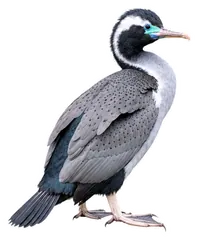 Spotted ShagPhalacrocorax punctatus
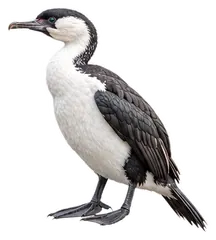 Black-faced CormorantPhalacrocorax fuscescens
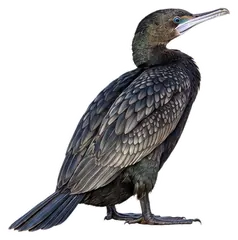 Little Black CormorantPhalacrocorax sulcirostris
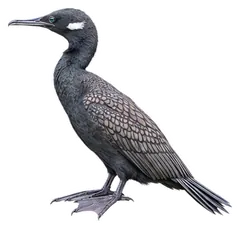 Indian CormorantPhalacrocorax fuscicollis
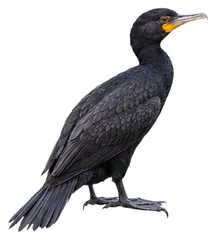 Cape CormorantPhalacrocorax capensis
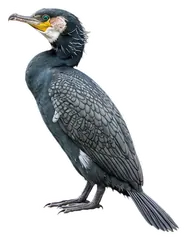 Japanese CormorantPhalacrocorax capillatus
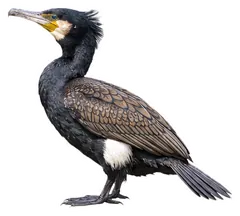 Great CormorantPhalacrocorax carbo
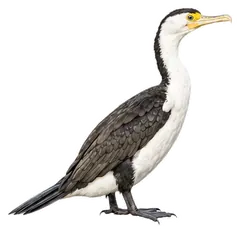
Download illustration
Free to use with credit: “Illustration: Bird Album (birdalbum.com)”. Drawn by AI from a reference photo by Owen Lishmund. ↗
Heard it but can't see it? Mingji identifies birds by sound and photo, on your phone.