 Bird Album
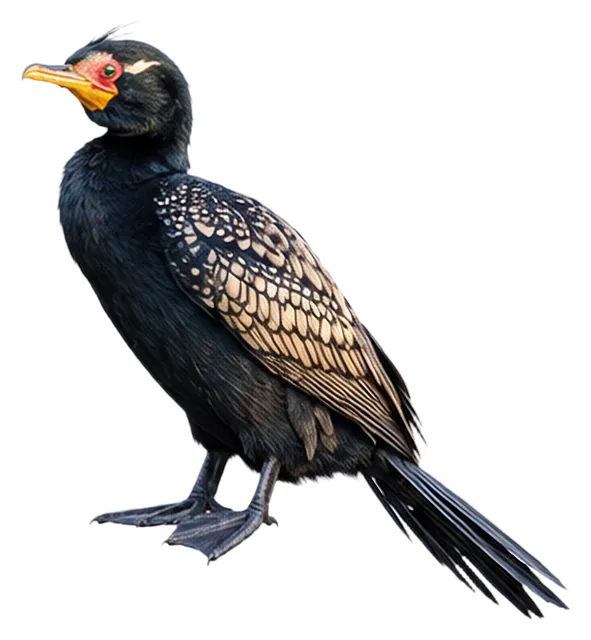
Reed Cormorant
Microcarbo africanus (Gmelin, JF, 1789)
545 gWeight
The reed cormorant (Microcarbo africanus), also known as the long-tailed cormorant, is a bird in the cormorant family Phalacrocoracidae.
Busiest months: October–November · Most records: South Africa, Kenya, Uganda
Where and when it's recorded
Busiest months: October–November · Most records: South Africa, Kenya, Uganda

Reed Cormorant has been recorded at 548 of the 8,276 birding hotspots we track, in 48 countries and regions.
Records by month Southern Hemisphere
Where it's recorded most
- Strandfontein WTPSouth Africa1,523 records
- Nairobi NPKenya1,495 records
- Entebbe Botanical GardenUganda1,331 records
More places
- Mabamba SwampUganda1,051 records
- Marievale Bird SanctuarySouth Africa981 records
- Rietvlei NRSouth Africa961 records
- Lake Nakuru NPKenya799 records
- Rondevlei NRSouth Africa719 records
- Lake NaivashaKenya615 records
- Chobe River – boat tripBotswana569 records
Countries and regions with the most records
eBird records via GBIF up to 2024-12-31. A record means someone listed it; more records partly mean more birders, not more birds.
About
The reed cormorant (Microcarbo africanus), also known as the long-tailed cormorant, is a bird in the cormorant family Phalacrocoracidae. It breeds in much of Africa south of the Sahara, and Madagascar. It is resident but undertakes some seasonal movements.
Excerpt from Wikipedia, CC BY-SA 4.0 · authors · Read more on Wikipedia
Questions
How big is the Reed Cormorant?
The Reed Cormorant weighs around 545 g.
Where does the Reed Cormorant live?
Its breeding range: Africa: mainly inland; widespread Sub-Saharan Africa and Madagascar. It is most often recorded in South Africa, Kenya and Uganda.
When is the best time to see the Reed Cormorant?
At the hotspots we track, it is recorded most in October and November (Southern Hemisphere).
Is the Reed Cormorant endangered?
The IUCN Red List classifies the Reed Cormorant as Least Concern.
What does the Reed Cormorant eat?
Main food: Fish, shrimp & shellfish.
What family is the Reed Cormorant in?
It belongs to the family Cormorants, Shags (Phalacrocoracidae), order Suliformes.
At a glance
- Weight
- 545 g
- Habitat
- Wetland
- Diet
- Fish, shrimp & shellfish
- Lifestyle
- On the water surface
- Migration
- Resident (barely migrates)
- Conservation
- Least Concern
More measurements
- Wing
- 199 mm
- Tail
- 143 mm
- Bill
- 36 mm
- Tarsus
- 35 mm
Averages from the AVONET dataset; length from field guides where available.
Range
Africa: mainly inland; widespread Sub-Saharan Africa and Madagascar
Breeding range, IOC World Bird List 15.2
Classification
- Order
- Suliformes
- Family
- Cormorants, Shags Phalacrocoracidae
- Genus
- Microcarbo
Other birds in the genus Microcarbo
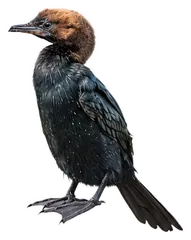 Pygmy CormorantMicrocarbo pygmaeus
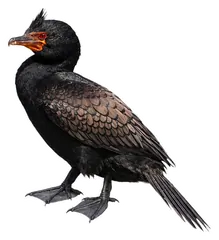 Crowned CormorantMicrocarbo coronatus
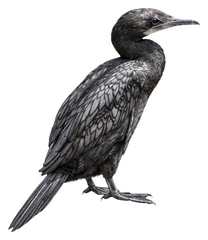 Little CormorantMicrocarbo niger
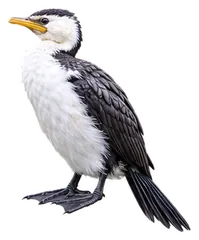 Little Pied CormorantMicrocarbo melanoleucos
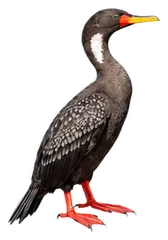 Red-legged CormorantPoikilocarbo gaimardi
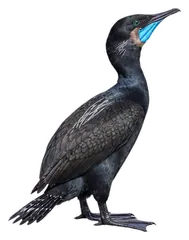 Brandt's CormorantUrile penicillatus
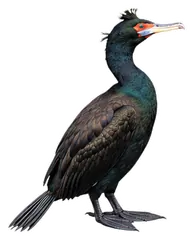 Red-faced CormorantUrile urile
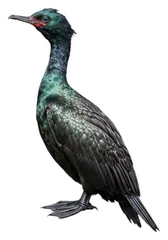 Pelagic CormorantUrile pelagicus
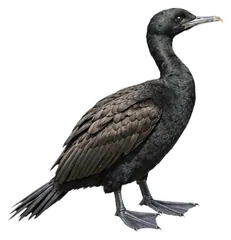 Bank CormorantPhalacrocorax neglectus
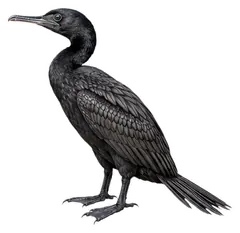 Socotra CormorantPhalacrocorax nigrogularis
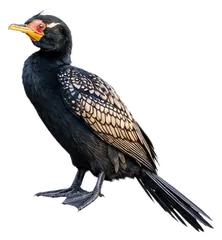
Download illustration
Free to use with credit: “Illustration: Bird Album (birdalbum.com)”. Drawn by AI from a reference photo by Lawrence Boatwright. ↗
Heard it but can't see it? Mingji identifies birds by sound and photo, on your phone.