 Bird Album
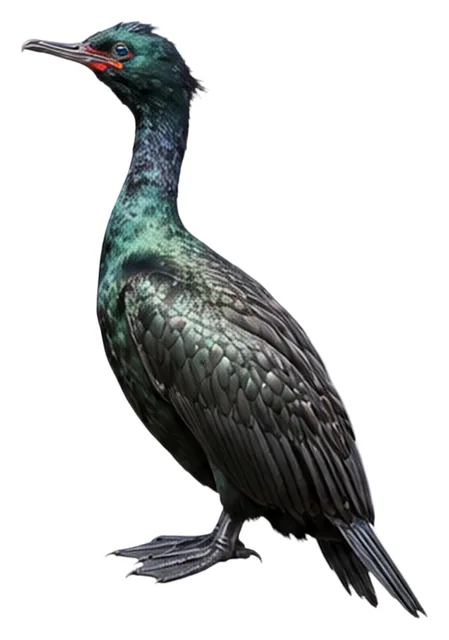
Pelagic Cormorant
Urile pelagicus (Pallas, 1811)
70 cmLength1.8 kgWeight
This small black cormorant develops magenta bare skin below the eyes and white thigh patches in the breeding season.
Busiest months: September and November · Most records: United States, Canada, Japan
Looks like Red-faced Cormorant
How to identify
Field marks
- Non-breeding plumage black overall, with a metallic gloss
- One short crest on the crown and another on the nape in the breeding season
- Thighs white in the breeding season
- Bare skin below the eyes turns bright magenta in the breeding season
Male, female and young
Sexes identical in appearance; female slightly smaller. Juvenile dark brown without a metallic gloss.
Voice
Growls when threatened; often gives a single call before taking off.
Similar species
Where and when it's recorded

Pelagic Cormorant has been recorded at 137 of the 8,171 birding hotspots we track, in 7 countries and regions.
Records by month Northern Hemisphere
Where it's recorded most
- Southeast Farallon IslandUnited States16,671 records
- Pt. Pinos – seawatch onlyUnited States14,051 records
- North Vancouver – Maplewood Flats Conservation AreaCanada6,565 records
More places
- Edmonds WaterfrontUnited States6,126 records
- GambellUnited States4,930 records
- Clover PointCanada4,728 records
- Tsawwassen Ferry Terminal JettyCanada4,431 records
- Pt. PinosUnited States4,236 records
- Mark Hatfield Marine Science Center and Estuary TrailUnited States3,776 records
- Rodeo LagoonUnited States3,718 records
Countries and regions with the most records
eBird records via GBIF up to 2024-12-31. A record means someone listed it; more records partly mean more birders, not more birds.
About
The pelagic cormorant (Urile pelagicus), also known as Baird's cormorant or violet-green cormorant, is a small member of the cormorant family Phalacrocoracidae. Analogous to other smallish cormorants, it is also called the pelagic shag occasionally. This seabird lives along the coasts of the northern Pacific; during winter it can also be found in the open ocean.
Excerpt from Wikipedia, CC BY-SA 4.0 · authors · Read more on Wikipedia
Questions
How big is the Pelagic Cormorant?
The Pelagic Cormorant is about 70 cm long and weighs around 1.8 kg.
Where does the Pelagic Cormorant live?
Its breeding range: Pacific Ocean: coastal Arctic to subtropical North Pacific Ocean, from northeastern Siberia to northern Japan (western North Pacific) and Aleutian Islands to northern Baja California (eastern North Pacific). It is most often recorded in United States, Canada and Japan.
When is the best time to see the Pelagic Cormorant?
At the hotspots we track, it is recorded most in September and November (Northern Hemisphere).
Is the Pelagic Cormorant endangered?
The IUCN Red List classifies the Pelagic Cormorant as Least Concern.
What does the Pelagic Cormorant eat?
Main food: Fish, shrimp & shellfish.
What family is the Pelagic Cormorant in?
It belongs to the family Cormorants, Shags (Phalacrocoracidae), order Suliformes.
At a glance
- Length
- 70 cm
- Weight
- 1.8 kg
- Habitat
- Ocean
- Diet
- Fish, shrimp & shellfish
- Lifestyle
- On the water surface
- Migration
- Resident (barely migrates)
- Conservation
- Least Concern
More measurements
- Wing
- 254 mm
- Tail
- 137 mm
- Bill
- 52 mm
- Tarsus
- 54 mm
Averages from the AVONET dataset; length from field guides where available.
Range
Pacific Ocean: coastal Arctic to subtropical North Pacific Ocean, from northeastern Siberia to northern Japan (western North Pacific) and Aleutian Islands to northern Baja California (eastern North Pacific)
Breeding range, IOC World Bird List 15.2
Subspecies · 1
- Urile pelagicus pelagicus Siberia from Chukotka, Kamchatka, Sea of Okhotsk, Kuril Is., and Commander Is. (e Russia), Hokkaido and n Honshu (n Japan) and islets of Liaoning (ne China); Aleutian Is., s Alaska to sw Canada | non-breeding: s to Korean Pen. and ec China
Classification
- Order
- Suliformes
- Family
- Cormorants, Shags Phalacrocoracidae
- Genus
- Urile
Other birds in the genus Urile
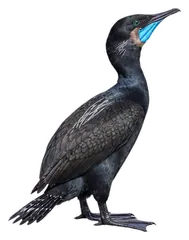 Brandt's CormorantUrile penicillatus
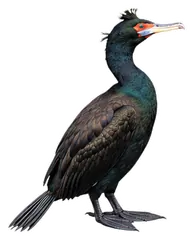 Red-faced CormorantUrile urile
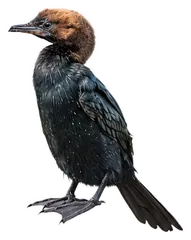 Pygmy CormorantMicrocarbo pygmaeus
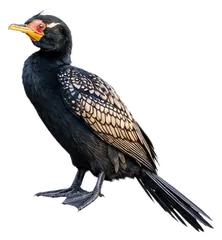 Reed CormorantMicrocarbo africanus
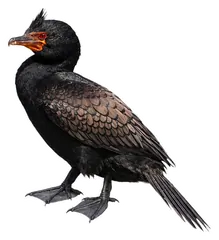 Crowned CormorantMicrocarbo coronatus
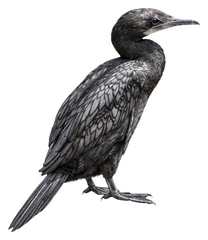 Little CormorantMicrocarbo niger
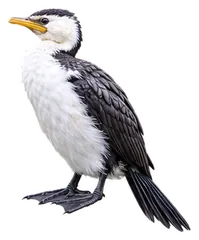 Little Pied CormorantMicrocarbo melanoleucos
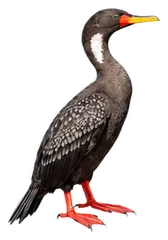 Red-legged CormorantPoikilocarbo gaimardi
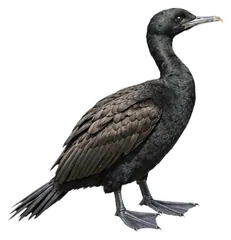 Bank CormorantPhalacrocorax neglectus
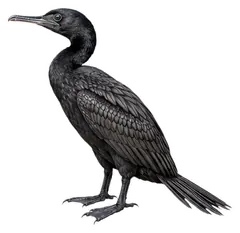 Socotra CormorantPhalacrocorax nigrogularis
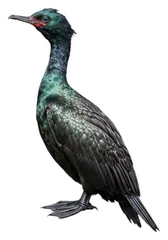
Download illustration
Free to use with credit: “Illustration: Bird Album (birdalbum.com)”. Drawn by AI from a reference photo by sdrov. ↗
Heard it but can't see it? Mingji identifies birds by sound and photo, on your phone.