 Bird Album
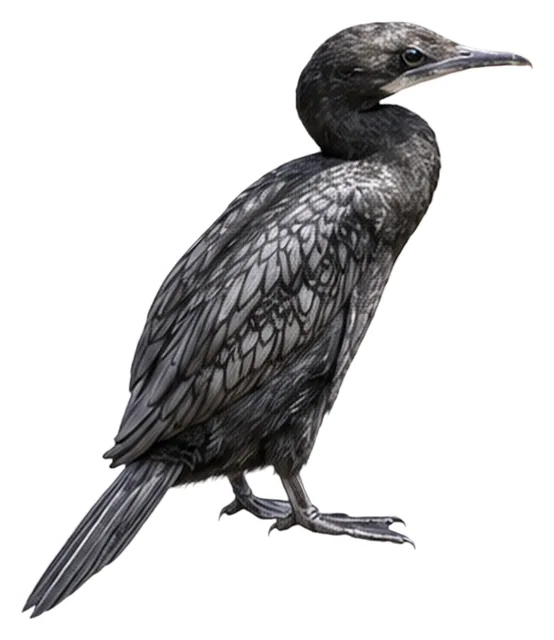
Little Cormorant
Microcarbo niger (Vieillot, 1817)
50 cmLength90 cmWingspan427 gWeight
Glossy black overall in the breeding season, it often stands motionless with its wings spread after coming ashore.
Busiest months: January–February · Most records: India, Thailand, Sri Lanka
Looks like Pygmy Cormorant
How to identify
Field marks
- Glossy black overall in the breeding season, with white spots on the face
- Breeding adult has a short crest on the back of the head
- Non-breeding plumage brownish, sometimes with a small white patch on the throat
- Head less pointed and bill shorter than in Indian Cormorant
Male, female and young
Sexes indistinguishable in the field; male often larger. Non-breeding birds and juveniles are brownish.
Voice
More vocal near nests and roosts: low roars and growls, as well as “kok-kok-kok”.
Similar species
Where and when it's recorded

Little Cormorant has been recorded at 560 of the 8,171 birding hotspots we track, in 15 countries and regions.
Records by month Northern Hemisphere
Where it's recorded most
- Kanha NP – Mukki ZoneIndia5,796 records
- Changaram Wetlands – EzhupunnaIndia4,009 records
- Bharatpur – Keoladeo Ghana NPIndia4,004 records
More places
- Saul Kere / Sowl KereIndia3,463 records
- Hoskote / Hosakote KereIndia2,455 records
- Sultanpur National ParkIndia2,168 records
- Vetal Tekdi/HillIndia2,160 records
- KattampallyIndia2,100 records
- Krishnampathi Lake, SeeranaickenpalayamIndia2,017 records
- Rabindra SarovarIndia2,016 records
Countries and regions with the most records
eBird records via GBIF up to 2024-12-31. A record means someone listed it; more records partly mean more birders, not more birds.
About
The little cormorant (Microcarbo niger) is a member of the cormorant family of seabirds. Slightly smaller than the Indian cormorant it lacks a peaked head and has a shorter beak. It is widely distributed across the Indian subcontinent and extends east to Java, where it is sometimes called the Javanese cormorant.
Excerpt from Wikipedia, CC BY-SA 4.0 · authors · Read more on Wikipedia
Questions
How big is the Little Cormorant?
The Little Cormorant is about 50 cm long, with a wingspan of 90 cm and weighs around 427 g.
Where does the Little Cormorant live?
Its breeding range: Oriental: widespread inland and coastal, Indus Valley (central Pakistan) through sub-Himalayan India and Nepal to Sri Lanka, east to southern China, Vietnam and Java. It is most often recorded in India, Thailand and Sri Lanka.
When is the best time to see the Little Cormorant?
At the hotspots we track, it is recorded most in January and February (Northern Hemisphere).
Is the Little Cormorant endangered?
The IUCN Red List classifies the Little Cormorant as Least Concern.
What does the Little Cormorant eat?
Main food: Fish, shrimp & shellfish.
What family is the Little Cormorant in?
It belongs to the family Cormorants, Shags (Phalacrocoracidae), order Suliformes.
At a glance
- Length
- 50 cm
- Wingspan
- 90 cm
- Weight
- 427 g
- Habitat
- Wetland
- Diet
- Fish, shrimp & shellfish
- Lifestyle
- On the water surface
- Migration
- Partial migrant
- Conservation
- Least Concern
More measurements
- Wing
- 196 mm
- Tail
- 131 mm
- Bill
- 35 mm
- Tarsus
- 36 mm
Averages from the AVONET dataset; length from field guides where available.
Range
Oriental: widespread inland and coastal, Indus Valley (central Pakistan) through sub-Himalayan India and Nepal to Sri Lanka, east to southern China, Vietnam and Java
Breeding range, IOC World Bird List 15.2
Classification
- Order
- Suliformes
- Family
- Cormorants, Shags Phalacrocoracidae
- Genus
- Microcarbo
Other birds in the genus Microcarbo
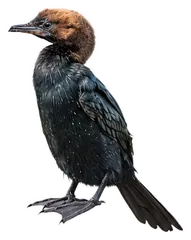 Pygmy CormorantMicrocarbo pygmaeus
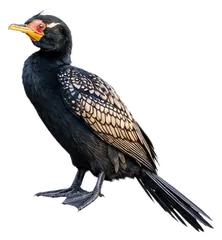 Reed CormorantMicrocarbo africanus
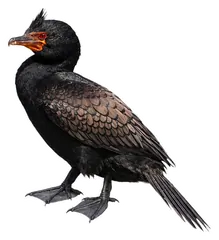 Crowned CormorantMicrocarbo coronatus
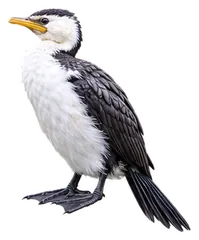 Little Pied CormorantMicrocarbo melanoleucos
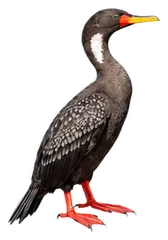 Red-legged CormorantPoikilocarbo gaimardi
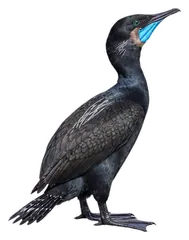 Brandt's CormorantUrile penicillatus
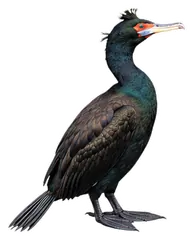 Red-faced CormorantUrile urile
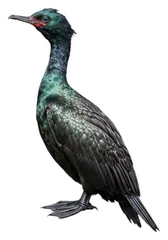 Pelagic CormorantUrile pelagicus
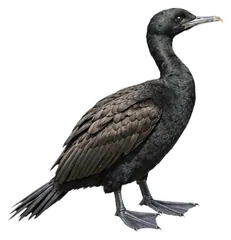 Bank CormorantPhalacrocorax neglectus
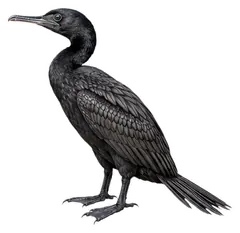 Socotra CormorantPhalacrocorax nigrogularis
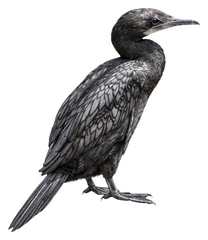
Download illustration
Free to use with credit: “Illustration: Bird Album (birdalbum.com)”. Drawn by AI from a reference photo by Sergio Rivero Beneitez. ↗
Heard it but can't see it? Mingji identifies birds by sound and photo, on your phone.